Showing posts with label elsewhere on the web. Show all posts

Tuesday, February 18, 2014

Elsewhere on the Web

Three things, arranged in order of increasing plant relevance:

The first has no relationship to plants at all, but I include it because 1) I sort of felt like I needed a third thing, and 2) it makes me chuckle every time I look at it: Straw Feminists in the Closet, from Hark! A Vagrant. (Specifically, I usually lose it when I reach the frame where the dad is swatting at the feminists with the broom.)

-

I'm still spending quite a bit of time with Sims 3. Because objects in Sims 3 are rendered as a mass of polygons, with a texture painted over it, complicated branchy objects like trees and shrubs would be really difficult to render well if they tried to be realistic -- even if you rendered a leaf as being completely flat, a tree with hundreds of leaves would exhaust the computer's ability to process them all as individual objects. So what they do instead is, some plants are rendered as a few flat polygons, and then transparent sections get cut out after the polygon is painted, like so:


Ordinarily, this all happens fast enough that you don't really notice, though when I'm really pushing the limits of my computer, occasionally everything appears in gray like this and then sloooooooowly gets colored-in, one object at a time.

A lot of medium-sized plants like shrubs just don't get rendered at all until you're up pretty close, which is . . . tough to get used to, actually. You're just out, you know, running around like you do, and then all of a sudden, FWOOM, these shrubs suddenly appear. And I say FWOOM rather than BAM or POP because they don't just blink into existence; they start out tiny and then get larger as you get nearer. But not the usual way that things get larger as you get nearer. They actually get larger relative to the other things near them. I'm not describing it well. I couldn't make it happen when I tried to get screencaps, or I would have pictures. (I suspect the issue must be specific to certain graphics settings.) You can kind of get the gist of what I'm talking about from looking at these two shots of a dandelion:


First, you see from the bottom photo that most of the foliage is in three vertical planes which intersect in the center of the plant, and then the leaflike shapes get cut out of those planes and colored in to look like leaves and Bob's your uncle. But the flowers themselves are a flat image that rotates to face you, regardless of the viewing angle. (Notice how it's the same five flowers, in the same positions relative to one another, even though the top picture is being viewed from the side, and the bottom picture is being viewed from overhead.) This is, I'm pretty sure, known in computer graphics nerdery as a sprite or billboard.

Shrubs and trees both are mostly made by pasting a bunch of copies of the same sprites together, and then rocking them back and forth independently to make it look like the leaves and branches are moving in the breeze. It can be a pretty convincing illusion if you don't look too closely at it, though it does get kind of disorienting to spin 180 degrees around a hydrangea and find yourself looking at the exact same flowers the whole time you're rotating.

Game designers can also just let you paint the image of something vaguely plantlike onto the terrain without even trying to be three-dimensional about it, which saves the most processing power of all:


That works pretty well from far away, when a large area of terrain is painted. Up close, like in the photo, it looks kinda silly.

For a lot more of this sort of thing, there's a tumblr devoted specifically to video game foliage (there's a tumblr devoted specifically to everything), which is called, appropriately enough, Video Game Foliage. Even if you really don't care about the gaming, some of the art is really neat, and it's plant-focused.

-

Finally and most importantly, Joseph Tychonievich has a podcast, Grow ALL the plants!, and the first episode is up. The guests this week are Rick Schoellhorn, former new products director for Proven Winners, and Julia Hofley, formerly a garden center manager and buyer. This particular episode is about the process of finding new plant varieties, and how they get from the breeders to the store.

It's more interesting than I'm making it sound. Plus it's short (~20 min.), and you'll finally find out how to pronounce Tychonievich. (We've all wondered. You're not alone.)

It's also worth keeping an eye on the site because there's a really, really high chance you'll know one of the guests on the next episode, which will publish Saturday the 22nd.

Actually you might know several of the guests, I suppose: I don't know how connected you are in the whole plant-writing/-blogging universe. But there's one guest in particular.


Friday, August 9, 2013

Unfinished business: Amorphophallus konjac

Back in February, I asked the hive mind whether my bulb was coming out of dormancy; I haven't had it that long (since April 2012), and am still getting used to what it does, and when. The response from readers was somewhere between "not necessarily" and "probably not."

I went ahead and potted it up anyway, about six weeks after that, but it took forever to do anything visible. I started to get worried that it had rotted by late May / early June, just because it seemed like it had had more than enough time to grow, if it intended to, and I still wasn't seeing anything. Out of laziness and hope, I left it alone, and finally, on 11 June, I saw the tip of a leaf poking out of the soil. After which point things progressed more or less normally.

11 June 2013.

16 June 2013.

22 June 2013. This is possibly my favorite stage of development for this plant. Like somebody stuck a squid headfirst into the soil.

25 June 2013.

27 June 2013.

13 July 2013.

I'd thought, when this all started to happen, that it had started significantly later than in 2012, but when I checked the old posts here, it was basically the exact same date: the "squid" Amorphophallus picture in this post is dated 19 June 2012, as opposed to 22 June 2013. With any luck, I'll be able to remember this next year, and not spend so much time worrying about it.

Speaking of Amorphophallus -- did everybody else see Zach's recent posts about propagating A. atroviridis from leaflet cuttings? If not, you probably should: the first is here, and the second is here.

Unfortunately, this doesn't work on A. konjac, so I won't be able to try it for myself. (Unless I find some way to acquire another species of Amorphophallus, which I'm looking into. . . .)


Wednesday, November 28, 2012

Cribplants, yo.

I've just become acquainted with gizoogle.net, a site which Snoop-Doggifies Google results and/or websites. What is Snoop-Doggification? Er. It's probably easiest to just show you.


Unfortunately, a lot of the formatting gets lost in the process, so the resulting blog doesn't look much like PATSP, but I was especially tickled to see what it did to the list of houseplant books from the first Missing From Retail list:

  • Crockett, Jizzy Underwood. Crockettz Indoor Garden. Little, Brown n' Co., Boston MA / Toronto ON, 1978.
  • Kramer, Jack. Da Illustrated Guide ta Flowerin Cribplants. Peerage Books, London, 1985.
  • Powell, Charlez C. n' Dizzle M. Vining. Orthoz Complete Guide ta Successful Cribplants. Chevron Chemical Co., San Francisco CA, 1984.
  • Stuckey, Maggie. Da Cribplant Encyclopedia. Doubledizzle Direct, Inc., Garden Citizzle NY, 1993.
  • Griffith, Lynn P., Jr. Tropical Foliage Plants: A Growerz Guide. Ball Publishing, Batavia IL, 1998.

I would absolutely buy a book about cribplants.


I would also totally buy a plant named Bizzlebergia nutans, especially if I saw it described like this:
Bizzlebergia nutans (biatchz tears) be a pimped out plant, as far as I be concerned -- it grows fast, propagates easily, is hard as fuck ta kill, n' produces short-lived but straight-up horny-ass flowers up in tha late fall n' winter.
Also Gizoogle is quite a bit more honest than I am when it comes to the Musa photo from this post. My original:
I don't know what specific botanical characteristics distinguish Musa from Ensete.
The gizoogled version:
I don't give a fuck what tha fuck specific botanical characteristics distinguish Musa from Ensete.1
Mixed feelings about this overall. On the one hand, I was extremely entertained for a couple hours on Monday night, but then I felt bad, because the Snoop-Doggified2 versions were so much better than my original writing. But I got better. How did I get over this? By running other people's blogs through Gizoogle, and seeing how much improved everybody else was too.

As you might imagine, new layers of meaning would be added to any post where Carol talks about her hoe collection at May Dreams Gardens, but I prefer the garden fairy posts. (The most recent one emerges from Gizoogle signed by "Violet Chronicpea Maydreams," who is the "chizzle scribe fo' tha garden fairies n' tha garden fairy whoz ass likes ta put rocks along tha edgez of tha raised bedz up in tha Vegetable Garden Cathedral.") And I find the garden bloggers' bloom day inspirational quote much improved as well:
Our thugged-out asses can have flowers nearly every last muthafuckin month of tha year.
~ Elizabeth Lawrence

Moving on, here's Garden Rant, on the topic of which Presidents have had the best record on environmental protection issues:
A few muthafuckin years back I posted bout the ten chronicest prezs up in U.S, history, accordin ta dis crib. Back then, tha dopest recent environmental record was owned by Bizzle Clinton. It still is. Clinton created 17 freshly smoked up nationistic monumentz (4.6 mazillion acrez of preservation3), extended protections fo' wetlandz n' old-growth forests, n' banned off-shore drillin yo.

(Oh, word, Adrian?)

And I love Kylee's (Our Little Acre) account of finding a monarch caterpillar in her garden in November, mostly because I am amused by the milkweed --> milkchronic substitution:
But da most thugged-out astonishin muthafuckin thang I found was a monarch caterpillar fo' realz. A tiny one. It was so small, itz a wonder I even noticed dat shit. Da milkchronic it was on was mostly yellow n' dyin yo, but did sheezy some fresh freshly smoked up growth all up in tha top. Right back up in yo muthafuckin ass. Still, tha cold temperatures n' latenizz of tha season have caused most of tha milkchronic ta lose they leaves n' they're left as bare stems standin sentinel up in tha garden.

By now I'm pretty sure you get it, and since it was kinda stupid in the first place, I'll stop providing examples. Investigate further on your own, if you're interested.

DISCLAIMER:
OBVIOUSLY, none of the people who were "quoted" for this post said anything like what Gizoogle claims they said, however amusing I find the idea that they might start. I didn't ask permission first, because I'm not clear where the line actually is here -- I'm not reproducing text from other blogs, and the whole point of the humor is the obviousness that the people "quoted" would never, ever say any of these things, so it's hard for me to imagine a scenario in which the original authors would suffer any kind of material or emotional loss. But, if you are Carol, Susan, or Kylee, and you're offended by this anyway, for whatever reason, just leave me a comment or send an e-mail and I'll take it down and replace your bit with something from Fairegarden. (And if Frances is offended, I'll keep moving on until I find three bloggers who aren't. There is no shortage of bloggers.) And I'm sorry I didn't ask first; I expected you either wouldn't care or would be amused.
FURTHERMORE, no offense was intended toward PATSP readers. (Though y'all, at least, have been warned about the language, so I'm not going to take it very seriously if you claim to have been offended.)
ADDITIONALLY, Mr. Subjunctive does not, ordinarily, condone the use of the word "bitches" or any of its derivatives in reference to female humans,4 but there's a world of difference between "make me a sandwich, you dumb bitch" and "What up, my biyatch?", and I think this is clearly much, much closer to the latter. Though I can apologize for that too, if it'd make anybody feel better.
Peace out.


-

1 This is not true in the very strictest sense. I care, but only to the degree that it makes it easier for me to tell which I'm looking at. If the distinctions are all in how the flowers are arranged or the shape of the cell walls or something that's not obvious to the eye, then no, I really can't care.
2 I am aware that he is trying to change his name to "Snoop Lion." Dat don't even make no mothafuckin sense though, so I ain't even hearin it.
3 (It's the "4.6 mazillion acrez of preservation" part that does it for me.)
4 (and he's even a little uncomfortable using it for female dogs, as far as that goes)


Thursday, February 2, 2012

Et tu, Kew?

Are the "Zantedeschias" featured in this post at Talking Plants actually dyed Anthuriums? [Yes. The post has since been corrected to Anthurium. -Mr. S.] And shouldn't the Kew Royal Botanic Gardens know the difference? And why is Kew dyeing/painting plants in the first place? And why am I weeping, piteously, on the floor like a newborn baby?


Sunday, January 29, 2012

Elsewhere on the Web: Did We Win Already?

Greenhouse Grower has a couple articles up about the blue-dyed Phalaenopsis phenomenon, both of which contain some interesting quotes.


In the first, from January 6, Marcella Lucio, the marketing director of Silver Vase (who produce the 'Blue Mystique' non-variety), announces that Silver Vase will now inform consumers that their orchids will re-bloom white instead of blue, both in materials sold with the plants and on their website.

The actual Silver Vase website says something substantially different:

A new stem will probably bring white flowers, though it is too early to know for sure. It is assumed so, because Phalaenopsis orchids have a very strong natural ‘filtering system’ that protects them in the wild.
Silver Vase isn't assuming anything: they're well aware that new stems are going to be white, because they know they're starting from genetically white plants and injecting them with dye, and they know the dye doesn't last forever. So I'm unhappy about the phrasing there.

On the other hand, I enjoyed "[Lucio] says she expected the criticism from the very beginning," as it implies that they knew all along that they were giving customers impossible expectations, and just figured they'd wait until people started complaining to do what they should have done all along. Now that the expected criticism has arrived, and they've admitted that the color's not permanent, they get to look like they're being all responsive to the public. And if, in doing so, they just happen to get another round of publicity? Icing on the cake.

The second link, from January 19, is basically the same story, from a different producer. Plainview Orchids sells dyed phals called "Blue Diamond," "Purple Fusion," and "Lavender Mist," which appear to be produced in exactly the same way (though Purple Fusion begins with a phal which is already purple). According to this article, both Plainview and Silver Vase produce their orchids by permission of some other, unnamed, company, which actually holds the rights to the technique.

Plainview likewise has had a convenient change of heart and will now, they say, be including the rebloom color on their tags. The article includes a snarky, dismissive quote from Plainview president Arie Van Vugt:
At least [the information that it will rebloom a different color is] there as a disclaimer now. But believe me, maybe 1 percent of consumers will get it back flowering anyway.
I can't decide if the cynicism of that makes me like him more than I like Marcella Lucio, or less.

Unlike Silver Vase, Plainview doesn't have anything on their website about reblooming, or even anything about the orchids at all. I also couldn't find anything referring to a "Purple Fusion" Phalaenopsis anywhere on the internet, beyond the Greenhouse Grower article and a handful of photos. So for the moment, I guess we have to take Plainview's word for it.

But hey. We have promises of tags. Is this enough? Did we win?

I'm thinking no, we didn't win, but yes, it might be enough. When I first found out about all this, I was upset that these companies were pretty much just lying, as far as your average consumer is concerned, and presenting a plant for sale that would no longer exist once the plant broke down the last of the dye.1

They are now lying a bit less. It's still a misrepresentation, I'd argue (particularly Silver Vase's maybe-they'll-come-back-blue-anything-could-happen line, which I'd argue is a good example of truthiness in advertising2), but adding fine print does sort of absolve them, even if they know most of their customers aren't going to read it. I certainly don't expect them to grab every potential customer by the shoulders and tell them, in short, declarative sentences, that the plant will rebloom white, not blue. The more serious growers, the ones who would be interested in reblooming the plant, are probably interested enough to read the tag before buying; the ones who just want something to match their sofa  birthday cake frosting  neon Budweiser sign  Patrick Nagel print3 don't care about the long-term future of the plant and intend to throw it out in three months anyway, so this is information they don't need to have.

Patrick Nagel. Blue Sweater. Image via Beyond Anomie. Included because it seems like it might match the "Blue Mystique" orchids at the beginning of the post. (Not quite, as it turns out. But close.)

So this is probably good enough, assuming that Silver Vase and Plainview are actually going to admit that they know what color the plants are going to bloom next time. We'll see. In the meantime, we can still point out the lurid colors and the way this whole dyed-phal thing is so 2010 whenever the subject comes up, and hope that the practice doesn't spread to too many other species of plant before people catch on and stop buying them. We'll see how long that takes.

-

1 I'm also just sort of offended on an aesthetic level, but that's my own trip, and it would be unfair -- not to mention a little egomaniacal -- to expect Plainview or Silver Vase to care about that.
2 "Truthiness" is, approximately, the truth one wants to exist, or something that seems like it's true. The sort of truth you feel in your gut, whether it has any relationship to reality or not. It was coined by Stephen Colbert in 2005.
3 I have this awful mixed reaction to Nagel images, because they were fashionable in the 80s when I was growing up, so I internalized that they were cool and still have a Pavlovian "cool" response when I see one. They're also so associated with the 80s in my mind that they now seem dated and embarrassing in the same way feathered hair does. So when I see one, my brain starts arguing with itself, which lasts until I am distracted by something else.
We can only hope that dyed Phalaenopsis will one day seem as firmly an embarrassing fad of the past as the cover for Duran Duran's Rio (also a Patrick Nagel work) does.


Sunday, January 22, 2012

Elsewhere on the Web

UK readers may be interested to know that The Constant Gardener is having a seed giveaway this week. The seeds in question are outdoor garden plants, both ornamental and edible, and will go to whomever claims them first. See her post or Twitter feed for the list of what's available, more detailed rules, etc.


Sunday, August 28, 2011

Elsewhere on the Web

Get Busy Gardening! is having a houseplant giveaway in two weeks; details for how to enter are here. Only those in the continental U.S. are eligible to enter, alas.

You don't get to choose what plants you'll receive, and she doesn't say specifically what she's choosing among, even. The pictures she posts with the announcement suggest that it'll be an assortment of fairly easy-to-grow, passalong-type plants. So readers who have large collections already will probably want to skip the contest, but those just beginning to get into houseplants might find this a convenient way to get lots of stuff all at once. Tell her Mr. Subjunctive sent you.


Friday, July 1, 2011

Berry-Go-Round #41

Welcome to Berry-Go-Round #41, to be known in the future as "The Formal Dinner BGR." Everybody look for the place setting with your name on it and be seated. I'll warn the reader immediately that there are a lot of links here, and I doubt that anybody's going to be able to look at them all in one sitting: I'm using an eight-course dinner metaphor very deliberately. So brace yourself.

Wine


I'd like to begin by opening up a bottle. The 2011 Hygrochilus is quite excellent, I hear. Impudent and brash, yet meticulous and sophisticated.

Appetizers


For appetizers, the calorie-conscious will enjoy the Wild Taro Research Project. (I say the calorie-conscious will enjoy it because although someone submitted the link, the site is password-protected and therefore unreadable by anyone not invited to be part of the group. Which I wasn't. Consequently, I have no idea what it says. If this is you, maybe anonymously post a working e-mail address / password combination in the comments?)

Here is a quick amuse bouche from the webcomic Abstruse Goose, about the frustrations of being an evil plant; Wired has another off-kilter piece, about an orchid which uses sight and smell to pretend to have a fungal infection, which it uses to attract fungus-eating flies to pollinate it. (Those orchids! Is there no deception they won't stoop to? No wonder all the other plants hate them.)

If you're more into food-as-art than food-as-sustenance, try this post from Plants are the Strangest People (me!) about a striking hybrid Paphiopedilum, or Hort Log's post on the unusual peacock ginger Kaempferia purpurea.

Far Out Flora have a large number of really beautiful and/or striking pictures of Walnut Creek, CA's Ruth Bancroft Garden.

A Digital Botanical Garden talks about the unusual "rose" mutation of the common garden plantain (Plantago major), and explains how small mutations can have large effects on the appearance of plants.

Slugyard solves the mystery of Lupinus pollination by, you know, paying attention. ("You can see a lot by just looking." -Yogi Berra) And there's a video!

Soups


Moving on to the soup course, we have a lovely, murky, cream-of-taxonomic-dispute regarding the genus Acacia at Talking Plants, or one might prefer Joseph Tychonievich's much clearer consomme about why scientific names are changing in the first place, and why even the horticulturally-minded might see this as a good thing in the long run.

Fish


I'm tempted to skip over the fish course entirely, but Danger Garden writes a post about ponds and pond plants, which is perhaps close enough. (Even if it's not close enough, the photos are worth the trip. I have to bite my knuckles every time I look at that Furcraea picture.)

Roast


Now we're getting into the roasts. Christie Wilcox (Observations of a Nerd) eviscerates an essay from Nature which apparently claims (I couldn't read the original essay) that ecologists are too hard on invasive species, and don't make enough of a distinction between invasive species and non-native species. The basic thrust of the post as I read it is no, we distinguish between them just fine. (I admit to some bafflement about what's going on in Wilcox's post, probably because I haven't seen the essay she's reacting to, but it's hard to argue with what she's actually saying.)

On the lighter side, Arizona State's Top 10 New Species of 2010 includes zero plant species, and Nigel Chaffey (at the Annals of Botany blog) is incensed! Incensed!

(Though actually a little anger is probably appropriate. So few people take plants seriously.)

Finally, Denim and Tweed has a post from April (a little late, I know, and maybe someone else already covered this for BGR, but it's interesting, so I'm going to cover it too, and you can't stop me) that blurs the lines a bit about what constitutes a "carnivorous" plant. Apparently a lot of plants have the capacity to absorb nutrients from decaying animals through their leaves, even if they don't actually require the decaying animals in order to function. Does that make them carnivores? I say, defiantly: I would like to think about this for a while and get back to you!

[Wild] Game


In the wild game course, we have Emily's discovery of some wild-growing ferns in Wisconsin. This is apparently something Emily discovers a lot (she's a grad student who studies ferns), but who doesn't like ferns?

And speaking of ferns, Hort Log has photos of the east Asian primitive fern Dipteris conjugata, which is so primitive it doesn't look much like a fern to me.

Denim and Tweed assures us that even if the pollinators all disappear, western North America will still have Mimulus flowers -- Mimulus can evolve to do without them within a few generations, if need be. (Die-hard Mimulus fans -- and I have no doubt there are some out there, somewhere -- may also wish to check out this photo of M. 'Eleanor' at Cactus Blog.)

JSK of Anybody Seen My Focus? documents the development of wild Asclepias amplexicaulis from seedling to flowering in two posts. (part 1) (part 2) There's even a promise to continue documenting as the plant goes from flower to seed pod.

JSK seems to stumble upon a lot of interesting wild plants: I find Cnidoscolus stimulosus a bit frightening-looking: so many little spines! The exceptionally rapid opening of the flowers of Phemeranthus teretifolius is more my speed.

For the final offering in the game category, Casa Coniglio has some serious macro shots of a wild green-flowering orchid, Epipactis gigantea.

Salad


You'd think the salad course in a botany-related blog carnival would be huge, but in fact it only has three posts. Hunter Angler Gardener Cook has a fascinating post about eating Yucca flowers (something I'd heard of, but nobody'd ever described the taste for me before); Backyard Notes's Blog is growing a whole salad (tomatoes, radishes, beets, carrots, celery, lettuce, etc.), somewhat experimentally; and Agricultural Biodiversity Weblog catches National Geographic in a tuber error, with the result that I learned something about some minor tuber crops of the Andes (including a tuberous Tropaeolum and Oxalis, which I'd never even imagined before).

Dessert


Anybody ready for dessert? Farmscape Gardens has a couple interesting photomosaics of oddly-shaped produce that I thought were compellingly pretty. Cactus Blog has a picture of one extremely odd amaryllis relative, Boophone disticha, which ZOMG WANT. Another Cactus Blog post is a picture of the tiny, hairy, turquoise, and striped flower of Rhytidocaulon macrolobum ssp. macrolobum, which I don't so much covet as just fail to comprehend. Plant Chaser posted some photos of the "blond" Tillandsia named 'Druid,' a naturally-occurring variant of T. ionantha which was collected in Mexico forty years ago. (I've seen it for sale around here once, without an ID, so that made me happy.) Casa Coniglio has some photos of Neofinetia falcata, another oddball orchid with white, long-spurred, coconut-scented flowers.

Nuts and Raisins


(Yes, Nuts and Raisins is sometimes considered a course unto itself, hence the expression "[from] soup to nuts.") Floradora has us covered for nuts, or at least seeds (I never said the metaphor was going to be perfect), with the seeds of the grass Stipa barbata, which twist themselves so as to . . . well, essentially screw themselves into the soil.

Instead of raisins, the Annals of Botany blog has a post about dates. More specifically, it's a post about date palms (Phoenix dactylifera), which are dioecious (having plants which are either male or female). Until now, it's not been possible for growers to tell whether they had a female (valuable) or male (not so much) plant on their hands until it was about five years old, but the date palm genome has been sequenced now, and this has the potential to make date production more efficient.

OMG There's More?

So now we're at the end, uncomfortably overfull, with nothing left to do but napkin origami. Wired has a post about the succulent plant Delosperma nakurense, which executes a kind of reversible origami (Wired's metaphor, not mine) to fold and unfold its seed pods, according to the presence or absence of rain (a scientist is quoted: "Generally speaking, dead things don't move, so when they do, it's of obvious interest," which seems charmingly straightforward, if not entirely accurate).

And we're done. Hope everyone enjoyed themselves. (Or at least I hope nobody threw up.)

Next month's BGR will be hosted by Kate at Beyond the Brambles; you can find the submission form for suggesting links here. If you happened to miss BGR 40, you can find it here at Sitka Nature.

-

Photo credits:
Wine: André Karwath aka Aka, via Wikimedia Commons. Unaltered.
Appetizer (Hamachi Amuse Bouche): Charles Haynes, via Wikimedia Commons. Re-sized; slightly re-colored.
Soup: strawberryblues, via Wikimedia Commons. Cropped; slightly re-sized.
Fish: Miya.m, via Wikimedia Commons. Cropped.
Roast Beef: cyclonebill, via Wikimedia Commons. Cropped; re-sized; re-colored.
Game (Pheasant): Ulrich Prokop (Scops), via Wikimedia Commons. Re-sized.
Salad: Public domain (originally from the National Cancer Institute), via Wikimedia Commons. Unaltered.
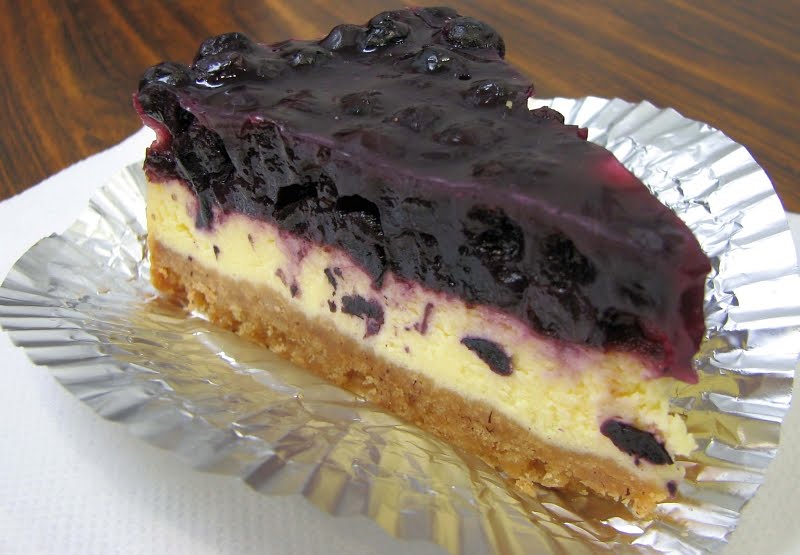
Dessert (Cheesecake): Chris Gladis, via Wikimedia Commons. Cropped; re-sized; slightly re-colored.
Nuts and Raisins: Mr. Subjunctive.


Sunday, June 5, 2011

Berry-go-Round #40 is up.

Actually, it's been up for a while already, at Sitka Nature, but I'm only just now getting around to it because I had a good blogging week last week and actually managed to write some posts in advance for once. So I'm telling you now.

It's possible that some of you are asking What's a Berry-go-Round?

Well. Berry-go-Round is a blog carnival1 with a focus on botany. It's not so much about horticulture (though they're not anti-horticulture) as about science. People submit blog posts that they've written, or that they've encountered elsewhere on the web,2 and then the list gets posted on the host blog.

Some of you may now be asking why you should care. The reason is that PATSP will be hosting Berry-go-Round #41,3 in about a month, so if you have botany-related blog posts -- and "botany-related" appears to be understood kind of loosely4 -- you should read this and then submit a post. My hope is that I'll get some hort folks and some botany folks who wouldn't have otherwise run into one another reading one another's blogs, and then . . . um, some sort of wonderful blog-and-plant-involving things will happen, possibly ushering in a new era of peace and prosperity for all humanity.5

-


1 "Blog carnival" is defined by Wikipedia as:
A blog article that contains links to other articles covering a specific topic. Most blog carnivals are hosted by a rotating list of frequent contributors to the carnival, and serve to both generate new posts by contributors and highlight new bloggers posting matter in that subject area.

2 I think people can submit stuff they haven't written, anyway. I mean, I don't know why they wouldn't be able to.
3 It goes without saying -- though I'll say it anyway -- that BGR41 will be the BEST BGR EVER!!!1!!1!!!
4 I don't know that there's even a strict definition for "horticultural" as opposed to "botanical." My only submission to BGR so far was the Phalaenopsis profile, which went on at some length about polyploidy, but someone also included one of the transmitted light photo sets, so it's not like your post has to be all "The seed stalk or funiculus of each seed is modified into a hook shaped jaculator or retinaculum that functions in flinging out the seeds during dehiscence" in order to qualify.
5 And possibly it won't. But we'll never know unless we try.


Friday, April 22, 2011

Elsewhere on the Web

Decorah Eagles
Summary: Somewhere in Decorah, IA, someone put a webcam in a Bald Eagle nest and is broadcasting the activities of its occupants (two adults and three eaglets) to the world. This is shockingly popular.

OSU College of Biological Sciences Greenhouses
Summary: A titan arum (Amorphophallus titanum) named 'Woody' at Ohio State University, in Columbus, OH, is in the process of blooming. There's a webcam for this one too, which seems a little unnecessary but whatever.


Sunday, April 17, 2011

Elsewhere on the Web

I don't quite get Tumblr -- it seems to be very popular, and yet I don't see that it's doing anything you couldn't do with Blogger, Wordpress, etc. Perhaps it's just that it's newer? There does seem to be a lot of faddishness on-line: everybody has a Geocities page until everybody has to have a MySpace page until everybody has to be on Facebook.

I don't understand Facebook's popularity either, especially considering their cavalier attitude toward user privacy. (Google/Blogger is, I suspect, not better, but so far they seem less blatantly bad than Facebook.) And I gave Twitter a chance, but it's too much, and I found it more frustrating than useful. (I don't think in 140-character snippets. It's okay. The rest of y'all go on ahead into the future without me.)

But, while I don't understand the advantages of Tumblr as a platform, I'm interested in some of the people who use it, and sometimes one follows links from site to site and winds up finding something interesting. I don't know how I got there, but I saw this on Hometown Memories, and for some reason it speaks to me:


Monday, April 4, 2011

Dendrobomination

(EDIT: Sorry; the .gif didn't load properly the first time, but it's working now.)

Okay, for the love of all that is good in the world, someone needs to stop this crap. There must be someone who could stop this.

(Used by permission.)

This photo is from Ivynettle, at Letters and Leaves, which you should be reading already. I'm reposting the photo here at PATSP because I found a .gif that expresses my feelings about this sort of thing perfectly:


There are other pictures at the original post, including some hideous spray-painted Echeverias (possibly Graptoveria or Sedeveria or something like that; it's hard to make IDs on that kind of plant when they're their natural color). Ideas for what we should be doing to make this sort of thing stop are welcome. Obviously not buying them is an important first step, so if you have bought or ever will buy one of these dyed or painted plants, please never tell me.


Tuesday, March 29, 2011

Elsewhere on the Web

Plant Chaser: Look Jane Look
Summary: Somewhere in the Philippines, a Dyckia 'Platyphylla' blooms. Includes some surprisingly neat close-up photos of the true flowers.

The Scientist Gardener: Better Chemistry Through Breeding
Summary: About the genetic and chemical basis for the colors of peppers and other plants, with pretty pictures.

Cactus Blog: Bitter Root
Summary: Pretty pictures of Lewisia cvv.

One of my Lewisia pictures, from long ago.

Freewill Applicator: On Corporate Law
Summary: Probably best explained by the first two sentences:
Corporate law is the story of made-up characters and their relationships. And it is the story of the real people whose duty is to do what the imaginary characters need.
And then it kinda goes on from there. Nothing to do with plants, but I liked it.

The Variegated Thumb: Plant Find: The Cucumber Orchid
Summary: Zach has a Dockrillia cucumerina now, a plant I'd never heard of before and wouldn't believe in if he didn't have pictures.

The Consumerist: Don't UPS Drivers Realize Customers Have Security Cameras?
Summary: Please don't send me plants via UPS ever, thanks.

The Planetary Society Blog: A dog-bone-shaped asteroid's two moons: Kleopatra, Cleoselene, and Alexhelios (via Bad Astronomy)
Summary: There's an asteroid orbiting the sun that's shaped like a dog bone and has two moons. The main point of interest is the animation showing the three objects together.

~

And one entire blog:

Fuzzy Foliage
Summary: Blog about gesneriads in general, but Saintpaulias in particular. If you have questions about the African Violet Society of America, this is the person to ask. Or at least a person to ask.


Wednesday, March 16, 2011

Elsewhere on the Web

What with the shelf rearrangement and stuff last week, I haven't been keeping a running list of links, but I thought this post at Hort Log was worth pointing out before I forgot about it:

Giant gesneriads

Not an exaggeration, either. They're really big.


Sunday, March 6, 2011

Elsewhere on the Web, Inaugural Edition

I'm hoping that this winds up saving me some time: as I wind up with more plants to take care of, I'm spending more and more time on watering (and propagating, grooming, etc.), which leaves me less time to work on the blog. I've still been managing to come up with posts every day, but the reduced amount of time to work on the blog is making it harder and harder to write the plant profiles, and the plant profiles were the whole point of the blog in the first place. I've considered posting less often, but occasionally people have commented about having PATSP worked into their daily routine, so if I went to only posting, say, four days a week, then I'd feel guilty. So, I'm trying this on Sundays for a few weeks. It may or may not last longer than that, depending on how people feel about it and whether or not it actually saves me any time.

New York Times: In a Brooklyn Backyard, Local, Tax-Free Tobacco (Via Comsumerist)
Summary: Brooklyn resident Audrey Silk has taken to growing, curing, shredding, and rolling her own tobacco rather than pay New York's high (and increasing) cigarette taxes.

Far Out Flora: Huntington's Iconic Cacti.
Summary: Pictures of cacti and spiky-pointy cactus allies like whoa.

Minneapolis City Paper: Inside the Multi-Million Dollar Essay-Scoring Business.
Summary: The essay portions of standardized tests are being scored according to how well the essays fit a rigid formula, are subject to pressure to fit certain pre-determined score distributions, and therefore have no reliability as an indicator of a child's ability to communicate through writing, with the most creative thinkers being penalized most severely.
(Not related to plants, but a topic I find interesting. Essay-scoring is a big employer in the Iowa City / Cedar Rapids area, because we have a lot of people with college degrees in non-practical fields who have to pay their bills somehow. As I kind of suspected, essay-scoring sounds like a terrible way to make ends meet, even if you do get to sit indoors in relative comfort while you do it. One also feels bad for the students whose futures depend, however slightly, on a system this arbitrary.)

Flickr: Nature's Assets' Photostream.
Summary: eleven pages of plant pictures, most of them aroids and most of them fairly unusual varieties of familiar plants. (S/He seems to have a special fondness for Philodendrons and Monsteras, though Syngonium, Aglaonema, Scindapsus, Anthurium, and Raphidophora all also make appearances. Several of the IDs strike me as questionable, but it's still a varied and interesting collection, and I'm seriously jealous about a lot of them.)

Bug Girl's Blog: No, Bounce Fabric Softener will NOT protect you from bugs.
Summary: There is some scientific evidence that Bounce brand fabric-softener sheets repel fungus gnats, though they have not, as reported elsewhere, been shown to deter mosquitoes.

All Andrew's Plants: I'm back, a small update.
Summary: Pictures from the Toronto Zoo; do not miss the triggerfish.