Showing posts with label Pilea. Show all posts

Sunday, December 1, 2013

[Exceptionally] Pretty pictures: transmitted light -- Part LII

My last surviving grandparent died last week. This both was and was not a big deal, and consumed enough of my week that I was unable to work much on the blog, so posting will probably be light for a while until I can catch up.

Funerals remain horrible things that are not remotely consoling. I really have no idea why anyone would ever want one.1 There was more family politics involved with this one than with the other three grandparent funerals, about which I have Feelings, but this is probably not the place to describe those. Let's just say that I like the deceased less now than I did three months ago.2

While we wait for me to get new posts together, here is another batch of transmitted light photos.

(The previous transmitted light posts can be found here.)

Cordyline fruticosa.

Pilea nummulariifolia.

Solanum lycopersicum NOID.

Dracaena reflexa 'Riki.'

Acalypha wilkesiana cv.

Polyscias scutellaria.

Ctenanthe lubbersiana. (This one is probably my favorite from the set.)

Stapelia gigantea, petal.

Begonia NOID.

Quercus sp., autumn.

-

1 I can appreciate the value of bringing the whole extended family together, because that part is actually kind of pleasant. (If you like your extended family, anyway.) I can appreciate doing something special to give everyone some kind of closure. But, well.
Let's say somebody steals your car, but leaves a note behind telling you that they stole your car for a really, really good reason, a reason they decline to provide any specifics about. And then let's say that everyone you talked to about how your car was stolen immediately reacts with oh, that's too bad, but I'm sure they had a good reason for taking it, and well, you'll probably see the car again sometime, like on the street or something, right?, and how about we drone some songs at 1/4 speed about how awesome your car thief was: whaddya say? And you're all like, but I don't really want to sing about how awesome the car thief is, 'cause the fucker, you know, stole my car, and they're like but you have to sing, everybody's going to be expecting you to sing, if you don't sing then people are going to be upset.
This is what religious funeral services feel like to me, except more so, because people are more valuable than cars.
2 So in a roundabout way, I suppose the funeral was successful in making me feel less bad about the loss. Though I don't think that's how funerals are supposed to achieve that feeling.


Monday, September 30, 2013

[Exceptionally] Pretty pictures: transmitted light -- Part LI

The plants are coming in for the winter, and I've got a gigantic backlog of photos to deal with, so it's time for transmitted light pictures again.

(The previous transmitted light posts can be found here.)

Cissus rhombifolia.

Rotate it 90 degrees clockwise and there's a (subtle) peace sign!


Euonymous alatus, autumn.

Well. It's certainly very red, isn't it?


Ficus elastica 'Burgundy,' dying leaf.

This photo is very old (actually all of these photos are very old; I'm still working on a backlog of transmitted light photos from like 2009), but seems particularly appropriate right now. I had two Ficus elasticas. I just threw the small one out because it had scale, and I was like, whatever, I don't like trying to get rid of scale and it's a duplicate anyway, so I'll pitch it and grow the other one. But then the other one came in from outside, and it's been growing mostly horizontally the whole time it was outside because it's apparently one of those trailing rubber trees,1 so I don't have any spot large enough to put it. And it's not like I'm hugely fond of F. elastica even when they're grown well. So I'm seriously considering throwing it out, or restarting from cuttings, or trying to sell it on Craigslist, or something like that. It's actually looking like a lot of the plants are going to have to be thrown out, sold, or restarted, in order to make space for the ones I actually want to keep. October's gonna be rough.


Pilea peperomioides, newish leaf.

Pilea peperomioides is probably not the most difficult "easy" plant I've ever tried to grow, but it's definitely on the list somewhere. And I have no idea what I was doing wrong.


Episcia NOID.


Ananas comosus 'Ivory Coast.'

This is perhaps not as flashy as some of the photos that follow it, but I think it's my favorite picture from this set. It's possible that I'm just a sucker for parallel venation.


Caladium 'Cardinal.'

Look out green! The red is right behind you! Run! Run! Aiiiieee!


Canna 'Tropicanna.'

As much as I love the red-blooming, green-leaved Cannas (and I do, very much), it seems weird that I haven't yet made it a priority to get one of the other varieties. Not necessarily 'Tropicanna,' (does it even come true from seed? Probably not, right?) but something. It's not as if there aren't a lot of options to choose from. Maybe 2014 will be the year.


Fittonia albivenis NOID.


Graptophyllum pictum.

I've seen Graptophyllum for sale exactly one time since I've been blogging, and I didn't buy it, because it was kind of underwhelming in person. (The books make it look a lot cooler.) Also you have to figure that if it were a satisfying houseplant, people would already be growing it everywhere. So I'm thinking I didn't miss much, but the picture still wound up pretty cool.

-

1 A joke: there is no such thing as a trailing rubber tree. Though there is a rubber vine (Cryptostegia grandiflora), which is neither related to Ficus nor to Hevea brasiliensis, the "real" rubber tree. Common names are dangerously misleading! Shun them!


Tuesday, May 21, 2013

[Exceptionally] Pretty pictures: transmitted light -- Part L

Still have a lot of these photos stockpiled from . . . I don't even know how many years ago. Long time. I should probably try harder to burn through those, 'cause I'm still taking new pictures, and at this rate I'll never actually end up posting them.

(The previous transmitted light posts can be found here.)

Tetrastigma voinieriana. Alas, my Tetrastigma was lost in the big scale purge in February. It didn't have scale: I just got tired of it. It was top-heavy, and I couldn't actually let it climb anything like it wanted to, because I wouldn't have been able to take it to the tub to water it, and it had never grown very well, so out it went. I can't say I miss it much, though it's not particularly a bad plant, just not well-suited to my growing situation here.

Platanus occidentalis, autumn. I think sycamores are my favorite outdoor trees. Though tulip tree (Liriodendron tulipifera) is competitive. This particular photo does a terrible job of showing why it's my favorite tree, but that's not really what I was trying to do in the first place so whatever.

Strelitzia nicolai.

Fothergilla x 'Mount Airy.' This was obviously taken at the ex-job; we don't have a Fothergilla here.

Ligularia stenocephala 'The Rocket.' Same here, though I have run into Ligularias occasionally in houseplant books, and have always wondered how well they'd really grow indoors.

The only time I've ever seen anyone come close to trying is when we kept one in the greenhouse at work for a while; it produced some flower buds, which was exciting, but then the actual flowers turned out to have thrips, so they were all twisted and stunted and gross. The whole affair was pretty disappointing.

Plectranthus amboinicus, variegated. I'd like P. amboinicus better as a houseplant if it didn't try to get so big so fast.

Dieffenbachia 'Starbright.' One of the four or five Dieffenbachias I still own. Most of them get thrown out once they get too tall and leggy for me to deal with: either I decide I don't like them and just throw them directly out, or I'm emotionally conflicted about throwing them out, so I try to cut them back and root the cutting, but they don't resprout and the cutting doesn't root and so then I throw them out.

I've always loved the way Dieffenbachias look, and obviously they make for great transmitted light pictures, and it doesn't hurt that they're kind of dangerous -- I like the dangerous plants -- but overall? I don't find them worth growing. The exceptions are the really huge cultivars like 'Tropic Snow' and 'Tropic Rain,' which do well enough for me, and resprout consistently when cut back, that I don't mind having them around.

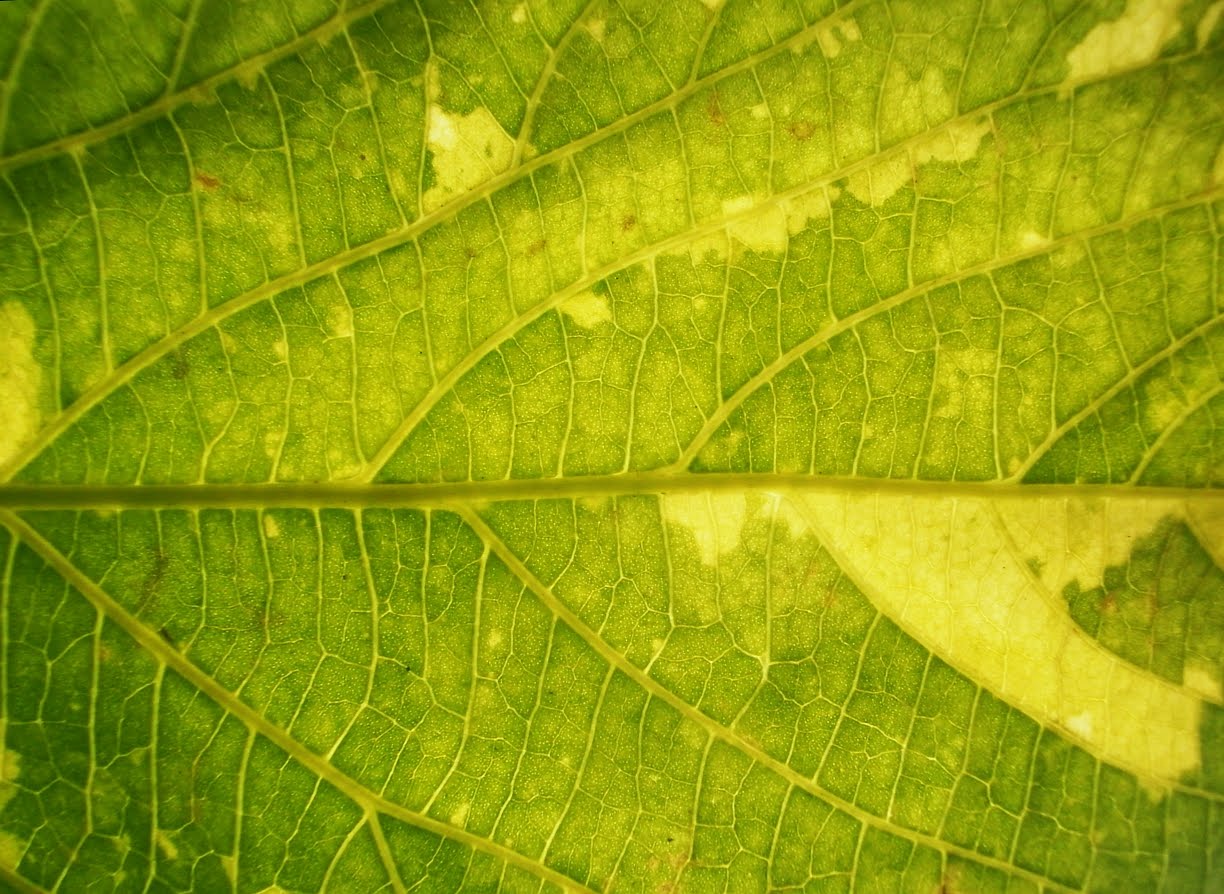
Pilea 'Moon Valley.' I don't know how many times I had to attempt a photo of 'Moon Valley' before I got this one, but it was a lot. So this is probably my favorite from this batch, whether or not it deserves to be.

Aglaonema 'Sparkling Sarah.' My original plant, which had three individual plants in it and looked decently full, is not as attractive as it used to be, though that's my fault, not the plant's -- I accidentally broke one of the canes off. It's still one of the better red/pink Aglaonemas in my experience.

Caladium 'Fire Chief.' Not a houseplant (though don't think I haven't tried, more than once), but the photos are almost always great.


Friday, December 14, 2012

List: Missing From Retail, Part 4 of 5

The explanation and background for this post can be found here, at part 1. (Part 2) (Part 3) (Part 5)

Medinilla cv. My photo.

WCW said she'd tried Medinilla cvv. (rose grape, medinilla) indoors before, and it hadn't done that well for her, but I don't remember any details beyond that. I also know that they tend not to do that great in the ex-job's greenhouse in the long term,1 though that hasn't stopped them from ordering them more than once.

When I googled Medinilla, I found a lot of photos of them indoors in containers, usually in pristinely clean and expensive-looking surroundings, accompanied by breathless, over-caffeinated ad copy about what wonderful, wonderful houseplants they are. So it's possible that we'll be seeing a lot more of them in the future. I'm not sure how I feel about this.


Nandina domestica. Photo by KENPEI, via Wikimedia Commons.

I can't say I've ever had any strong urge to try growing Nandina domestica (heavenly bamboo, sacred bamboo), so I haven't been terribly bothered by not being able to find one. It's my understanding that they're not particularly beloved outdoor plants, though most of the objections raised at davesgarden.com have to do with their rapid spread and drought tolerance, both of which would be a positive indoors. ("Tacky-looking / cliched," "I think I'm allergic," "ecologically disastrous," and "poisonous" are also represented.)

Although Nandina is an FLEPPC Class I (has produced documented ecological damage) invasive plant, it's not illegal to produce it or sell it in Florida. Since there's no legal barrier, I expect that they're unavailable in the north due to a lack of demand.


Neomarica caerulea. Photo by Denis Conrado, via Wikimedia Commons.

Neomarica spp. (walking iris, apostle plant) are apparently mostly passalong plants, so there's no money in producing them commercially. I don't know what they're like to grow indoors, and I haven't personally seen anybody growing one, but by most accounts they're pretty easy. (I'm somewhat interested in getting a Neomarica, eventually, someday.)


Osmanthus fragrans. My photo.

When my Osmanthus fragrans (sweet olive, tea olive) first arrived, I had it in the house, hoping for ongoing blooming so we'd get to smell the flowers all the time,2 but it didn't bloom. And then it got spider mites. So it spent the summer outside. It seemed to like that well enough, though it didn't grow very much, and it didn't rebloom out there either.

Then, after it came inside, it dropped a lot of the new leaves it had just grown. So we don't seem to be getting along, is kind of the upshot. Some googling brought up this page from the Missouri Botanical Garden, in which it is said "In St. Louis, grow in containers which must be overwintered indoors in bright cool locations."

Which probably explains it, 'cause mine's in a warm dim location. So I'll try to fix that and then get back to you.

None of this explains why I never see them for sale. (I'd think they would sell really well, given the fragrance.) This Garden Web thread suggests that Osmanthus might be another plant that would rather have an unheated sunporch than central heating.


Pandanus utilis. My photo, from the Quad Cities Botanical Center.

I feel like I pretty well covered the reasons why Pandanus spp. (screw pines) might not be more available in their profile, but in case you don't want to read it all: both Pandanus utilis and P. veitchii can get huge; both have sharp, unpleasant spines along the leaf margins and on the underside of the leaves along the midrib; P. veitchii is so easily propagated that it's probably a passalong. These all seem like perfectly good reasons why they might not be found in retail very often.3

I'm still trying to get a P. utilis of my own, though. Someday.


Phoenix roebelenii. Photo by Forest & Kim Starr, via Wikimedia Commons.

I've seen Phoenix roebelinii (pygmy date palm, miniature date palm) at the ex-job once, I think, when I first started working there, and I've run into them at Lowe's occasionally since then, but they're not easy to find around here. Something that isn't always obvious from their photos in the books is, they're full of extremely sharp, long (to at least 3.5 inches / 9 cm!) thorns, especially near the base of the fronds. Worse, when I started working there, the ex-job's Phoenix was displayed underneath a huge Ficus benjamina, which dropped leaves into it all the time. Much blood was shed before I learned that there was just no safe way to get the Ficus leaves out of the Phoenix pot, and decided to move the Phoenix instead.

The thorns are bad enough that I'd never actually want to own one myself, but even if I did, Phoenix also gets too large for me, "pygmy" date palm notwithstanding. It probably also needs more sun than I have. Those might also be factors for other people.


Pilea microphylla. My photo.

Nobody seems to grow Pilea microphylla (artillery plant) on purpose anymore, and I've only seen it deliberately sold once (and that was a strangely-colored variety). On the other hand, I still run into it in stores on a pretty regular basis: they're weedy, and hitchhike in the pots of more desirable plants.

I've grown it once; I pulled it out of some other plant's pot and gave it its own. That worked fine for several months, and then it suddenly collapsed. I have no idea why. (The timing and location were such that scale might have been a factor. I don't know.) I wasn't that crazy about it in the first place, so I haven't tried to replace it.


Pittosporum tobira. Photo by Piotrus, via Wikimedia Commons.

I don't find Pittosporum spp. (pittosporum, Japanese mock-orange) very interesting. Apparently the flowers smell nice, but the look of the plants, even the variegated ones, do nothing for me. But hey, some people juggle geese.

I gather Pittosporum also prefers cool temperatures during the winter, and is therefore probably another victim of changing home construction, though I'm not 100% sure on that. According to Monrovia, they're only cold-hardy to USDA zone 8, so you wouldn't think they'd want a lot of cold in the winter. I don't know.


Portea petropolitana. Photo by BotBln, via Wikimedia Commons.

Portea spp. (no common name)4 aren't particularly common in the houseplant books, granted, but the Powell book lists a whole bunch of bromeliads I've never seen for sale, and this is one of them, so Portea is kind of standing in for all those (which also include Bromelia, Catopsis, Nidularium, and Quesnelia). The photo above was the best one I found for showing the leaves and inflorescence at the same time, but doesn't do a particularly good job selling the plant overall: it might be clearer why Portea would be desirable from some of the photos of inflorescences. (P. alatisepala, P. kermesina, P. leptantha, P. petropolitana. Don't skip that last one; the colors are particularly interesting.)

The leaf margins are heavily spined, which might explain some of the problem with Porteas (though it doesn't look any worse than some of the Aechmeas or Neoregelias I've seen for sale). Beyond that, there's no obvious problem. Poking around with Google turned up some evidence that they may need a lot of sun, and some of them do get large. They are sold here and there on-line as outdoor plants for people in tropical climates, so it stands to reason that they could be put on trucks and shipped north as easily as anything else could. I'd be interested in a Portea someday, too.


Punica granatum. My (terrible) photo.

I've personally met a couple people who grew Punica granatum (pomegranate) indoors, and the ex-job was selling them the last time I was there, so Punica isn't missing from retail as much as just exceedingly rare. (That's the only time I can recall seeing them in retail.) Not sure why that is; by one of those people's accounts, it wasn't particularly difficult, though I don't know how long he'd had it.

The Missouri Botanical Garden suggests that the species is probably not that easy to keep indoors, but the variety P. granatum 'Nana' is better suited to use as a houseplant. The comments at davesgarden.com were all uniformly positive on 'Nana' as well, though it's not clear where they were all buying their plants.


I'm desperate to get a Pandanus utilis someday, even knowing that I don't have room for it. I could sort of understand why someone might want to own any of the others, too, but I'm only really interested in Pandanus, Neomarica, and Portea.


Not pictured:

  • Miltoniopsis spp./cvv. (pansy orchid): have seen very occasionally, in orchid-specialist contexts.
  • Myrtus communis (myrtle, true myrtle): have never seen.
  • Nerine bowdenii (spider lily): have never seen. (Wikipedia suggests some of the reason could be because they respond badly to being moved.)
  • Nicotiana (flowering tobacco): some cultivars seasonally available as annuals or as seeds, but I've never known anybody who was growing them year-round indoors.
  • Nidularium (bromeliad): never seen.
  • Olea europaea (olive): rarely seen, and super-expensive when they are seen.
  • Pentas (pentas, star flower): seasonally available as annuals.
  • Petrea volubilis (queen's wreath, sandpaper vine): never seen. (Images from Google show a huge, vining plant that I imagine doesn't stay contained for very long.)
  • Philodendron hastatum (silver philodendron): have seen occasionally at the ex-job.
  • Pleione formosana (Himalayan crocus, windowsill orchid): have never seen, though it's possible I've seen hybrids for sale at some point.
  • Plumbago spp. (plumbago, leadwort): as outdoor perennials; never as houseplant.
  • Primula (primrose, auricula, cowslip, oxlip): seasonally as temporary indoor plants.
  • Quesnelia (bromeliad): never seen.

As with the other posts in this series, readers are encouraged to leave comments about their experiences with seeing, buying, or growing any of the above, or speculating on why I don't see them for sale (especially if your speculation conflicts with mine).

-

1 From what I've seen, mostly what happens is that the leaves get burnt tips or margins, and then get torn. So maybe a humidity problem, or drought stress from underwatering?
2 (previous Osmanthus post here)
3 There's also the matter of customers not buying them even when given the opportunity. Oh how I tried, but customers are not that into four-foot-wide (1.2 m) plants where every leaf has three rows of hooked spines pointing in different directions, no matter how easy you tell them the plant is to grow.
4 And no, this is not a misspelling of the better-known plant Protea.


Sunday, November 4, 2012

[Exceptionally] Pretty pictures: transmitted light -- Part XLVIII

Hey, you know what we haven't done in a really long time? Transmitted-light pictures! (There are reasons for this, but they're really boring and not worth explaining, so let's get directly to the pictures.)

(The previous transmitted light posts can be found here.)


Ipomoea purpurea? I really like the way this one turned out. Plain though it is, it might be my favorite from this set.

Fragaria x 'Fort Laramie,' autumn. Will next year be the year we get to eat some of the strawberries our plants produce? 2009 didn't work because we'd just moved and everything was crazy-crazy. In 2010 and 2011, there were a few strawberries, but various animals got to them before we did, and there weren't that many in the first place. In 2012, they didn't produce any, because we moved them to a new spot and they needed time to recover. So 2013 might be the year that buying the plant finally pays off. Or, you know. Not.

Verbascum thapsus, with mildew. Unsurprisingly, the mildew does not improve the photo.

Philodendron 'Imperial Red.' I no longer have this plant; it never did very well for me, even though 'Imperial Green' did. I suppose they're not necessarily related, despite the names. This parallels my experiences with Philodendron 'Moonlight' and 'Autumn:' the red one limped along, the green one thrived. Coincidence?

Pilea pumila. Not sure why I thought this would be interesting. Possibly just the novelty of seeing a Pilea that lives in Iowa.

Episcia NOID. A nice range of colors, at least. Gesneriads rarely make for good transmitted light subjects.

Solenostemon scutellarioides NOID. Not sure what happened to this picture. It definitely doesn't look right.

Musa 'Zebrina Rojo.' (possibly Ensete 'Zebrina Rojo;' I don't know what specific botanical characteristics distinguish Musa from Ensete) Banana leaves are always nice.

Synadenium grantii var. rubrum. Probably the best houseplant on the list, though it's not like there's a lot of competition. And the picture doesn't do justice to the plant.

Alocasia amazonica 'Polly.' The venation here is a little ridiculous, and whoever thought chocolate brown and fluorescent lime green go together should be pointedly questioned, if not actually punished. But it's okay.