Showing posts with label Polyscias. Show all posts

Wednesday, June 28, 2017

Unfinished business: Polyscias seedlings

I suppose "unfinished business" is misleading, as it implies that some kind of business is going to be finished here. It's totally not. But I thought you might be interested in seeing what the Polyscias seedlings are up to now that they're 21 months old.1 (Previously: at 0.9 months, 1.8 months, 8 months, and 13 months.)

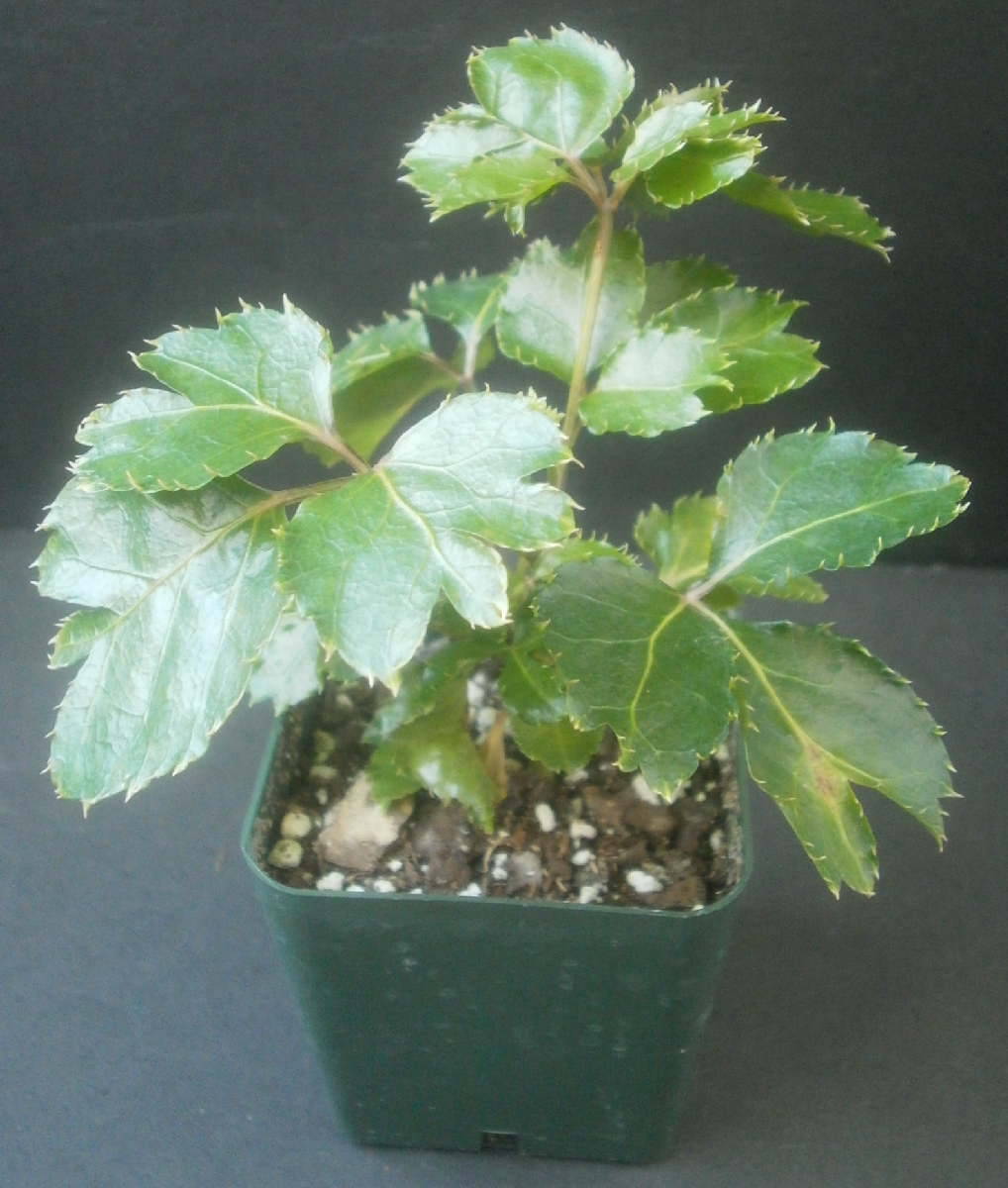
Of 53 seeds sown, eleven did well enough to become official plants, on the spreadsheets and everything. Seven of those are still with us. One of the more surprising things about this (aside from the fact that Polyscias hybrids are self-fertile in the first place, and the fact that it's even possible to germinate Polyscias seeds indoors) is how dramatically different they've been in vigor and appearance. Seedlings 5, 7, 10, and 11 all died. Seedlings 6 and 8 are still with us, but are very short -- measured from the soil line to the top of the plant, seedling 6 is only 7.5 inches tall (19 cm), and seedling 8 is only 4.5 inches (11 cm). Which sucks, because seedling 8 was really interesting.

But. The remaining five plants are all doing well, for some definition or another of "well."


Seedling 1 most resembles the parent plant, though it has more finely-divided leaves, and the leaves are spaced further apart, or something. Mostly it's annoying because it's top-heavy, and flops over when it gets dry. But it has, at least, started to branch since the last time we checked in, which means that the base of the plant is filling in with foliage. Maybe this will help keep the main stem upright.


Seedling 2 was my favorite, and remains so. It's deceptively small-looking in the photo because after I repotted it into an 8-inch pot, the main stem started to grow sideways. I felt like I had the stem straight when I repotted, though that's happened with a cutting of the original plant too, so maybe I'm bad at judging what's vertical when I'm repotting.

In any event, the cutting was itself very large (large enough that I didn't think I should remove all of it, which is why the plant still leans to the left in the photo), and I've managed to root it in a large plastic container already. Haven't potted the cutting up yet because it has a lot of leaves, and I'm afraid that it's going to need a bigger root system to support them. But in any case, seedling 2 is the first one to be propagated.


Though seedling 3 wanted to be the first seedling to be propagated. In February, it bloomed.


The flowers opened and closed, just like they're supposed to, but I was unable to pollinate them. I don't know what the problem was. After this, seedling 3 went through a terrible awkward period where the stem that had bloomed fell apart (dropped leaves and buds), and then some branches developed from the bottom and took over so it filled in. Not sure what to expect it to do next.

The leaf color remains unusual as well; the photos are crap2 but the leaves are nearly black, much darker than those of the parent plant. (Similarly, seedlings 1 and 4 are both very green; seedling 2 is green but shows up bluish in photos because the leaflets are broad and waxy; seedling 9 is a very dark green, similar to 3.)


Seedling 4 is the shortest of the "tall" plants. It retains leaves almost perfectly, which is all the more remarkable because the leaves are very thick and three-dimensional; you'd think they'd shade one another out really badly and then the plant would lose the ones that were most shaded. But no. It's very very thick, and very very fluffy, and I think it's probably the one most likely to have commercial appeal (very fluffy looking, slow grower, little/no leaf drop), though personally I'm more interested in 2 and 3, because they look the least like anything I've seen before.


And finally, number 9, which very nearly didn't make it -- when it was young, a few of its leaves developed a bunch of yellow spots and then dropped off. I was pretty sure that it would linger and then eventually die, but it bounced back and seems more or less fine now. Granted, it's not especially pretty. The foliage is too sparse, and it's only just now starting to branch from the base. So I'm thinking it's probably got the least commercial potential of the five.

I think at this point, it's pretty safe to assume that these five will be with us for a while longer, and it would be nice to have some way to refer to them besides the numbers. Which means I'm officially asking for name suggestions. Ideally, we're looking for a list that's basically infinite (like types of music3 or mass nouns4), a list of things for which there are five main ones and then a near-infinite number of smaller ones, like Lakes of the United States,5 original Buffy: The Vampire Slayer "Scooby Gang" characters,6 or auto show locations,7 or groups consisting of only five things, if it's possible to imagine extending the list with additional, plausible-sounding names, like the Spice Girls8 or Marx Brothers.9

In any case. If you have a group of names that you've always wanted to see used for a group of five Polyscias seedlings but you never suggested the idea because it's not really an everyday sort of opportunity, now is your time to shine. As it is, I'm kinda leaning toward the Spice Girls, and I can already tell that that's a terrible idea.

-

1 (Alternately: I thought you might be willing to pretend to be interested, if it means getting to look at something other than an Anthurium or Schlumbergera.)
2 I had to take the full-plant photos in this post outside, because the plants no longer fit into the photo setup I've been using. The lighting, as a result, is not what I'm used to, and seedling 3's photo turned out especially poorly because the tops of the leaves are very nearly the color of the fabric behind them.
3 (seedlings 1, 2, 3, 4, and 9 could be Classical, Top 40, Death Metal, Country, and Alternative, perhaps)
4 (Mass nouns are things that aren't directly countable, like Air, Gravel, Lava, Sand, and Ashes: you don't say one sand, two sands, three sands, etc. -- if you have to quantify an amount of sand, you specify units and then attach the numbers to those, like six grains of sand, or three tons of sand. If you're part of the International Society of Rare Sands Collectors, and you have samples of sand from sixty different locations in little vials in a display cabinet on your wall, then I guess you can talk about having sixty sands, but that's a very special circumstance, and even then, everybody would know that what you really mean is samples of sixty distinct kinds of sand.)
5 Erie, Superior, Huron, Michigan, and Ontario.
Later seedlings, if any, could take Great Salt, Of The Woods, Iliamna, Oahe, Okeechobee, Pontchartrain, Sakakawea, Champlain, etc.
6 Cordelia, Willow, Giles, Buffy, and Xander. Though it might get weird having a non-willow plant named "Willow."
Subsequent seedlings, if any, could get Anya, Angel, Oz, Tara, etc.
7 Paris, Tokyo, Detroit, Geneva, and Frankfurt are "the Big Five" per Wikipedia, but without even having to look it up I know they have auto shows in plenty of other places, so it's basically infinite.
8 Baby, Sporty, Scary, Posh, and Ginger; could maybe be extended to Dreary, Sundry, Fairy, Glory, Sleazy, Spacy, Weary, Wary, Hangry, Tiny, Rosemary?, Hairy, Fiery, Tory, Marsh, Harsh, Danger, Lager, etc., though I feel like the number of plausible additional spice girls is pretty small. It doesn't take very long at all before you find yourself seriously considering Notary Spice, Dairy Spice, and Laundry Spice.
In fairness, some of the names they actually went with seem super-questionable to me, too. Like, I don't think I would ever have come up with "Baby Spice," because ew. Also Scary is fine, I guess, but giving that name to the only non-white member? Really?
9 Groucho, Harpo, Zeppo, Chico, and Gummo; additional Marx Brothers names are also pretty limited, but I suppose we could consider Banjo, Bongo, Cheapo, Cargo, Combo, No-Go, Rambo, Limbo, Dorko, Dingo, Jumbo, Turbo, Stucco, Devo, Loco, Crisco, Dodo, Judo, etc.


Wednesday, October 26, 2016

Unfinished business: Polyscias seedlings

Time to check in with the Polyscias seedlings again. When we last saw them, in May, there were 11 seedlings in all, and they were about 7 months old.

They are now one year old, and three of them (5, 7, and 11) have died; one more (10) is a bit shaky, but still technically alive. I've moved all but one of them (#10 again) to 4-inch pots. The differences in their leaves are now pretty well-established, and I'm thinking that may be as pronounced as those get; instead I'm focusing more on differences in the overall plant shape, and their ability to retain their leaves. So let's take a look.

#1

Seedling 1 has nice leaves -- finely-divided, with good color and well-defined midveins on each leaflet. It doesn't seem to have great leaf-retention skills, though. There's a side-shoot barely visible near the bottom of the trunk here, but it doesn't seem to be going anywhere. I'd take the growing tip off the top if I thought it would help, but since there's only the one side shoot, I imagine I'd just replace one tall, bare-trunked stem with another. Not the worst of the survivors, but I'm disappointed; it looked really interesting in May.


#2

Seedling 2 was my favorite in May, and it's still doing well in October. I worry a little bit about it, in that it's not as tall as some of the others, and it's dropped a couple leaves since this picture was taken, but it sure seems to have a lot more light-collecting area than the other ones,

also #2

so I'm hoping it will be all right. #2 is the only one I really care that much about, so keep your fingers crossed.


#3

#3 has darker, flatter leaves than most of the seedlings did. In May, I liked that, but the flatness of the leaves makes it harder for the plant to look full in photos, it isn't branching either, and the petioles are all pretty long. It's okay, but unless it starts branching, I'm not expecting much to come of it.


#4

Number 4, on the other hand, has really thick, fluffy leaves, holds them well, and has already branched at least twice. It looks enough like the parent plant that I find it difficult to get excited about, but even if it's not that original, it's still a nice-looking plant.


#6

Seedling 6 is trying to branch, and might get there eventually. It looks kind of bare here because the newest leaf got partly broken off in the process of development, so there's just a petiole stump where there ought to be a leaf. 6 doesn't do much for me either, but it's trying.


#8

Number 8 is the one with the really, really narrow leaflets. They're so narrow that they've become kind of a problem, actually: they get tangled in themselves, and then tear when I try to straighten them out. It doesn't strike me as pretty, still, but it's dense, it's branching on its own, and it's different from what I started out with, so I'm pleased. A plant that actively tears pieces off itself when the wind blows probably doesn't have much potential as an outdoor landscaping plant, but that's not as big of a problem indoors.


#9

Number 9 is the one where a couple of the leaves suddenly developed a bunch of yellow spots and then dropped off; I figured it for an overwatering error at the time, and I don't have a better guess now. It hasn't done it again, though as you can see, there aren't many leaves, the leaves it does have aren't very interesting, and there's a lot of space between the leaves, so it's not likely to ever become my favorite.


#10

And then, finally, number 10, the only one that hasn't been moved up to a 4-inch pot yet. It was growing along okay for a while, and then the growing tip died and all the leaves fell off. It started a new growing tip from the side, but that doesn't seem to be doing so hot either, and it's so much shorter than all the others that it has a tough time getting any light, so I imagine #10 is going to be dead before the next update.

I don't know if I trust these enough to give them names quite yet, but it would be sort of nice to have something to call them besides numbers. I have an idea for a series of names but part of my brain is like, no, Jesus, that's a really bad idea, don't do that, so if you have suggestions, I'm listening.


Friday, May 27, 2016

Unfinished business: Polyscias fruticosa

So I told you a while back that the plant collection had done one thing that made me happy during the previous three months or so. This is that thing.1

A quick recap of the Polyscias saga so far:

At the end of last May, both my original Polyscias fruticosa and the plant I started from a cutting of it bloomed. I tried to pollinate the flowers, not knowing if it was self-fertile, and got berries. Started the seeds from those berries on vermiculite in late September. To my surprise, the seeds began to germinate in mid-October, and the first seed leaves were visible in early November.

And then I stopped blogging about them, but they continued to do things. Eventually it started to become a problem to keep the vermiculite moistened, so I potted up the sturdiest-looking eleven seedlings on 12 January.

I hadn't been very optimistic about the seedlings. I've never actually done this before with Polyscias, and it's not like I really need more of them. I thought the best case scenario was that I'd get five or six that I could sell at the consignment store or on Craigslist or something, ideally before they got huge.

Instead, all eleven survived. Here they are on 3 February, looking a little yellow:


In March, with all eleven still intact, it started to become apparent that something unexpected was happening. They were starting to diverge in appearance a little. Young leaves aren't necessarily representative of mature foliage, but it got my attention. 11 March:


By April, it was clear that something was up. As each new leaf appeared, the seedlings weren't all converging on a standard "Polyscias fruticosa" form like I'd expected: instead they were getting more and more distinct from one another in leaf shape, size, amount of branching, etc. And I started to get a little excited. 4 April:


By late April, it was official. Not only were they consistently different in appearance from one another, but they were distinct enough that some of the plants were individually recognizable.

Here are shots of individual leaves2 from the eleven seedlings, arranged in order of decreasing fluffiness.3

Seedling 01

Seedling 04

Seedling 05

Seedling 03

Seedling 08

Seedling 06

Seedling 11

Seedling 07

Seedling 02

Seedling 09

Seedling 10

The appearance of the individual seedlings sort of logically follows from the appearance of the leaves, so I'm not sure I actually need to show you the entire plants, but I guess in the interest of completeness, and because I have comments about a few of them, I may as well. Same order:

Seedling 01

Seedling 01 is a monster. The leaves keep getting bigger and more complicated. It's also one of the taller seedlings, though I realize you can't tell that from the photo very well, because of the angle. The veining is also a lot more prominent than on most of the other seedlings, which doesn't mean a lot, but gives the leaves a sort of striped appearance close-up. Which is sort of attractive.


Seedling 04

Seedling 04 is also producing really substantial, three-dimensional leaves, and since this photo was taken, it's also started to branch. (I think technically you can see the beginnings of the branches in this photo, down low on the stem, but they're more obvious now.)


Seedling 05


Seedling 03


Seedling 08

Seedling 08 is also very distinctive because of how narrow all the leaflets are. I don't find it especially appealing, but I can pick it out of the crowd: 08's the one that looks like a tangled mess. It's possible that it will have some redeeming feature, like being unusually durable or whatever.


Seedling 06


Seedling 11


Seedling 07


Seedling 02

Seedling 02 is either my favorite or second-favorite, along with seedling 01. Doesn't actually look that much like holly, but it nevertheless makes me think of holly.


Seedling 09

It's pulling out of it now, it looks like, but seedling 09 is the only one that's ever seemed to struggle at all; I'm not sure exactly what's wrong with it, but all the leaves suddenly developed yellow-brown spots, more or less evenly-spaced, and the leaf in front, the really yellow one, dropped off. I'm assuming that I overwatered; the spots are plausibly edema.4


Seedling 10

Seedling 10 is very short but also very thick: one of the first seedlings to start branching. The two things appear to be related. It's like there's only so much vertical growth possible, so the ones that branch tend to be short, and the ones that don't branch wind up tall. Which makes sense, though seedling 04 is both tall and branching, so it's maybe not a firm rule.

So . . . how to explain this, then. I'd never had any reason to suspect that my plant was anything other than a regular old Polyscias fruticosa, and yet a wild-type species plant, crossed with itself, shouldn't give offspring this varied, should it?

It's possible that my parent plant is a hybrid -- I don't know for sure that Polyscias species can hybridize with one another, but I don't know that they can't, and there are other species in cultivation,5 so surely someone has tried before. Searching for "polyscias hybrid" turns up pages where both words appear, but the sites all appear to be using "hybrid" interchangeably with "cultivar" or "variety;" there's no "_______ is a hybrid between P. _____ and P. ______" anywhere.

It's also possible that maybe P. fruticosa produces a lot of sports and/or is naturally variable, like Rhynchostylis gigantea, and all of them have the potential to produce variable offspring. In any case, I'm surprised, don't know how this happened, and am finding it kind of a fun puzzle.

As to whether any of them might be special enough to try to propagate on a larger scale, or patent, or whatever, well, it's still really early. They're only eight months old, and haven't even broken my heart yet,6 so let's don't go counting chickens. But I'm really interested in seedlings 01 and 02, especially 02, and I think I can safely assume that they'd propagate true from cuttings, so . . . maybe someday.

-

1 I'm also pleased to be able to report that there have been a couple other things: first, the previously-mentioned Anthurium seedling 0805 Triana Hill has opened a first bloom, and it actually is pleasant, as I had hoped. (Not wildly different from anything we've ever seen before, granted -- very similar to 0097 Colin Ambulance -- but still pretty and unusual.)
Second, the Neofinetia has bloomed again, which is less earthshaking this year than last, but I appreciate it anyway.
2 Whichever leaf was largest and newest, for each seedling.
3 A technical term. I don't have a fluffimeter (fluh-FIM-i-ter; prounouncing it "FLUF-ee-ME-ter" alerts people that you're not a real scientist) here, so I'm estimating from appearance.
(I should probably say approximate decreasing fluffiness.)
4 The spots don't show well in the photo because of the angle I had to shoot from, but I feel confident in ruling out scale or thrips, and the only thing I've seen anywhere that looked at all like this is edema. And the soil was very wet.
It took me a while to trust that the seedlings didn't have to be kept wet all the time; since they were coming from a very damp germination container, I figured they wouldn't be able to dry out at all, so I was watering a lot. Even so, seedling 09 is the only one that ever complained about it, and I've been watering more cautiously and normally since. It's replaced the dropped leaf already, and then some.
5 (The other two used as houseplants are P. guilfoylei, formerly balfouriana, and P. scutellaria; another three or so are commonly cultivated outdoors, according to Wikipedia.)
6 They will. Let's not kid ourselves. The Anthuriums have, the Schlumbergeras have. I suppose the Coffea and Spathiphyllum seedlings haven't done it yet, but only because they can't: I'm not especially emotionally invested in either group.


Thursday, November 19, 2015

Random plant event: Polyscias fruticosa

Nothing huge going on with the Polyscias seedlings exactly, but I thought learning a little bit more about how Polyscias works was maybe worth a post.

As of 10 November, 13 seeds have germinated (out of 53 sown). The first has already begun to produce true leaves, though they're not easy to see in this photo:


Maybe three or four others have visible cotyledons ("seed leaves"). There's still a ways to go before I can officially say that I've grown Polyscias fruticosa from seed -- the next hurdle will be transplanting to soil -- but I never anticipated getting this far with it, so even if no plants actually result, I think this is technically still a success.

For various reasons, it might be better if the seedlings fail to transplant. I was in the husband's office a few days ago, telling him that I had had nine Polyscias seeds germinate already, and he was all, cool, that's neat about it. And then as I was saying something else, can't remember what, I saw his eyes drift over to the parent Polyscias -- by now approximately 6 feet tall and 2 feet wide (2 m x 0.7 m) -- and he interrupted me. "You said nine? There are nine?"


Thursday, October 22, 2015

Well, that was quick. . . .

The Polyscias fruticosa seeds in fact have begun to germinate. Only two so far, and they're so tiny that it's difficult to get a good picture, but this is probably enough to get the general idea:


Sown on 26 September 2015, and I first noticed that something had happened on 18 October, so 22 days from sowing to germination (for the fastest ones). It remains to be seen, of course, whether any others will germinate, and whether I'm competent to keep the seedlings alive long enough to turn into proper plants, but this is at least proof of concept.


Sunday, October 18, 2015

Materials and techniques: Polyscias fruticosa

This post is probably a little premature, since nothing has actually happened with these yet. But since I'm doing non-Anthurium posts sometimes now, I figured it was better to say something, and have this post to remind me later, than to say nothing and possibly forget about the whole business entirely. So.

What happened was, both the original Polyscias fruticosa of mine and a cutting I took from it decided to bloom this summer, which I wrote about in June. At the time, I wasn't sure whether they would be self-fertile or not, but it turns out that they are. So far, so good.

The berries are sort of grayish (previously); they vaguely resemble blueberries.


The resemblance gets a lot stronger when you crush them:


(Though, weirdly, the color in that photo is more or less accurate: the juice is dark purple until it soaks into the paper plate, or dries, or something. Then it turns basically gray. I don't know how many times I had to look at it over and over before I realized that the color was fading from the juice, not that I was losing the ability to see in color.)

At this point, I didn't know what one was supposed to do with the seeds in order to get them to germinate. Searching the internet was unhelpful, so I shrugged and did what I would do with Anthurium: how different could they be, right? So I cleaned them off as best as I could, stuck them in water to rinse and clean them further,


and then sowed them on damp vermiculite in a clear plastic container. If a batch of Anthurium seeds intends to germinate, they'll usually have done something within about 10-14 days; the Polyscias seeds have, as of 15 October, been doing nothing at all for 19 days now. This is hardly enough evidence to conclude that they're duds -- in the same situation, Spathiphyllum seeds treated the same way will germinate immediately, after six months, and all time spans in between, and Schlumbergeras will germinate in nearly-perfect unison after about 3-5 weeks. So the Polyscias seeds might be fine.

Well. I notice a handful have some fungus on them. Those ones aren't fine, obviously.

But so we'll see how that goes. If this doesn't work, I think there are more fruits still on the original plant, so I have the option to take a new batch and let them dry overnight before sowing, and see if that works any better. Or just forget about it, which might be the best thing: I just started like 1500 Schlumbergera seeds;1 more seedlings surely won't be helpful.

-

1 From 'Exotic Dancer,' plus five of my own seedlings: 088A "Cyborg Unicorn," 082A "Strawberry Madeleine," 023A "Stoked," 026A "Brick Wall," and 057A "Pyrotechnic."
Which reminds me: soon Schlumbergera seedling posts will start showing up instead of / in addition to the Anthurium seedling posts. Already got a few previously-unbloomed Schlumbergera seedlings with buds on them (so far: 018, 034, 056, 103, 106, 107), and there's a chance that 083A "Psychedelic Bunny" might finally be blooming as well. If it is, I could possibly take cuttings and have "Psychedelic Bunny" available next year. I mean, possibly not, too. I still go back and forth about whether I want to try patenting it first. But the first step in doing any of those things would be to know which of the plants in pot #083 is "Psychedelic Bunny," so here's hoping I can find out.


Tuesday, June 9, 2015

Random plant event: Polyscias fruticosa

I don't remember how long ago it was, but at some point within the last year or two, I realized that the Polyscias fruticosa I'd purchased in February 2009 had officially become Too Big for the house, and something would have to be done. So I took a piece off the top of it, stuck it in vermiculite, and when it had started to root fairly well, I moved it into its own pot. (It's always good to have a spare of plants that you really like anyway, in case of pest attack or whatever. As in computing, so in horticulture: always back up your plants.)

But anyway. So both that cutting and the original plant are blooming now.1


We've seen Polyscias blooms before, and, frankly, they haven't gotten any prettier since 2008.


I figure this is still noteworthy, if only for the fact that it happened indoors (the cutting is even being grown entirely under artificial light, if you can believe it), and I have a (slightly) better camera now than I did in 2008 so I can manage (slightly) better photos.

What dandelions?

It's also a little weird, I think, that both plants bloomed simultaneously. The original plant and the cutting get different day lengths (the cutting is on a timer and gets the same amount of light every day; the original is in a window and so gets seasonally-varying light), the temperature in both cases should be more or less steady,2 watering has been the same. Even though I don't know what it could be, this still indicates that there's some kind of time-related trigger, maybe having to do with the age of the plant,3 or the time of year.4


I don't know whether Polyscias is self-fertile or not, so I don't know whether I'm going to see fruit from this. I've made sort of a half-assed attempt at self-pollination, just kind of waving a couple flowers around close to one another, and I guess we'll see what happens. (Like I need more seeds.) The plant at the ex-job did produce berries, but nothing happened when I tried to germinate them. Of course, I may have gotten better at germinating seeds since then. Whether it works to produce new plants or doesn't, I can be pleased about the blooming. It's nice when plants show they can do things you didn't expect them to do.5

-

1 (Though I did not get photos of the original plant because it's unpleasant to move around. Watering it is bad enough.)
2 Though all the lights in the basement mean that it does get warmer down there during the day, and cooler during the night. I've never tried to measure how much of a swing in temperatures this is, but it's certainly noticeable when one goes up and down the stairs a lot. The upstairs keeps a steadier temperature, though some rooms still fluctuate perceptibly.
3 Though the cutting has only been around in its present form for a year or two, sometimes cuttings seem to "think" they're as old as the original plant, or at least they'll act more mature when potted up than a seed-grown plant will -- Schlumbergera cuttings will bloom earlier than those grown from seeds, for example, even if you take cuttings and start seeds on the same day.
4 Though the cutting in the basement wouldn't have day-length cues to know what season it is, some plants seem to be able to keep track of the time of year regardless of their lighting. Probably by making tally marks on the inside surface of the pot. Marking days off on a very, very small calendar. Something like that.
5 There's actually an even better example of this coming up soon, from another plant which is neither an Anthurium nor a Schlumbergera. Yes: more than one non-Anthurium/Schlumbergera doing something -- at the same time! Doesn't seem possible, right?


Sunday, December 1, 2013

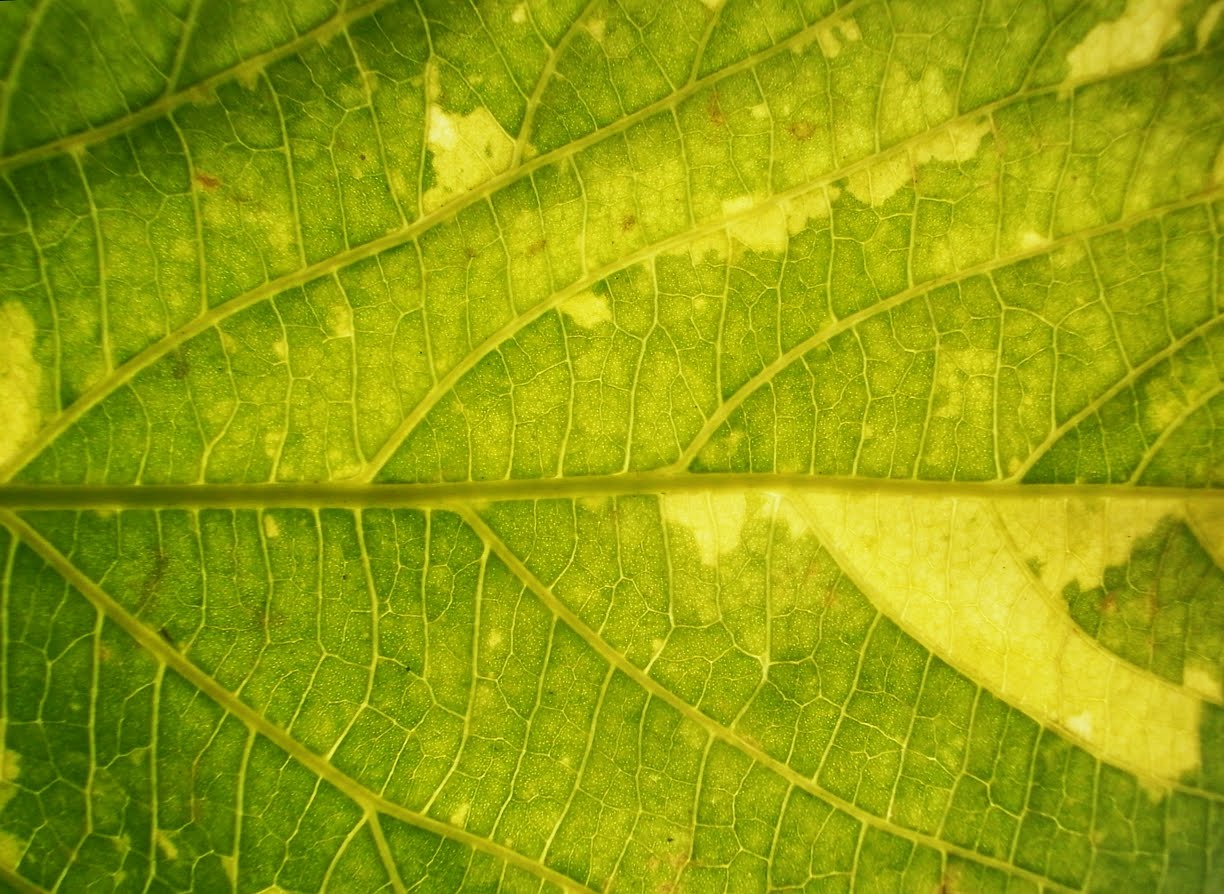
[Exceptionally] Pretty pictures: transmitted light -- Part LII

My last surviving grandparent died last week. This both was and was not a big deal, and consumed enough of my week that I was unable to work much on the blog, so posting will probably be light for a while until I can catch up.

Funerals remain horrible things that are not remotely consoling. I really have no idea why anyone would ever want one.1 There was more family politics involved with this one than with the other three grandparent funerals, about which I have Feelings, but this is probably not the place to describe those. Let's just say that I like the deceased less now than I did three months ago.2

While we wait for me to get new posts together, here is another batch of transmitted light photos.

(The previous transmitted light posts can be found here.)

Cordyline fruticosa.

Pilea nummulariifolia.

Solanum lycopersicum NOID.

Dracaena reflexa 'Riki.'

Acalypha wilkesiana cv.

Polyscias scutellaria.

Ctenanthe lubbersiana. (This one is probably my favorite from the set.)

Stapelia gigantea, petal.

Begonia NOID.

Quercus sp., autumn.

-

1 I can appreciate the value of bringing the whole extended family together, because that part is actually kind of pleasant. (If you like your extended family, anyway.) I can appreciate doing something special to give everyone some kind of closure. But, well.
Let's say somebody steals your car, but leaves a note behind telling you that they stole your car for a really, really good reason, a reason they decline to provide any specifics about. And then let's say that everyone you talked to about how your car was stolen immediately reacts with oh, that's too bad, but I'm sure they had a good reason for taking it, and well, you'll probably see the car again sometime, like on the street or something, right?, and how about we drone some songs at 1/4 speed about how awesome your car thief was: whaddya say? And you're all like, but I don't really want to sing about how awesome the car thief is, 'cause the fucker, you know, stole my car, and they're like but you have to sing, everybody's going to be expecting you to sing, if you don't sing then people are going to be upset.
This is what religious funeral services feel like to me, except more so, because people are more valuable than cars.
2 So in a roundabout way, I suppose the funeral was successful in making me feel less bad about the loss. Though I don't think that's how funerals are supposed to achieve that feeling.