Showing posts with label Begonia. Show all posts

Sunday, December 1, 2013

[Exceptionally] Pretty pictures: transmitted light -- Part LII

My last surviving grandparent died last week. This both was and was not a big deal, and consumed enough of my week that I was unable to work much on the blog, so posting will probably be light for a while until I can catch up.

Funerals remain horrible things that are not remotely consoling. I really have no idea why anyone would ever want one.1 There was more family politics involved with this one than with the other three grandparent funerals, about which I have Feelings, but this is probably not the place to describe those. Let's just say that I like the deceased less now than I did three months ago.2

While we wait for me to get new posts together, here is another batch of transmitted light photos.

(The previous transmitted light posts can be found here.)

Cordyline fruticosa.

Pilea nummulariifolia.

Solanum lycopersicum NOID.

Dracaena reflexa 'Riki.'

Acalypha wilkesiana cv.

Polyscias scutellaria.

Ctenanthe lubbersiana. (This one is probably my favorite from the set.)

Stapelia gigantea, petal.

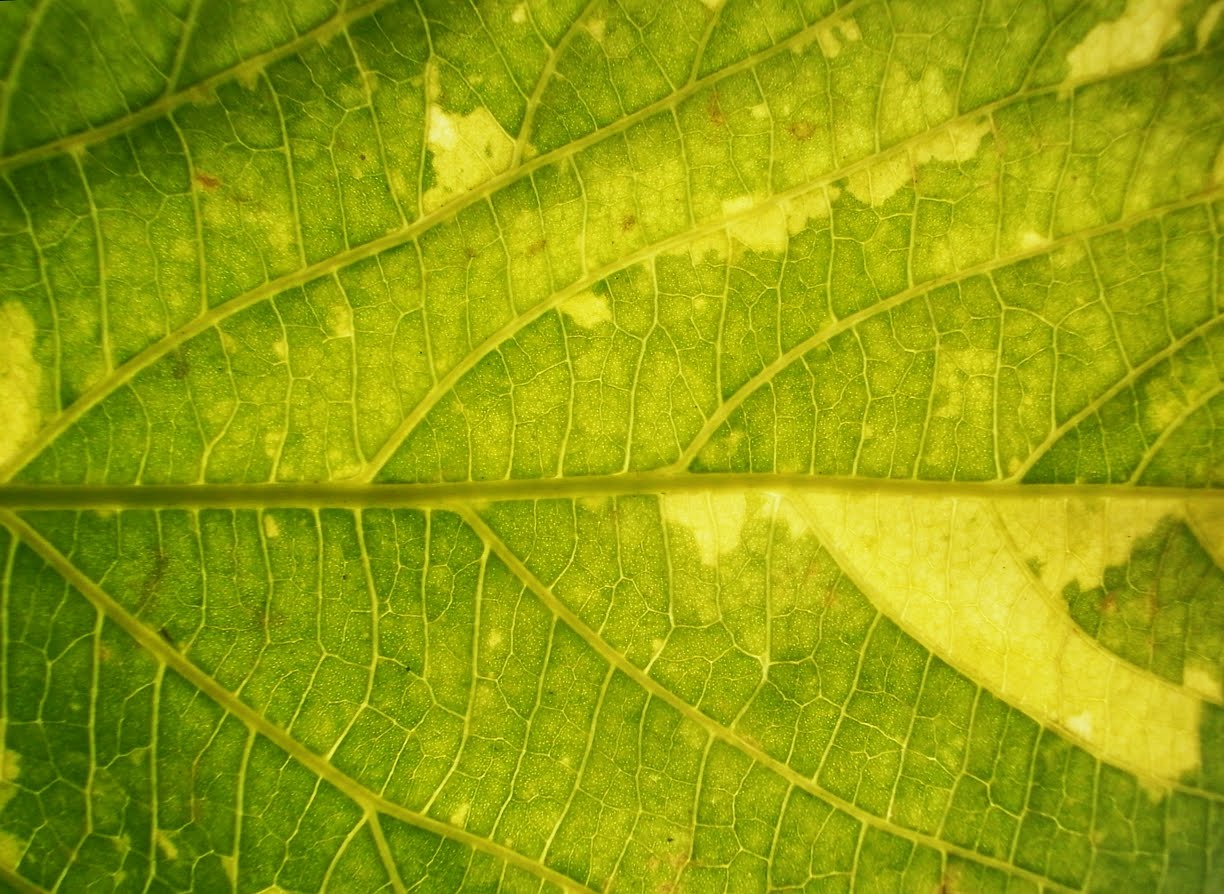
Begonia NOID.

Quercus sp., autumn.

-

1 I can appreciate the value of bringing the whole extended family together, because that part is actually kind of pleasant. (If you like your extended family, anyway.) I can appreciate doing something special to give everyone some kind of closure. But, well.
Let's say somebody steals your car, but leaves a note behind telling you that they stole your car for a really, really good reason, a reason they decline to provide any specifics about. And then let's say that everyone you talked to about how your car was stolen immediately reacts with oh, that's too bad, but I'm sure they had a good reason for taking it, and well, you'll probably see the car again sometime, like on the street or something, right?, and how about we drone some songs at 1/4 speed about how awesome your car thief was: whaddya say? And you're all like, but I don't really want to sing about how awesome the car thief is, 'cause the fucker, you know, stole my car, and they're like but you have to sing, everybody's going to be expecting you to sing, if you don't sing then people are going to be upset.
This is what religious funeral services feel like to me, except more so, because people are more valuable than cars.
2 So in a roundabout way, I suppose the funeral was successful in making me feel less bad about the loss. Though I don't think that's how funerals are supposed to achieve that feeling.


Saturday, March 23, 2013

Saturday morning Sheba and/or Nina picture

I know a lot of y'all hate snow, but I am going to miss it so much when it's gone. I'm not a fan of slush, of course, because . . . well, I don't think I need to defend that, because who likes slush? And I acknowledge that snow is dangerous to walk or drive on, and that it's frequently accompanied by unpleasant cold, and all that. But snow is just so neat.


This particular snowfall happened on 18 March, and was an unusually heavy, sticky, wet snow. Not my favorite type, necessarily, but I'm happy to take anything. (It was gone within a couple days anyway.) It's looking like Eastern Iowa may be clawing its way out of last summer's drought, though officially we are are still "abnormally dry" and a couple inches short of normal. Our long-term forecast for this spring is warm and wet, which potentially means thunderstorms and tornadoes, my other favorite kind of weather, so I'm keeping my fingers crossed.

I suppose I should probably mention the dog in the photo at some point.

Sheba's doing fine. The ear infection went on forever, but seems to have cleared up finally. Or at least her ear doesn't smell terrible anymore. Hopefully those are the same thing.

She's still getting hot spots, off and on. This is irritating to all three of us, but it doesn't seem to have much to do with whether or not she's taking the Benadryl, and in any case it's been harder to convince her to take them. So long as it's just one, every once in a while, I think we're all just going to have to live with it. Everything else seems to be fine.

Nina says hello. The terrarium is still in shambles from the last batch of crickets, and it looks like possibly the Episcia is on its way out, but it's been clear for a while that eventually the terrarium was going to fill up with Begonia 'Tiger Kitten,' so this isn't the most surprising thing in the world.

*

EDIT: I have elected not to completely disable anonymous commenting for the moment; instead we're going to go with captchas for a while, to see how much that cuts down on the spam comments (if at all). Or at least that's the plan. One of the quirks of Blogger is that I apparently can't see the captchas when signed in, so I'm not sure whether that's actually happening now or not.

If the captchas don't solve the problem, then we'll move on to disabling anonymous commenting entirely, but hopefully this will be enough.


Saturday, March 9, 2013

Unfinished business: various

As I predicted, the Cryptbergia seeds (or at least "seeds" -- I'm not sure we ever definitively proved seediness) have all failed, due to some combination of fungus and incompetence. Womp-womp.


Not much else is going on here, really, which I guess makes it a good time to look through the back posts and see if I have any updates about them. All these are from September 2012; turns out there were no posts in October or November that require follow-ups.


Saturday morning Sheba and/or Nina picture, with bonus Question for the Hive Mind (1 Sep 2012)

Nothing ever came of the Canna seed. Not really surprised by this, though. More surprising: the Begonia 'Tiger Kitten' has more or less completely taken over the terrarium. I think this is mostly because it's more drought-tolerant than the Episcia 'Coco' was. (I have a tough time knowing when to water the terrarium, because it's less convenient to actually touch the soil, and every time I open the lid I'm convinced that Nina is going to take that opportunity to jump out and run into the living room, where Sheba will eat her. So I don't open the top very much.) The Peperomia puteolata is still present, as is the Murraya paniculata seedling, but overall, it's kind of a mess. And I sort of wish that the crickets didn't eat the plants so enthusiastically. I mean, I understand: they're crickets. It's what they do. But it's just depressing, with all the dead leaves, holes, ragged edges, and what have you. Perhaps I am not emotionally stable enough to keep anoles in a planted terrarium.


Random plant event: Sansevieria cylindrica (4 Sep 2012)

It's taken a while, but the third leaf is now slightly bigger than the second.

Sansevieria cylindrica.

Come back in late 2016 and I may have a fourth leaf to show you. CAN YOU HANDLE THE EXCITEMENT.1


Random plant event: Rhipsalis NOID (12 September 2012)

The Rhipsalis seedlings are still alive, and are slightly larger than they used to be. This is neither unusual nor unexpected, but it's a thing that happened. I wound up potting all the surviving seedlings into two pots together, because it seemed like they were likely to give me a really sparse, uninteresting plant if I didn't put several of them together, and also because it wasn't clear how many of them were going to survive. (As far as I can recall, though, all the seedlings that made it out of the vermiculite have survived in soil, and possibly I should have just started them in soil to begin with.)


Random plant event: Zamioculcas zamiifolia 'Zamicro' (19 Sep 2012)

I wasn't expecting this, but so far, 'Zamicro' actually has turned out to be easier for me to grow than the species. I suspect that this is not actually about the cultivar so much, and has more to do with these getting better watering and light (the species plants I've started from leaflets also did well in similar conditions, until they were transplanted), but who can really say.


For now, they seem to be happy in their little 4-pack cells, and I'm inclined to leave them there for as long as that seems to be working out. Whenever I do have to transplant, I'm going to take the advice of Steve Lucas at Exotic Rainforest and make an especially sandy and fast-draining soil for them. I am more or less convinced that this Zamioculcas-growing secret I've been missing.

-

1 NO YOU CANNOT HANDLE THE EXCITEMENT.


Tuesday, March 5, 2013

Ten(-ish) Things I Have Mistaken for Scale

So we're in the fifth week of checking all the plants in the basement weekly (on the east and south sides) or every second week (on the west). I'm not finding many actual pests anymore, for two reasons:

The first reason is that there's just not that much to find anymore, since any plants with obvious, easy to see infestations were already thrown in the trash.1 The second is that I'm not looking as hard, because it's extremely time-consuming and tedious to do, and I'm tired of it.

As a result, almost every scale insect I've seen lately has been a false positive of one kind or another. And there are many kinds. So here is a list of ten things I have managed to mistake for scale in the last five weeks:

1. Scars -- on everything. Oh my god. You've never imagined how many little tan corky spots there are on the leaves, petioles, and stems of your plants until you've had to check each one individually to see whether it rubs off. And of course there's no way to actually remove them, because they're part of the plant, so I wind up checking the same scars over and over, week after week. This is far and away the largest and most irritating category of false positives.

Multiple scars on Epipremnum aureum 'Neon.'

Leaf scar on Manfreda undulata 'Chocolate Chips.'

Not actually sure what this thing on a NOID Cryptanthus is, but I think it's either edema, a scar, or edema that became a scar.

Multiple irregular scars on the back of a Begonia x 'Erythrophylla' leaf.

Scars from thrips (?) on one of the Anthurium seedlings.


2. Dots of dried sap -- they're generally the wrong color to be scale, but the size and shape are close, so they have to get checked out anyway. Arguably a subcategory of scars, though distinct because dried sap rubs off. (Usually.)

Dried sap on Euphorbia trigona.

And on Hoya something. (Sold as H. kentiana, probably actually H. wayetii.)


3. Marginal burn, tip burn -- It doesn't happen a lot, but sometimes when a leaf is burnt in just the right way, the dead spot looks like a scale insect hanging right on the edge or tip of the leaf. Since the actual insects tend to congregate around the spot where the petiole attaches to the leaf, on and along the midrib and other major veins, this isn't terribly confusing, but it happens.

The margin spots on this variegated Yucca guatemalensis didn't make it through the recoloring / cropping process in very good shape, but they're there, along with a more obvious scar in the center of the leaf.


4. Aerial roots -- the shape is often not quite right, but when they're first developing, some aerial roots are small, oval, and tan. Best distinguished from scale by the facts that they don't wipe off and that they're pointy.

Aerial roots on a somewhat unhappy Selenicereus anthonyanus.2

Roots forming on a Stapelia gigantea stem.


5. Dirt -- dirt gets splashed all over when I water, so some of it ends up on the leaves and stems. Because there's no wind in the basement to blow it off, it stays attached. The irregular shape usually gives it away, but some pieces of bark are rounded enough to be momentarily alarming, and vermiculite is about the right color, so this is occasionally a problem.

A tiny fleck of potting mix on an Aglaonema 'Peacock' leaf.

A couple bits of dirt on an Anthurium seedling.


6. The natural coloration of the plant -- some plants just naturally have lots of little bumps or brown spots or whatever. In most of these cases, I've either given up on checking altogether because it's impossible, or the plant got scale a long time ago and has been thrown out. Aerial roots is technically a subdivision of natural coloration, now that I think about it, but it's so common and specific it probably deserves a separate entry anyway.

Close-up of a Ficus microcarpus stem, showing peeling bark, aerial roots, and a bunch of other random stuff.

Some of this Schefflera actinophylla's brown spots, if not all of them, are capable of becoming aerial roots if the air is sufficiently humid, but usually they just expand to form bark.


7. Edema -- again, bumps due to edema are usually irregularly shaped, so I don't have to resort to the squish test, but this has still happened plenty of times.

Surprisingly bad edema on a Billbergia nutans leaf, probably because I moved it into a bigger pot and then set it in front of a cold window.


8. Spiders -- only once, but still.


9. Mineral deposits -- parts of the plants that are in contact with the soil will sometimes get a tan, crusty mineral buildup which can resemble a big infestation of closely-spaced scale. Hatiora salicornioides seems to be especially prone to this, but I also see it on Anthurium quite a lot.

Mineral crust on Hatiora salicornioides.


10. Hallucinations -- and occasionally I just straight-up see things that aren't there. Which is usually a sign that I should take a break.

-

1 The last few scale insects I've found also appeared to be dead already. Or at least they were really, really tired, being flat and dried out and crunchy. One hopes that this has something to do with the imidacloprid.
Although thrips aren't really the focus of the post, for readers who are curious: the thrips are still around, here and there, and when I see them they're generally alive. I'm only finding them in a particular fairly narrow section of the basement shelves, though, and I didn't find any last week, so this is maybe progress. I also got my first thrips photos -- none are very good, but they're an improvement over no photos at all:
The thrips in question was photographed on notebook paper (hence the blue line in the top image), through a tiny magnifying glass lens, if this gives you any sense of the size.
2 I have two Selenicereus anthonyanus plants, one in the basement and one in the plant room, and neither one has ever seemed very happy to be here. Mostly they just don't grow very fast, and the new growth is thin. Likely a light issue, but I don't have any better spots available.
It's weird, because Selenicereus chrysocardium is fine in very similar spots. I don't know what's wrong.


Tuesday, October 2, 2012

Five Plants I'm Not Currently Mad At (A through G)

Just before bringing all the plants inside for the winter, I spent about a week trying to get some updated photos. Though a tedious and exhausting process, which is still not over yet (I'm still cropping and color-editing, etc.), I've made enough progress editing the new crop of photos that I can start posting a few of them.

This has been a terrible year for the plant collection, mostly because of the whole scale thing, but also in terms of just having accumulated too many plants to comfortably care for. Consequently, I've spent a lot of time being frustrated and angry, which is hard on me and the plants both, which you already know. In an attempt to make myself feel a little better about things, here are five plants that aren't upsetting me lately and have been here long enough that they could have upset me, if they'd really wanted to. This is just what was in the first part of the alphabet: I'm only up to the Gs on the photo-editing. Also, I'm trying to focus on stuff I haven't talked about lately. So, Coffea arabica is doing wonderfully for me, but it's not on the list because you've seen it a lot this year already (here, here, and here).


1. Cryptbergia x rubra

Date: September 2012.
Pot size: 6" / 15 cm.

The color, it's true, is not as strong as it was when I first got the plant:

Date: August 2010.
Pot size: 4" / 10 cm.

Presently I have it in an east window, which isn't strong enough light to maintain the color, but it's at least alive, it's grown a lot, and it's not been any trouble so far. The care is basically the same as for most of my plants: I water every couple weeks, giving it a good flushing and then splashing some fertilizer on top (probably not the ideal way to fertilize, but nothing about my setup is ideal). No pests in two years; hopefully that will continue. It gets whatever temperature and humidity is prevailing in the living room at any given moment.

It's offsetting a little bit, true to the Billbergia side of the family, but I haven't yet tried to propagate it yet.


2. Ctenanthe burle-marxii

Date: September 2012.
Pot size: 6" / 15 cm.

(As above.)

I may never actually know what the real name for this plant is: I've seen it Ctenanthe burle-marxii and Stromanthe burle-marxii, as well as assorted other ways (as a cultivar name 'Burle Marx,' with or without the hyphen, occasionally identified as a Calathea, etc.). Whatever it is, it seems to like it here.

Date: April or May 2009.
This is the original specimen; it wasn't potted up until after it outgrew the terrarium.

For something from the Marantaceae, this is damn near miraculous, actually. Not only is there this plant in the 6-inch pot, but I have seven others in 4-inch pots, all created from divisions of the original.

Care is pretty much the usual: water every two weeks, prevailing humidity and temperature. It gets artificial light, down in the basement, which is surprisingly adequate. There may have been minor spider mite problems once a while ago, but minor spider mite problems are extremely small potatoes now, now that I have the scale outbreak for perspective. The only issue I've had with it is, after a certain point, they do get sort of rootbound, and when they're rootbound, they dry out more than they should between waterings. I don't think I've ever lost a plant to that, but the leaves curl up and eventually dry and fall off. Of course, once that starts happening, you only need to up-pot or divide the plant and then everything's good again.


3. Euphorbia NOID (maybe E. ingens?)

Date: September 2012.
Pot size: about 7" / 18 cm.

It's not that this one's so amazing, exactly, as that this has been a bad year for my Euphorbias specifically: I have fungus problems on E. drupifera, half of the E. miliis, and E. bougheyi variegata. The E. tortilis, E. flanaganii, E. pseudocactus, and E. grandicornis have all etiolated and look sad. E. lactea fell over and severed an arm. And so on. It's not a complete disaster: a different NOID, E. ammak, multiple E. trigonas, and multiple E. tirucallis are all doing well. But as a group, it's been a bad year for the genus.

This one bucked the general trend; it hadn't been seeming like a very good idea until this summer. For one thing, it hadn't grown at all, in more than a year. This summer, it got to go outside, which is apparently what it had been waiting for all along -- it's not a huge amount of new growth, but it's something. (Everything above the constrictions near the top of the stems is new as of this summer.) I'm assuming that similar growth happened below the soil line -- when I first bought it, I checked to see if it needed a bigger pot, and not only did it not need a bigger pot, but the plants were barely even rooted.

Date: January 2011.
Pot size: about 8" / 20 cm.

Aside from being unresponsive, it's been an okay plant. No rot, no bugs, no problems. I had it in a west window previously, this being the best I could do. Having seen what it's capable of if properly motivated, I've now given it a spot in the small south window in the living room. When it was indoors before, it had been getting water every two or four weeks, depending on how quickly it seemed to be drying out. No special considerations for temperature or humidity. I haven't tried to propagate it yet, obviously (you can see from the photo that it hasn't been cut at all), but at least it's trying to get along, which is more than I can say for some Euphorbias.


4. Begonia 'Puffy Clouds'

Date: September 2012.
Pot size: about 4.5" / 11.5 cm.

'Puffy Clouds' and I have never gotten along all that well, probably because I wasn't giving it enough light -- for most of the time I've had it, it only got artificial light, and probably not as much of it as it wanted -- but things have been better since it got moved to an east window in the living room.

Date: August 2010. This is what it looked like when it got here, but I cut it back (and tried unsuccessfully to propagate it) almost immediately. Also a stem or two resprouted and then died before I had the sense to move the plant, leading to the current picture.
Pot size: 4" / 10 cm (diagonal).

I'm not saying I love it even now, but I'm appreciating Begonias a lot more than I used to. (In retrospect, starting with B. rex-cultorum varieties was probably the worst possible way to get reacquainted with the genus.) I'm optimistic that the recent strong growth will continue. Worse things could happen.

It's been getting the standard care: water every two weeks (which is probably not quite often enough), a little splash of fertilizer along with the water, light from an east window, and the temperature and humidity that everyone else is getting. To its credit, everything that's ever been wrong with B. 'Puffy Clouds' has been my fault: the plant itself seems easy-going enough if you don't torture it.


5. Ficus lyrata

Date: September 2012.
Pot size: 10" / 26 cm.

And, finally, Ficus lyrata. Nobody ever seems to be that into F. lyrata. I mean, the books all dutifully mention it, and they're for sale often enough that I don't think I'd have much trouble finding one to buy, but I never hear anybody saying that it's their favorite plant. Hell, I never hear anybody saying they think F. lyrata is even nice or interesting or anything like that, unlike F. elastica, F. binnendijkii, or F. benjamina.

And yet, you know, F. lyrata is not that bad. A little goofy-looking, perhaps, but the leaves get huge, it's been, if anything, a little easier for me than F. elastica (though weirdly not as easy as F. benjamina, which I'm also appreciating a lot more these days than I ever thought I would), and there've never been any huge problems. Every now and then a leaf clunks to the floor, and I apparently had mealybugs on it once, though I no longer remember that happening. (It's mentioned in this post.) That's about it.

Date: November 2007.
Pot size: 6" / 15 cm?

It's got a spot near the living room south window, where it doesn't really get much actual sunlight, but it makes do. I water every 2 or 4 weeks, depending on how fast it's dried out -- to the plant's credit, it doesn't seem to be particularly shaken if I make it wait a little longer than it would like. It's only been repotted once, so it's probably pretty rootbound, but I've been hesitant to move it up again because I'm not sure I want to encourage it -- at some point, it's going to be too big to fit inside the house, and I suppose that's when I'm going to have to learn how to air-layer.


Other plants that aren't making me angry at the moment:

Agave americana 'Medio-picta alba'
Agave lophantha 'Quadricolor'
Agave victoriae-reginae
Aglaonema 'Cory'
Aloe NOID which might be 'Blue Elf'
Ananas lucidus
Anthurium NOID (red-violet flower)
Araucaria bidwillii
Asplundia 'Jungle Drum'
Begonia, NOID cane-type
Begonia x erythrophylla
Billbergia nutans
Browningia hertlingiana
Ceropegia woodii, variegated
Chamaedorea metallica
Coffea arabica
Crassula perforata var. falcata
Dracaena deremensis 'Janet Craig Compacta'
Dracaena fragrans 'Sol'
Epipremnum aureum 'N'Joy'
Episcia 'Coco'
Episcia 'Suomi'
Euphorbia ammak
Euphorbia NOID (the one I refer to as "E. kokopelli")
Euphorbia tirucalli 'Firesticks'
Euphorbia trigona
Ficus benjamina 'Margarita'
Ficus benjamina, NOID variegated

That isn't necessarily an exhaustive list, within the A-G section of the alphabet; those are just the ones I happened to have taken pictures of and that I've been finding generally pleasing lately.


Saturday, August 18, 2012

Saturday morning Sheba and/or Nina picture

I'm not planning to bring back the Saturday pet pictures as a weekly thing -- it winds up being a lot more work than you'd think -- but it's been a long time, so.


Nina's been fine. Or at least she's been fine as far as I know: sometimes it's hard to tell.

Post-replanting, some plants have done well, and others haven't. The Episcia 'Coco' has been happy, as you can see, though the crickets do nibble at it (hence the hole in the leaf in the bottom left of the picture).

The Murraya paniculata is in decent shape, too; the crickets leave it alone, and it's produced a little bit of new growth. I'm a little concerned that the terrarium may not get enough light to keep the Murraya happy, though.

The Begonia 'Tiger Kitten' has had a more mixed response: the stuff on one side (labeled 1 and 2 in the photo at the above link) has been growing well, and is producing a lot of new growth; the stuff on the other side (6 and 7) has died. One of those (I think #6) was basically completely devoured by the crickets, who prefer Begonia to Episcia. I'm not sure what happened to the other one.

The Ctenanthe burle-marxii (3) that I was sure would do fine was the first plant to die, and I'm not sure what happened to it. I might try to replant it, since I do have others, but I also might take this as a sign and leave it open, or try a different plant. I may have Aglaonema 'Peacock' cane segments rooted in a little while; that's probably the leading candidate if I decide not to replace the Ctenanthe.


Sheba, meanwhile, has been having another round of allergies, worse than those in the spring. We did have the vet look at her (we were there anyway for the annual Bordetella shot), and he said he thought it was just allergies, and that we should get her 25 mg of Benadryl twice a day if this continued, and that would probably take care of everything. Which was fine, but then we didn't immediately run out and buy the Benadryl, because this had gone away on its own previously without any intervention. So Sheba's gotten noticeably more uncomfortable (as of Tuesday, when I'm writing this), but we're working on it. A large part of the issue might be that it's ragweed season, and I've just found out that the husband has been walking her near weedy areas. I mean, not that the pollen doesn't get everywhere, but we might be able to limit her exposure a little bit.


Saturday, June 16, 2012

Saturday morning Sheba and/or Nina picture

They said it would never happen. Some even said it couldn't be done. But I've done it: I cleaned and replanted Nina's terrarium.

She got part of a strawberry as a house re-warming gift, though as far as I could tell she didn't actually eat any of it.

Gone is the Pellionia pulchra. It grew well, it handled drought like a champ, but it choked out everything else, and eventually started choking out itself, even. So behold the next crew:


1: Murraya paniculata (seedling)
2, 4, 6, and 7: Begonia 'Tiger Kitten' cutting (4) and rooted leaves (2, 6, 7)
3: Ctenanthe burle-marxii
5: Episcia 'Coco'

The Ctenanthe has lived with Nina before, and did awesomely; I'm less sure about the other plants. They should all be fine in a terrarium, but I don't know if they'll be fine with the transplanting (which was kind of rough on the Begonias in particular) or the inevitable cricket-nibbling. There's also some danger that the Episcia and Ctenanthe may grow fast enough to crowd out the other plants. It's not even a particularly hypothetical danger, since that's basically what the Ctenanthe did the last time it was in the terrarium.

But we'll worry about all that other stuff later: right now all I care about is that I actually got it cleaned up, after many months of procrastinating, and consequently should be able to enjoy several guilt-free months before I have to do it again. It's surprising how much of a load off my mind that is.


Thursday, January 26, 2012

List: PATSP All-Stars

"All-Stars" are those plants for which:

1) I have had at least one specimen, continuously, for at least three years,

2) which is still living,

3) and looks as good as, or better than, it did when first acquired, plus:

4) no specimen has ever had spider mites, scale, mealybugs, thrips, aphids, whitefly, cyclamen mites, or fungus (Fungus gnats are excluded, because fungus gnats don't do enough damage to the plants to count as pests, and it's often difficult to tell what plant they're residing in anyway.),

5) no established specimen has ever gone into an abrupt and irreversible decline (new cuttings/divisions/offsets may still do so, 'cause that's part of the process of getting established), and

6) the plant has been successfully propagated,

7) more than once.

I have something in the neighborhood of 400-450 distinct kinds (species / subspecies / cultivars / hybrids) of plants in the house right now, and I don't have any idea how many other kinds of plants I've attempted to grow in the past, but I figure it has to be at least a couple hundred. Out of all those, a mere nineteen meet the above criteria at the moment.

(NOTE: The pictures which follow are not necessarily of the original plant nor particularly current; even those photos which are of the original plant and current may not impress, because looking better than when the plant originally came to live here is a lower bar to clear for some of the plants than it is for others. Also the Philodendron hederaceum 'Brasil' picture isn't even of my own plant.)

Aloe 'Walmsley's Blue.'

Anthurium 'Gemini.'

Anthurium 'Orange Hot.'

Begonia NOID, rhizomatous type.

Chlorophytum x 'Fire Flash.'

Dracaena fragrans 'Massangeana.'

Gasteraloe x beguinii. (Aloe aristata x Gasteria batesiana)

Nematanthus 'Tropicana.'

Peperomia obtusifolia, variegated.

Philodendron hederaceum, chartreuse version. (Possibly 'Aureum' or 'Lemon-Lime;' I've never had an official cultivar name.)

Philodendron hederaceum 'Brasil' or 'Brazil.'

Philodendron hederaceum micans.

Sedum morganianum.

Sedum rubrotinctum.

Synadenium grantii (green version).

Syngonium podophyllum NOID (possibly 'Neon').

Yucca guatemalensis, gray version.

Yucca guatemalensis, green version.

Yucca guatemalensis, yellow-margined version.


I don't know whether this would be useful information to anybody else, but there it is. Ordinarily with the List posts, I recommend three good ones and warn against one, but these are obviously all recommended, so we'll skip that part.

What are your All-Star plants, according to the above criteria?

-


Honorable mentions:

Honorable mentions are those which meet 6 of the 7 criteria. Depending on their reason for disqualification, some of these may move into the All-Star list eventually.
  • Aechmea fasciata (only one successful propagation)
  • Agave desmettiana (?), variegated (have only had ~1 1/2 years)
  • Agave victoriae-reginae (one's been here 4 1/2 years but never propagated; the other's been propagated more than once but has only been here for 2 years)
  • Aloe NOID, possibly 'Blue Elf' or A. x humilis (have only had 2 years)
  • Anthurium NOID w/ purple flowers (original is not as attractive as when first brought home)
  • Anthurium 'Pandola' (have only had ~2 1/2 years)
  • Begonia NOID cane-type (only one successful propagation)
  • Begonia x 'Erythrophylla' (have only had for 7 months)
  • Breynia disticha 'Roseo-Picta' (has had spider mites)
  • Codonanthe serrulata (have only had for 8 months)
  • Columnea microphylla (have only had for 8 months)
  • Echeveria coccinea (have only had 1 1/2 years)
  • Ficus elastica (has had spider mites)
  • Ficus microcarpa (has had spider mites)
  • Furcraea foetida 'Medio-Picta' (have only had for ~2 1/2 years)
  • Guzmania cv. (original is not attractive)
  • Hatiora salicornioides (has had spider mites)
  • Haworthia attenuata (specimens have abruptly declined)
  • Hoya carnosa 'Chelsea' (only one successful propagation)
  • Hoya carnosa 'Krimson Princess', solid-green revert (have not propagated >1 time)
  • Justicia scheidweileri (have only had 1 1/2 years)
  • Murraya paniculata (only one successful propagation)
  • Nematanthus NOID, orange-yellow flowers (specimens have abruptly declined)
  • Nematanthus NOID, orange flowers (have only had 2 1/2 years)
  • Pandanus veitchii, variegated (specimens have abruptly declined)
  • Peperomia pereskifolia (original plant got chopped back severely for propagation, so it doesn't look as good as it did initially)
  • Philodendron erubescens (?) 'Golden Emerald' (have only had 2 1/2 years)
  • Sansevieria trifasciata 'Hahnii' (have only had about 2 1/2 years)
  • Selenicereus chrysocardium (have had about 2 1/2 years)
  • Solenostemon scutellarioides 'Tilt-a-Whirl' (has only been an official plant for less than one month; have likely owned for less than a year but I'm not actually sure when I got it)
  • Synadenium grantii, red/purple version (have only had for 1 1/2 years)
  • Tradescantia pallida (original plant has been restarted repeatedly, and at the moment does not look better than it did when new)
  • Tradescantia zebrina (original plant is not attractive)
  • Zamioculcas zamiifolia (specimens have abruptly declined)