Showing posts with label Nematanthus. Show all posts

Thursday, January 26, 2012

List: PATSP All-Stars

"All-Stars" are those plants for which:

1) I have had at least one specimen, continuously, for at least three years,

2) which is still living,

3) and looks as good as, or better than, it did when first acquired, plus:

4) no specimen has ever had spider mites, scale, mealybugs, thrips, aphids, whitefly, cyclamen mites, or fungus (Fungus gnats are excluded, because fungus gnats don't do enough damage to the plants to count as pests, and it's often difficult to tell what plant they're residing in anyway.),

5) no established specimen has ever gone into an abrupt and irreversible decline (new cuttings/divisions/offsets may still do so, 'cause that's part of the process of getting established), and

6) the plant has been successfully propagated,

7) more than once.

I have something in the neighborhood of 400-450 distinct kinds (species / subspecies / cultivars / hybrids) of plants in the house right now, and I don't have any idea how many other kinds of plants I've attempted to grow in the past, but I figure it has to be at least a couple hundred. Out of all those, a mere nineteen meet the above criteria at the moment.

(NOTE: The pictures which follow are not necessarily of the original plant nor particularly current; even those photos which are of the original plant and current may not impress, because looking better than when the plant originally came to live here is a lower bar to clear for some of the plants than it is for others. Also the Philodendron hederaceum 'Brasil' picture isn't even of my own plant.)

Aloe 'Walmsley's Blue.'

Anthurium 'Gemini.'

Anthurium 'Orange Hot.'

Begonia NOID, rhizomatous type.

Chlorophytum x 'Fire Flash.'

Dracaena fragrans 'Massangeana.'

Gasteraloe x beguinii. (Aloe aristata x Gasteria batesiana)

Nematanthus 'Tropicana.'

Peperomia obtusifolia, variegated.

Philodendron hederaceum, chartreuse version. (Possibly 'Aureum' or 'Lemon-Lime;' I've never had an official cultivar name.)

Philodendron hederaceum 'Brasil' or 'Brazil.'

Philodendron hederaceum micans.

Sedum morganianum.

Sedum rubrotinctum.

Synadenium grantii (green version).

Syngonium podophyllum NOID (possibly 'Neon').

Yucca guatemalensis, gray version.

Yucca guatemalensis, green version.

Yucca guatemalensis, yellow-margined version.


I don't know whether this would be useful information to anybody else, but there it is. Ordinarily with the List posts, I recommend three good ones and warn against one, but these are obviously all recommended, so we'll skip that part.

What are your All-Star plants, according to the above criteria?

-


Honorable mentions:

Honorable mentions are those which meet 6 of the 7 criteria. Depending on their reason for disqualification, some of these may move into the All-Star list eventually.
  • Aechmea fasciata (only one successful propagation)
  • Agave desmettiana (?), variegated (have only had ~1 1/2 years)
  • Agave victoriae-reginae (one's been here 4 1/2 years but never propagated; the other's been propagated more than once but has only been here for 2 years)
  • Aloe NOID, possibly 'Blue Elf' or A. x humilis (have only had 2 years)
  • Anthurium NOID w/ purple flowers (original is not as attractive as when first brought home)
  • Anthurium 'Pandola' (have only had ~2 1/2 years)
  • Begonia NOID cane-type (only one successful propagation)
  • Begonia x 'Erythrophylla' (have only had for 7 months)
  • Breynia disticha 'Roseo-Picta' (has had spider mites)
  • Codonanthe serrulata (have only had for 8 months)
  • Columnea microphylla (have only had for 8 months)
  • Echeveria coccinea (have only had 1 1/2 years)
  • Ficus elastica (has had spider mites)
  • Ficus microcarpa (has had spider mites)
  • Furcraea foetida 'Medio-Picta' (have only had for ~2 1/2 years)
  • Guzmania cv. (original is not attractive)
  • Hatiora salicornioides (has had spider mites)
  • Haworthia attenuata (specimens have abruptly declined)
  • Hoya carnosa 'Chelsea' (only one successful propagation)
  • Hoya carnosa 'Krimson Princess', solid-green revert (have not propagated >1 time)
  • Justicia scheidweileri (have only had 1 1/2 years)
  • Murraya paniculata (only one successful propagation)
  • Nematanthus NOID, orange-yellow flowers (specimens have abruptly declined)
  • Nematanthus NOID, orange flowers (have only had 2 1/2 years)
  • Pandanus veitchii, variegated (specimens have abruptly declined)
  • Peperomia pereskifolia (original plant got chopped back severely for propagation, so it doesn't look as good as it did initially)
  • Philodendron erubescens (?) 'Golden Emerald' (have only had 2 1/2 years)
  • Sansevieria trifasciata 'Hahnii' (have only had about 2 1/2 years)
  • Selenicereus chrysocardium (have had about 2 1/2 years)
  • Solenostemon scutellarioides 'Tilt-a-Whirl' (has only been an official plant for less than one month; have likely owned for less than a year but I'm not actually sure when I got it)
  • Synadenium grantii, red/purple version (have only had for 1 1/2 years)
  • Tradescantia pallida (original plant has been restarted repeatedly, and at the moment does not look better than it did when new)
  • Tradescantia zebrina (original plant is not attractive)
  • Zamioculcas zamiifolia (specimens have abruptly declined)


Thursday, October 27, 2011

List: Green-Leaved Plants With Red or Purple Undersides

I could have sworn that I'd read that leaves with red or purple undersides are an adaptation by understory-dwelling plants to collect more light. Damned if I can find a source to back me up, though: Google failed me completely. I checked some of my books, too. So maybe that's not true. Most of these do appear to be understory plants, though, whatever the reason for their pigmentation.

Alpinia luteocarpa (bamboo ginger)1.

Calathea roseopicta 'Medallion.' I think.

Cissus discolor (begonia vine).

Cyanotis kewensis (teddy bear plant).

Excoecaria cochinchinensis (Chinese croton).

Hemigraphis exotica (purple waffle plant).

Nematanthus NOID (guppy plant).

Philodendron hederaceum micans (heart-leaf philodendron).

Selaginella erythropus cv. (red spike moss)

Tradescantia spathacea. (oyster plant, Moses in the cradle)


Making recommendations from this batch of plants is pretty easy, since there are only four plants on the list that I've had good experiences with (Cyanotis, Nematanthus, Philodendron, Tradescantia).

Of those four, Philodendron hederaceum micans is far and away the easiest; it's an adaptable, flexible plant that will survive a fair amount of abuse while still looking good. Tradescantia spathacea is next: it's a perfectly nice plant, and also very tolerant, but it won't develop the purple coloration without a lot of light, so it is demanding on that one point.

Cyanotis kewensis and Nematanthus cvv. are both a little fussy for me: both are usually robust and fast-growing, but both also sometimes die back for no obvious reason, and Nematanthus sometimes abruptly defoliates, which is likely either a cry for more light or a delayed response to drought. Both also need fairly bright light, and not all Nematanthus varieties have the red underside. So those are tied for my third recommendation.

The rest of this field is not very promising.

I've never tried Alpinia luteocarpa, but the ginger family plants I am acquainted with aren't plants I'd necessarily recommend to anybody.2

Calatheas are virtually never a good idea, for anybody, though they're not the worst choice from the list.

I've heard of people keeping a Cissus discolor indoors for any substantial length of time, but I think the people telling those stories are lying.

Excoecaria cochinchinensis and I only just met, so I have no idea what it's like.

I've tried Hemigraphis exotica twice now and will not be buying a third one; they need very intense light to maintain their coloration, plus they can't go dry, even briefly. Since briefly going dry is something that's very likely to happen to a plant that's in intense light, this basically means that you really have to be on the ball with the watering.

And, finally, Selaginella erythropus, which may be the very worst choice possible from this list, unless you plan to put it in a terrarium. In a terrarium, it'll probably do great.

Not pictured:
  • Several Alocasias have green or gray surfaces with purple undersides, including A. amazonica 'Polly,' A. 'Mayan Mask,' and A. lauterbachiana. They're a bit too attractive to spider mites for my tastes, and 'Mayan Mask' is huge, but it is possible to grow them indoors. (suggested by tay696)
  • Many Begonia cvv. have red undersides; B. x erythrophylla, the "beefsteak begonia," has a particularly vivid green-red contrast and is easy to grow.
  • Virtually all Calathea varieties have red or purple undersides: C. burle-marxii, C. insignis (rattlesnake plant), C. makoyana (peacock plant), C. ornata, C. roseopicta, C. 'Corona,' C. rotundifolia, and C. rufibarba would all qualify, among several others. The only two I can think of that don't have a contrasting underside are C. concinna and C. zebrina. None are particularly recommended as houseplants, for a number of reasons.
  • Some Columnea species / varieties have red undersides; the only one I know of specifically is C. orientandina, and its leaves are only red underneath at the leaf tips. Columneas seem to grow okay for me, though I've only had any since spring; other people appear not to find them terribly difficult. (suggested by allandrewsplants)
  • A handful of Euphorbia species have green leaves with red-violet to violet backs: E. millotii, E. pachypodioides, and Synadenium grantii;3 Synadeniums are typically either uniformly green with red flecks or uniformly red-violet, but there are plants out there which are green with a red-violet flush on the undersides of the leaves. I have only grown Synadenium, which is ridiculously easy; I don't know what the other two are like in cultivation. (suggested by Sentient Meat)
  • Geogenanthus poeppigii (seersucker plant; formerly G. undatus) has highly textured leaves (texture is similar to Peperomia caperata) which are dark green with silver stripes on top and purple underneath. I don't know what it's like as a houseplant; I don't think I've ever even seen it for sale, but it's in a lot of the books, so people must have grown it once.
  • Tahitian bridal veil, Gibasis geniculata, has small green leaves with purple undersides when grown in good light, and is a fairly easy-to-grow, if messy, plant.
  • Homalomena 'Purple Sword' has broad leaves, mottled in green and gray, with purple backs and petioles. (It is, for some reason, often sold as an Aglaonema or Schismatoglottis; there doesn't seem to be much consensus on the ID, from what I could find on Google.) I haven't been happy with the Homalomenas I've tried to grow (though 'Emerald Gem' and I did eventually reach an understanding), and I've never seen a Schismatoglottis for sale so I assume they're probably difficult as well. Aglaonema and I get along great, which is a major part of my concluding that the plant in question is probably not an Aglaonema. (suggested by tay696 as Aglaonema)
  • Hoya curtisii has small heart-shaped leaves which are marbled green and silver on top and flush brownish-red on the underside in certain conditions. I've never grown one, but assume their care is similar to that for other Hoyas. (suggested by Tigerdawn)
  • In bright light, Maranta leuconeura var. erythroneura (prayer plant) leaves will have a red back. The other varieties of M. leuconeura never have red undersides, as far as I know. Not recommended, though people do grow them.
  • Monadenium rubellum (sometimes M. montanum var. rubellum) is an unusual caudex-forming succulent. The leaves are green with dark red undersides. I've never seen one for sale or tried to grow it.
  • Musa zebrina has large green leaves which are splotched with red above and solid red below. I've never tried to grow this one, either, but I would guess it's probably fairly difficult indoors. They may be grown outdoors during the summer and then brought in to go dormant during the winter.
  • Paphiopedilum delenatii and some other Paphiopedilums have reddish-purple backs on the leaves, at least in some conditions. Not recommended for beginners, but growable. (suggested by orchideya in comments)
  • Peperomia rugosa has glossy, bumpy, olive green leaves with a red underside. I don't know how it is as a houseplant, but I'm about to find out 'cause I just got one. (I didn't know what it was, or I wouldn't have. I'd been hoping to find out that it was a Begonia with atypically symmetrical leaves.)
  • Pereskia aculeata cv. 'Godseffiana's (lemon vine, yellow rose cactus) leaves aren't so much green on top and red underneath as they are yellow on top and hot pink underneath, but I figure it's close enough. I've only had one briefly (since May), but I like it a lot, and all indications are that it's going to be an easy plant.
  • Philodendron linnaei is sometimes, but not always, green with a purple underside (possibly light-dependent?). It doesn't seem to be sold very widely, so I have no idea what it's like as a houseplant.
  • Philodendron mexicanum has glossy, long green leaves with a red back, and is pretty easy to grow.
  • Plectranthus ciliatus (candlestick plant, blue spur flower) develops a purple underside in strong light; I had trouble finding a way to get enough light on my plant, when I tried growing it indoors.
  • Plectranthus x 'Mona Lavender' leaves are green on top and dark purple underneath. Easy to keep alive indoors, but best color requires ridiculous amounts of light. My main problem with them has been water-related: a potbound plant dries out too quickly, but when I repotted, the plant died. (suggested by Don and Kapt'n Splash in comments)
  • Many but not all Saintpaulia (African violet) varieties will get red undersides to the leaves under good conditions. Saintpaulia and I have a troubled history, so I don't recommend them personally, but many, many people get along with them very nicely, and hey, you might be one of those people.
  • Saxifraga stolonifera's (strawberry begonia) leaves are gray with a red back. It's usually a very easy plant; mine are being weird at the moment and I'm not sure why.
  • Stromanthe sanguinea 'Magicstar' has dark green leaves with white flecks and a red-violet underside; 'Triostar's leaves are pink underneath and irregularly brushed with white and green on top. Both are approximately Calathea-level difficulty; I've been successful with mine, over reasonably long periods, but not everyone is so lucky.
  • Syngonium erythrophyllum has dark green leaves with red undersides; I have only ever seen it for sale on the (now defunct) Asiatica Nursery and have no idea what it's like as a houseplant. (suggested by tay696 as Syngonium)
  • Some cultivars of Tradescantia zebrina (green/silver on top, red-purple beneath) or Tradescantia fluminensis (dull olive green on top, purple beneath) qualify. It's also possible to turn a T. zebrina that's supposed to be purple green by not giving it enough light; I think in those cases the underside turns green too, but it's been a while since I've seen it so I'm not sure. T. zebrina is easy to grow, if prone to running a bit out of control; T. fluminensis didn't do well for me indoors the one time I tried it. (T. zebrina suggested by Tigerdawn)
  • -->I'm open to other ideas, if anybody can think of other plants that fit the category.<--

-
1 "Bamboo ginger" is also the common name of Costus stenophyllus, which looks nothing like this and has leaves which are solid green on both sides. Just so you know. 2 Except maybe for Zingiber malaysianum, which did very nicely for me for a very long time, though we're having some relationship problems at the moment. Some of this is Sheba's fault. 3 (Which is technically Euphorbia umbellata now, but sometimes I have trouble letting go of the names.)


Sunday, October 2, 2011

Rumble Among the Jungle, Matches 1.45-1.48

Rules and Stuff
1) It's probably possible to vote more than once per poll, but please don't. If I believe that someone is voting repeatedly, I will throw out those results, repost the poll, and seriously question that person's priorities.
2) If you want to link to a poll on Twitter / Facebook / your blog / whatever and encourage your friends to come and pump up the support for your favorite plants, you are encouraged to do so.
3) You are also encouraged to leave comments on Rumble posts, if so moved.
4) All photos will enlarge if opened in a separate window/tab.
5) You can choose which plant is "best" according to whatever criteria you decide for yourself. My personal process is a bit convoluted.1
6) All polls will be open for three days.


Results from matches 1.29 to 1.32:

Ordinarily I write up the results about six or seven hours before the poll ends, and then just paste in the numbers after the poll closes at 5 PM. Makes it easier to keep up, and usually there's a wide enough split between competitors that it's obvious who's going to win well before it happens. I couldn't do that with match 1.29, though: it'd been close all along, and then as of 11:30 AM yesterday the two differed by a single vote, so it was still too close to call.

This led me to realize that I didn't announce a procedure for breaking ties. I'd thought of two possibilities when I was planning the RATJ: 1) a re-vote (arguably the most time-consuming, but also probably the most fair), or 2) I could break the ties myself (fast unless I have a hard time deciding, which is more and more likely to happen as we get closer to the end, and also arguably unfair to anybody who voted, since I wind up getting two votes that way). I have since thought of a third option, which is what I'm actually going to do for ties: if there are any, the winner will be determined by coin-flip. It doesn't drag the contest out for another three days, it's not biased, and it's easy to do. So now you know.
(In the end, Pachira aquatica defeated Pilosocereus pachycladus by a single vote: 53 to 52.)
Match 1.30 was likewise extremely close, with Cordyline fruticosa cvv. maintaining a tiny lead over Euphorbia lactea for most of the contest; when voting ended, Cordyline led Euphorbia by only three votes, 54 to 51.

Pachira aquatica and Cordyline fruticosa cvv. will now face one another in match 2.15, on October 10.

In match 1.31, after some wavering back and forth, Mimosa pudica smacked down Ravenea rivularis, 60 to 46. But in a sensitive way.
Match 1.32 is the only match from this group where the results were never in much doubt: Hibiscus rosa-sinensis clobbered Dracaena sanderiana, 69 to 36. (Asked to comment, Hibiscus said, "I got lucky.")

Mimosa pudica and Hibiscus rosa-sinensis will go head to head on October 10 as well, in match 2.16.

And now for today's first-round action:

Match 1.45
Nematanthus cvv. (guppy plant) vs. Dracaena deremensis cvv.

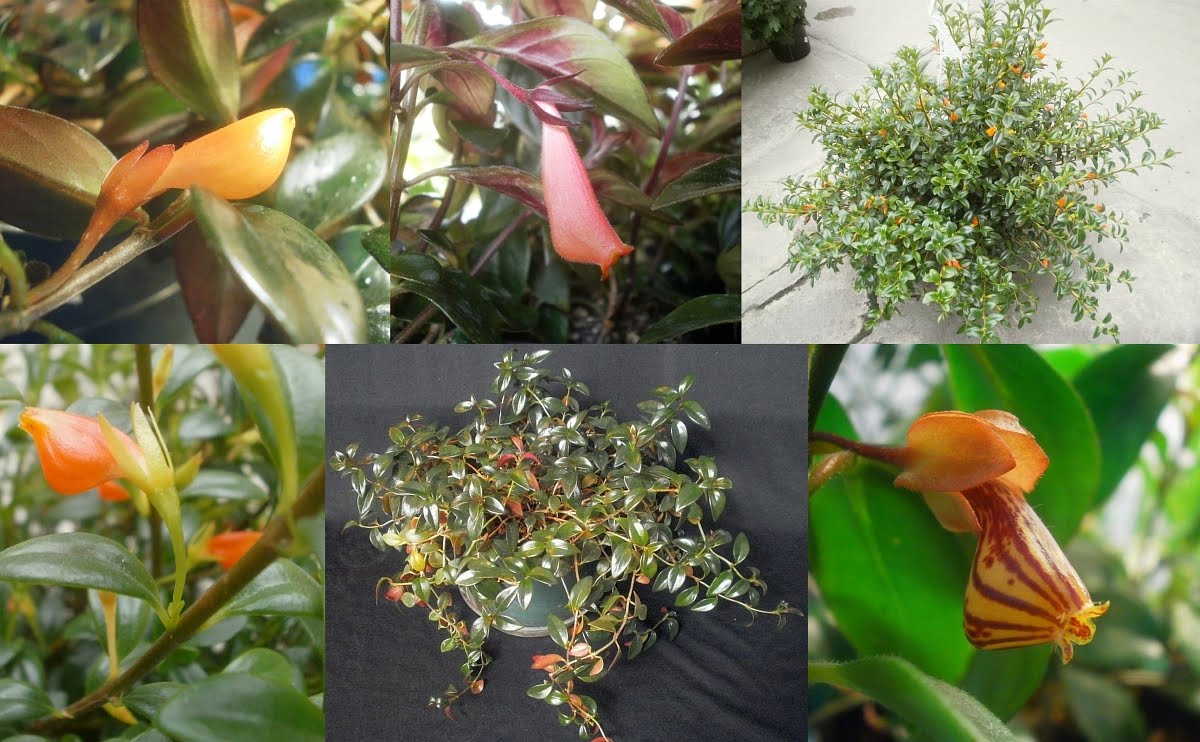
Various NOID Nematanthus cvv.; bottom right is N. 'Tropicana.'


Clockwise from top left: Dracaena deremensis ''Lemon-Lime,' 'Warneckei' or similar, 'Dorado,' 'Malaika,' 'Janet Craig Compacta.'


Match 1.46
Schefflera actinophylla / arboricola (umbrella tree) vs. Gardenia jasminoides (gardenia)

Top row, L-R: Schefflera actinophylla, S. actinophylla 'Renegade,' S. arboricola.
Bottom row, L-R: Schefflera actinophylla ('Amate?'), S. arboricola NOID.


(Both are of Gardenia jasminoides.)


Match 1.47
Begonia cvv. (rhizomatous begonias) vs. Hedera helix (english ivy)

Clockwise from top left: Begonia 'Soli-Mutata,' B. 'Erythrophylla,' B. 'Tiger Kitten,' NOID.


Various NOID Hedera helix cvv. The one in the bottom right corner may be 'Needlepoint.'


Match 1.48
Lithops cvv. vs. Sansevieria trifasciata cvv. (snake plant)

(All are NOID Lithops spp. or cvv.)


Top row, L-R: Sansevieria trifasciata 'Black Coral,' 'Laurentii,' 'Bantel's Sensation.'
Center row, L-R: S. trifasciata NOID, 'Hahnii,' 'Hahnii Pearl Young.'
Bottom row, L-R: S. trifasciata 'Moonglow,' 'Black Gold.'


-

1 I'm deciding according to a hypothetical situation in which all of my houseplants are gone, as are all the other houseplants of the world, except for one producer/supplier/retailer. Said person is offering to restock me with one or the other of the plants in question but refuses to give me both. Which one would I choose?


Friday, March 4, 2011

Random plant event: Nematanthus Pollination Achievement Unlocked!

Or at least I'm pretty sure that's what's happened here; the base of the flower (or where the flower used to be; I'm a little unclear on the official botanical terminology for this one) is turning orange (otherwise they're the same green as the stems), and it looks like a "live" color, not a "dead" one.


The female parent is an orange-flowering, large-leafed variety I've never had a name for, and the male parent is 'Tropicana.' I have no idea how long to expect this to take, or what to do with the seeds once I have them, but I expect there's still time to do the research on that. Several of the flowers are doing this, and hopefully I accomplished the reverse cross (female 'Tropicana,' male orange) as of yesterday, so I should have no shortage of seeds to experiment with, knock wood.


Sunday, February 27, 2011

They Grow Up So Fast, Part 2

Every once in a while, I wind up looking through the photo archives for something or another, and happen upon an old photo of a plant I still have, and am surprised by how much different it looks now. It should be hard to forget that plants grow. This is, after all, much of the point of having them, and one is regularly having to repot or prune or whatever. At the same time, it's easy to forget that it's going on at any particular moment, especially with slow-growing plants, so it's nice to see the evidence occasionally.

Here are four of the most dramatic examples I've seen lately (though sadly the photo quality could be better, particularly on the Before shots):

Ficus benjamina 'Black Diamond,' January 2008. Pot: 4" / 10 cm.

I brought home some cuttings of 'Black Diamond' from work and rooted them in perlite three years ago. Now, after a couple repottings (to 6"/15 cm and then to 8"/20 cm), I'm actually starting to get a respectable-looking plant out of it:

Ficus benjamina 'Black Diamond,' January 2011. Pot: 8" / 30 cm.

Though the leaves are no longer as dark as they were. Needs more light, I suppose.

Or there's my Peperomia glabella, which has gone from a 5- or 6-inch pot (13-15 cm),

Peperomia glabella, December 2008. Pot: 5" or 6" (13-15 cm).

to an 8-inch (20 cm), though it's been cut back a few times and doesn't look as large in the below photo as it really is.

Peperomia glabella, January 2011. Pot: 8" / 30 cm.


Nematanthus NOID, February 2008. Pot: 3" / 8 cm along the diagonal.

The Nematanthus also was from cuttings I took at work. I had actually forgotten that it was ever as tiny as the photo above. Give it three years to grow out, though, and it's looking decent:

Nematanthus NOID, January 2011. Pot: 6" / 15 cm.

I was amazed to find out that I've had my Coffea arabica for four years already.

Coffea arabica, October 2007. Pot: 4" / 10 cm.

I may have to adjust the PATSP difficulty level. Granted, it's not as lush and green now as it was; there have been some problems with chlorosis, and a few of the leaves have burnt from something or another, but I've changed the fertilizer on it (Miracle Gro, with micronutrients, instead of Osmocote without), and the stupid thing's gotten six inches (15 cm) taller in a month. Hopefully I'll get regular-colored leaves again soon.

Coffea arabica, February 2011. Pot: 8" / 30 cm.

Of course, plants in my care don't always get bigger and better with time:

Adiantum capillus-veneris, December 2010. Pot: 4" / 10 cm.

I've only had the Adiantum two months, and it was in a terrarium the whole time, and I still let it get too dry once and all the fronds dried up and died. It's made a considerable comeback since then, though:

Adiantum capillus-veneris, February 2011. Pot: still 4" / 10 cm.

And obviously I'll be more careful with it now that I know.

Some plants, though, you just can't reach. I got my Radermachera sinica at the same time as the Adiantum --

Radermachera sinica, December 2010. Pot: 4" / 10 cm.

-- and it has been a complete asshole.

Radermachera sinica, February 2011. Pot: 5" / 13 cm.

The individual plants in the pot have been dying off one by one: tick, tick, tick. At this point, I don't even want the plant to recover, but I have trouble throwing out a live plant even if I wish it ill. It's sort of a win-win: either it will get itself together and be an okay-looking plant, or it'll continue to suck and I can throw it away. Never again a Radermachera, though. This was my second one; the first didn't last much longer or do much better. I fail to see the point in trying a third time. They're obviously not good plants for me to have.

However, Radermachera issues aside, mostly the plants improve with time. You'd think this would be something I could just assume by now, having as many plants as I do, but I actually do get so focused on acquiring new plants sometimes that I forget that the old ones do more than just sit there, and that I'm getting better at growing them as time goes by besides. These are nice things to be reminded of.