Showing posts with label Dracaena. Show all posts

Saturday, January 19, 2019

Anthurium no. 1332 "Alexis Gabrielle Sherrington"

And then I caught a cold, so there went another week. This year I seem to be catching every single illness that's going around: cross your fingers for me that the flu shot works this year.1

So. Alexis. Alexis is mostly notable for being a color combination that I wouldn't have guessed possible and have never seen before: green and orange.


Which more or less speaks for itself, I think. I mean, I don't have any explanation for it. The seed parent was 0334 Jean Poole, which is red / pink, about as opposite as you can get from green / orange:


So where did the orange and green come from? [shrug] The pollen parent, I suppose. But I don't know which one that was.

As with previous green-blooming seedlings (1419 Maya Douglas, 1720 Mado Lamotte), the intensity of the green fades as the spathe matures. This is the same bloom as the one above, three days later:


Not a huge difference, but it just kept getting fainter from there; by the time it died, it was basically just white. Didn't get a photo of that, though.

The foliage is surprisingly large and abundant, which may not actually be ideal for a flower that blooms green. One does want to be able to see the flower among all the leaves.


Some thrips scarring, too, which isn't ideal. I've seen worse, I suppose. Though thrips damage shows up really well on the spathes, which makes me sad.


I don't know that I'd call it beautiful, but this is the sort of thing I had been hoping for when I started growing out the seedlings. I was never going to see this in a store; it's cool that it exists. I'm actually surprised that it's possible: I don't think I've previously ever had an orange spadix that wasn't accompanied by a red, pink, or orange spathe. What other combinations might be possible that I haven't seen yet? White/purple? Green/purple? White/orange?

The Anthuriums, as I mentioned in the last post, are kind of falling apart on me: I ran out of room to keep expanding, and I haven't been culling the herd on purpose, so I have lots of seedlings in spaces too small for them to fit, and a lot of seedlings that really need to promote to larger pots but can't because there's no space for them. At some point, I do intend to rearrange them all and promote a few and so forth, and when that happens, Alexis is a strong candidate to get promoted to a 6-inch / 15 cm pot, but there's so much competition that I can't promise her anything.

In unrelated news: I happened to be in a houseplant-related establishment this week and saw a Dracaena marginata variety I hadn't seen before: the shape and proportions were the same as any other D. marginata, but the coloration was dark green with a yellow-green stripe down the center, more or less the same as D. reflexa 'Riki,' but on thinner, lighter leaves. I didn't take a picture,2 and I didn't buy it,3 but I still thought it was interesting enough to follow up on.

Best guess as to variety name: 'Ray of Sunshine,' per this, this, and this, though there's a 'Sunray' here that looks like basically the same thing. So much like the same thing, in fact, that I suspect someone's trying to steal someone else's patented plant by changing its name slightly.

-

1 According to the CDC website, the dominant strain this year is influenza A(H1N1)pdm09, the flu that caused the 2009-10 pandemic, which you may remember from all of the You Are Totally Going To Die Of The Flu stories you read that winter. My understanding is that it actually caused milder symptoms in most people than the average seasonal flu, but it also had the ability to infect cells deep in the lungs (normal flu viruses are limited to the nose and throat), and consequently resulted in a higher number of deaths among people under 50 than is typical, which is why the media freaked out so hard about it.
The vaccines available last fall were intended to protect against A/Michigan/45/2015 (H1N1)pdm09-like, so I'm not actually super-worried about getting the flu. It's just that I've gotten everything else, it seems like. Which is remarkable for someone who barely ever leaves the house.
Alarmingly, Wikipedia says that about 33% of people with influenza have no symptoms. (The source is this study, in which healthy volunteers were deliberately infected with the flu.) I wouldn't have imagined that that number could be so high. This is one reason why it's important to get the vaccine even if you "never" get the flu, or you've had it before but it was no big deal: if you get the vaccine, not only are you personally less likely to get the flu, but the people around you are also less likely to get the flu. I'll grant that getting a shot isn't as dramatic or emotionally gratifying as taking a bullet for someone or charging into a burning building to rescue a small child, but getting the flu vaccine every year may in fact save more lives. And we can safely assume that it's considerably more pleasant than either of those options.
2 I didn't have it with me, because the camera gets dust behind the lens so easily that I don't take it anywhere.
3 $25 for three plants in a 6-inch pot, which maybe isn't outrageous, but that's a lot of money to spend on a plant I don't even particularly like, new color variety or no. Show me a Yucca guatemalensis with this coloration and I'd happily pay twice as much, though. Not kidding.


Saturday, December 5, 2015

Random plant event: Dracaena fragrans

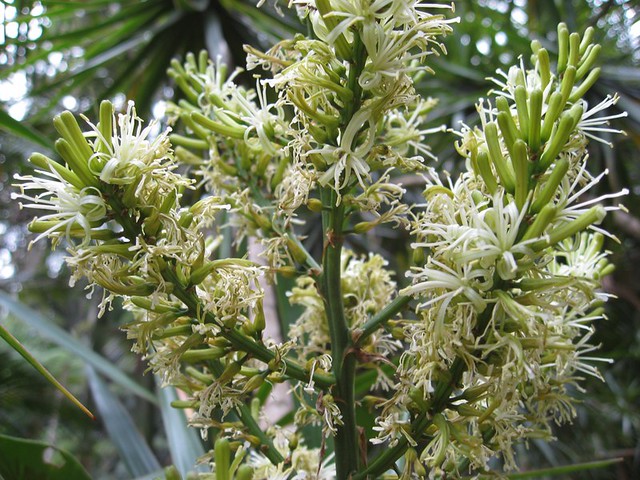
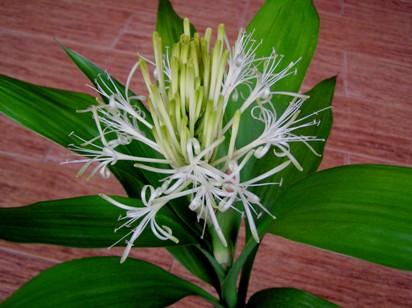
After hearing for years and years about Dracaena fragrans blooms and how drippy / strongly-scented / etc. they are, I have finally experienced it for myself for the first time. It's true: Dracaena 'Indonesian Tracker' and D. fragrans have both bloomed for the first time, within a few months of one another.

The process is surprisingly quick. I noticed the developing flowers for the first time on 7 November,


a couple flowers opened on 25 November, and then a whole bunch of them opened on the evening of 26 November (U.S. Thanksgiving). The blooms are difficult to photograph, since they're only open at night, so I only managed one good picture on one of the two spikes, but it's enough to get the idea.


What I was most interested in was the fragrance. I've heard people say that the smell was so strong, it filled their whole house, and they had to cut the blooms off because they just couldn't stand to live with the plant while it was blooming. This turns out to be an exaggeration. Or maybe we just have insensitive noses. Either way, the husband and I agree that it's pleasant, and although it does carry quite a ways into the house from the plant room, the odor isn't overpowering or incompatible with human habitation or anything like that, even with two spikes in bloom at once. I can't even smell it in the basement. The husband likened it to the smell from the Murraya paniculata, both in character and intensity, which sounds right to me. I mean, if I tried really hard and had both of them present to compare directly, maybe I could tell a difference between the two, but if I didn't know the Dracaena was responsible, I would completely believe someone who told me the odor was from the Murraya.

The smell starts up at about 4 PM, when it smells very much like cut grass, with a hint of lilacs. That gets stronger and stronger until about 6:45 PM, when it abruptly switches to the heavy Murraya smell. I have no idea how long the smell will last; individual flowers don't seem to last very long, but there are so many of them. (I'm writing this on 29 November; the show may be completely over by the time you read this. I don't know.)

I've also read a lot of complaints about nectar dripping from the flowers and what a pain it is to deal with; that hasn't really been my experience either. There's nectar, yes. And it does drip. It just doesn't drip in the quantities I've seen described, and as far as I can tell, what little nectar has dripped has mostly landed on the plant itself, or other plants. Which isn't ideal, of course, but it isn't really a problem. Maybe it gets worse later. In any case, the plant room floor is concrete, so even if it does get thoroughly coated in Dracaena nectar, cleanup should be pretty easy. Overall the whole thing has been a lot less of a catastrophe than I was expecting.


Saturday, November 7, 2015

Random plant event: Dracaena 'Indonesian Tracker'

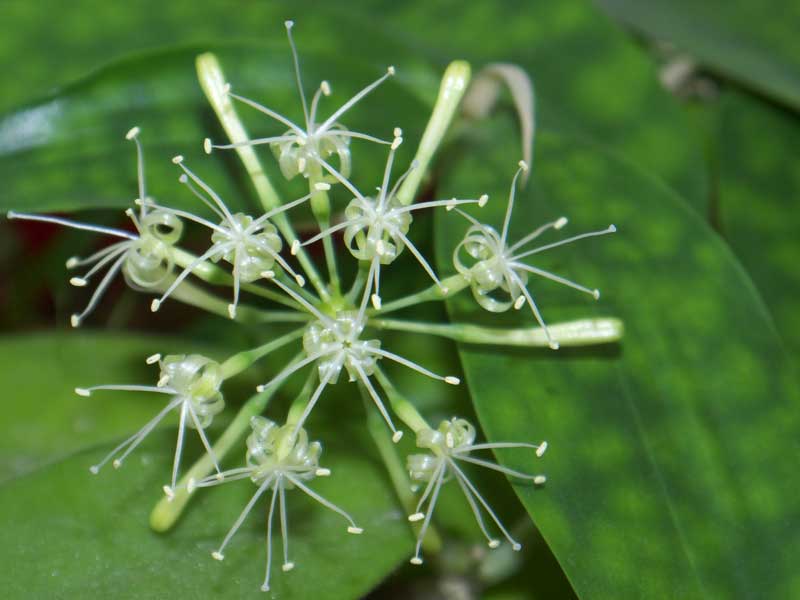
The husband's office was a magical place this summer and fall, apparently: the Polyscias fruticosa bloomed for the first time in June; the Anthurium schlechtendalii bloomed in October, and now the Dracaena 'Indonesian Tracker' in November.1 I had no reason to think that any of them would ever bloom, so it's neat that they all have, and downright peculiar that they did so within a few months of one another.


There is, of course, a smell. It's definitely an improvement on the vinegar / garbage can smell of the Anthurium,2 which is lucky for us, since it's also really strong. It's a bit like I remember the Dracaena surculosa flowers smelling, though some of that might be because the flowers look a lot the same and my brain is lazy.3 I described D. surculosa as smelling like an intense generic floral smell, with maybe a note of a chemical/solvent-type thing in there.

I would describe the smell of 'Indonesian Tracker' similarly, up to a point: the solvent/chemical note is still there. In fact, in the early afternoon, it's all that's there, and it's not pleasant. But a heavy floral scent takes over pretty shortly thereafter. I couldn't figure out specifically what it smells like. It's sort of especially hard to figure out in this case, because I only get about ten seconds to try to name it before my nose adapts and I can't smell it anymore, plus I can only identify a few flowers by scent in the first place so my vocabulary's pretty limited,4 and worst of all, it changes during the course of the night, but it reminds me a little of the Murraya paniculata in the early evening, and of carnations in the late evening.


There's also a sweet note to the fragrance -- on Halloween night when the flowers first began to open, I was working in my office and kept getting distracted by a new smell that was definitely not the Hoya lacunosa,5 something that brought to mind white birthday cake. This is hard to detect when closer to the flowers, because the floral smell overwhelms it, but it seems to be the component that travels the best. The only thing I can think of that smells at all similar to this part is Duranta.

I don't know much about 'Indonesian Tracker.' Asiatica Nursery (where I bought my plant, in 2008) presented it as a Dracaena hybrid, but they've since gone out of business, so I can't ask them about it. Logee's sells 'Indonesian Tracker,' and their information page for 'Indonesian Tracker' also identifies it as a hybrid but doesn't go any further than that. I'd really like to know what it's a hybrid of, but nobody seems to know or care, and searching the internet mostly brings up people selling it or my own posts mentioning it. No patent, even. So I'll guess D. fragrans (for the long leaves, upright habit, and sweet-smelling blooms) x D. surculosa (for the spots and whorls of leaves): if you stretched a D. surculosa leaf out to D. fragrans length, and the spots stretched along with it, you'd get something that resembled 'Indonesian Tracker.' I doubt that's correct, but it's my guess.


As a houseplant, it's a little underwhelming, in the usual Dracaena ways: it gets leggy over time, it gets taller but not wider. That sort of thing. I wouldn't say it's bad, though. I mean, if nothing else, it's very easy, and it grows so slowly that you'll have it for a few years before the legginess becomes a problem.

With some Dracaenas, the appearance of flowers would mean that the stem is about to branch; I suppose we'll find out if 'Indonesian Tracker' is one of those.

-

1 Technically October: the first blooms opened on Halloween night.
2 I don't remember there being a smell with the Polyscias.
3 Dracaena flowers all look like this to some degree or another. The color varies slightly, but the basic construction is similar: long, narrow white petals, with equally long white stamens and one (?) pistil in the center. (Examples:
Dracaena marginata, Dracaena fragrans, Dracaena surculosa var. punctata, Dracaena sanderiana, Dracaena thalioides.)
Also very similar: Sansevieria flowers. (e.g.) Sansevieria and Dracaena are pretty closely related -- part of the subfamily Nolinoideae, along with Aspidistras (whose flowers look nothing like this) and Beaucarnea (ditto except for being approximately the same color) -- so this shouldn't surprise me as much as it does.
4 I can sort of imagine the smells of Gardenia, marigolds, roses, lilacs, lily-of-the-valley, geraniums, petunias, peonies, Sansevieria, chrysanthemums, Eucharis, carnations, and Murraya paniculata, at least well enough to decide whether something smells like them. I can't really conjure up jasmine, hyacinths, tuberose, lilies, iris, heliotropes, lavender, alyssum, freesias, orange blossoms, or sweet peas, though I'm certain I've smelled all of them at one time or another.
5 (which is what's usually responsible for pleasant smells that suddenly appear after dark)


Tuesday, July 15, 2014

Walkaways Part 19

Haven't done one of these posts in a long time, because for the most part, I don't plant-shop anymore. Consequently, this list is 1) short, and 2) old. But I figure I should do something with these photos if I'm going to, and they're all interesting to some degree or another, so here we are.

The "most part" link above goes to a post about buying a Huernia and Mangave at Reha's Greenhouses in Wellman, IA on April 7; they also had a noteworthy Gasteria, G. minima variegata:


Why didn't I buy it, too? I don't know. I like Gasterias, but I haven't had great luck with them overall. (Though the seedlings are still doing okay, thanks for asking.) I think it's mostly an overwatering issue.

The other two plants are unusual color/size versions of perfectly ordinary plants, witnessed at Frontier Garden Center (Cedar Rapids, IA) on May 16; unfortunately, Frontier's greenhouse and the time of day combined to turn all the photos orange. I have attempted to correct for this, but I wasn't wholly successful.

The first plant was, I think, a new variety of Dracaena reflexa, though it's possible that it's Dracaena deremensis, and it hardly matters since D. deremensis is officially D. fragrans, so I think we should just all be happy that it's still classifiable as a Dracaena and make a jump to the next paragraph before this one explodes into a fireball --

Whatever species it is, I haven't seen this variety before, and the tag didn't give a variety name. The leaves were shorter than D. deremensis 'Warneckei,' which it otherwise resembles, but not quite as short as D. reflexa leaves usually are, and I've never seen a D. reflexa with this coloration.


I didn't even recognize the last one at first, but I figured it out as soon as I happened to brush along the side of a leaf -- it's my good friend Yucca guatemalensis. The biggest one I have ever seen, to boot. (My best guess from memory and the photo is that it was about 4 feet / 1.2 m in diameter, maybe a little wider near the top.)


I'm not 100% sure that it's a variety I haven't seen before -- I do have a streaky gray cultivar here, the oldest of my plant acquisitions, but the color on the plant at Frontier was a lot more consistent than my plants, with a single, mostly uniform light stripe taking up the middle 50% or so of the leaf. At one time, I would have bought this without blinking an eye (it was even fairly cheap -- I can't read the tag from the photo, but I think it was somewhere between $30 and $40), but it was so huge, and I know I don't have room for a plant this size, so I had to leave it.


Thursday, July 10, 2014

Product Review: Ultimate Plant Cage, Ultimate Plant Clips, Ultimate Plant Stakes

DISCLOSURE: I was provided with the following products for review:
Ultimate Plant Cage
Ultimate Plant Clips
Ultimate Plant Stakes
No other compensation was given. My understanding was that I was to provide a review of the stakes whether I liked them or not, but that I didn't necessarily have to acknowledge the clips and cage, which were sent along with the stakes. Though I'm acknowledging them anyway, because why the hell not.

The first thing to note is that the company that sells these products, Global Garden Friends, was unusually pleasant to communicate with, both when we were first discussing whether or not I would review their products, and later on when I had questions about the products while trying to draft the review. And that even remained the case when I delayed the review over and over for various reasons. This is probably not the sort of thing that's going to matter to you much as a consumer, but it was so novel to have a company treat me somewhat like a person that it seemed worth bringing up.

So here are my experiences with the three products I tried:


Ultimate Plant Cage

The cage didn't work particularly well for me, for reasons that I think are not the fault of the product. I only had one plant that I needed caged, a Monstera deliciosa, and it was already well-established, large, heavy, and contorted. (The reason I needed a cage was because it had gotten so large that it was no longer possible to do much of anything with it, including moving it to the tub to water, so sprawly and awkward it had become.) This is how it's supposed to work:


Which seems nice and straightforward, but I couldn't even get the base assembled around the bottom of the plant, because of the tangle of stems and aerial roots and so forth. The pot was not much larger than the ring in the first place, so I was trying to gather up the stems in the middle and build the ring around them, but when I finished building the ring and released the plant to move on to the next stage of the assembly process, the weight of the stems pulled the ring apart. This happened over and over until I gave up.

So I don't feel like I can fairly evaluate the cage. This isn't the cage's fault; it's the plant's fault, for being so heavy, and having already grown without a support for so long. I will likely have to restart the Monstera in question from cuttings soon, so if/when this happens, I'll start it in the cage and see how much better that works. So there may be a follow-up review at some point in the next year.


Ultimate Plant Clips

I had some troubles with these too, some of them the fault of the product and some not. There is an upper limit to how large of a stem they'll hold. If you attempt something bigger in diameter than that,1 the clips won't close around the stem. Or they'll close but then pop back open after a couple seconds. Aside from the size limitations, they work fine, and as the website notes, they can be attached one-handed, while you use your other hand to hold things in the right position or whatever.

I still wouldn't buy these myself, mostly because of the cost. You can get 20 clips for $5, which doesn't sound bad, but I can get a whole skein of acrylic yarn for $3, which is enough to tie stems to objects all day long and still have enough yarn left over to knit six pairs of baby booties. There's nothing wrong with the clips, and if you like the look of them better than yarn then hey, go for it, but the product is solving problems that I don't actually have.


Ultimate Plant Stakes

On the other hand: stakes. I have problems with plants leaning. Sometimes that's because plants aren't growing that well, leading to weak stems, phototropism, and the like. Sometimes it's because they're growing too well, and a small, weak base is trying to support a large, heavy top. Some plants just want to lean over after they grow for a while, even if everything's perfect. So stakes are a thing that I sometimes need and use, and I've tried a lot of different things.

With that said, the bar is set pretty low on what an object needs to do in order to function as a plant stake. Mostly it just needs to be capable of verticality and strong enough not to bend under the weight of the plant. So how impressive is it, really, if a product can stand upright without bending? Not very. And yet, some things I've tried in the past haven't been up to the challenge.

Wood core with coconut fiber (?) wrapped around it, for plants that climb: basically worthless. Maybe worse than worthless.2
Wooden dowels: good, even if they do eventually rot.
Acrylic rods collected from the garbage of a former employer: never quite big and sturdy enough to support anything that actually needed support.3 A thicker-diameter rod would probably have worked fine, but I'd guess it would be unnecessarily expensive. Plus acrylic scratches really easily, so it wouldn't look transparent and shiny for very long.
Bamboo: depends on the diameter. Thick ones work well, thin ones don't.4 The thin greenish-blue dyed ones are awful and I have no idea how the companies producing and selling them stay in business.
Thin metal rod of unknown origin which is also somehow green: better than nothing, but too short for most of the plants that need support.

Wood dowels and (thick) bamboo are perfectly fine, and sometimes even blend in with the real stem, for woody plants like Coffea or Murraya. Wood and bamboo eventually rot, though usually by the time that happens, either the plant has become self-supporting and it doesn't matter that the stake has rotted, or it's time to move the plant to a bigger pot anyway, so you may as well change the stake too. That said, wooden dowels are pretty expensive to be using as stakes, and either you have to choose one that's really tall and let the plant catch up, or choose one that's the same height as the plant and let the plant overrun it. This is not, like, Hitler bad, or even root mealybug bad, but I've usually chosen the first option and then silently resented the bare top of the stake until the plant caught up or the stake needed replacing. So my favorite part about the Ultimate Plant Stakes is how easily their height can be adjusted.

The Ultimate Plant Stakes improve on other things I've tried in other ways: you should only have to buy them once, unlike wood or bamboo, they don't break or bend, and the price is in the same ballpark as comparable products like bamboo stakes and wood dowels, so I feel comfortable endorsing the product. They definitely work well for my Dracaena 'Limelight,'

The angle hides the lowest 3/4 of each stake somewhat, but they're there.


and although they don't get the Asplundia 'Jungle Drum' completely vertical, they're more effective than anything else I've tried.5

A single stake, as packaged, is only useful for plants with stems from about 12 to 48 inches (30-122 cm) tall. Shorter than 12 inches and the stakes are overkill; taller than 48 inches and the top of the plant remains free to flop about. The stakes come in packages of six, though, and it's possible to use more than one stake at a time to get something taller than that. Each stake consists of an outer tube, an inner stake, and a white plastic cap. If you remove the cap and stagger the outer tubes and inner stakes, you can go higher than that. I don't know how much higher you can usefully go, but I managed to stake the length of my 60-inch (152 cm) tall Ficus lyrata by using three stakes together, so the useful range is at least 60 inches.6

The stake is mostly not visible here either, but you can see the bottom fifth of it to the right of the stems.

So to summarize:

Ultimate Plant Cage: testing incomplete, due to lack of fair test cases.
Ultimate Plant Clips: I don't object to them, but I don't really see the point.
Ultimate Plant Stakes: endorsed, and even kind of enthusiastic about, for plants within the useful height range.

-

1 The company's site says the clips will hold stems up to 1/2 inch in diameter, but I found the effective maximum stem diameter was a little bigger than that, about 3/4 inch (1.9 cm), when used along with the Ultimate Plant Stakes. This is large enough for most vining plants (though, again, if your problem is a Monstera then you're out of luck), but may or may not be adequate for upright woody plants like Dracaena, Yucca, older Ficuses, Asplundia, Dieffenbachia, etc. So measure the diameter of the stems first.
I tried, just for shiggles, to see whether it was possible to link multiple clips together to make a multi-clip with a larger diameter, but that didn't work.
It's probably worth pointing out that this is a good thing in some respects -- you don't have to worry about the clip strangling a stem as it grows, because the clip will pop open once the stem gets big enough to pop it. I don't know how often that problem actually arises, but I'm willing to accept this as a good quality for plant clips to have because the website says it is.
2 I've used those before with Monstera deliciosa, and I think maybe also Syngonium podophyllum. Coir doesn't actually hold water for shit when it's in a thin layer around a wood core, so the roots don't anchor themselves in it, and the stakes I've used had short, wide bases and were easily pulled over when I tied the plant to them. So I'm not a fan. I've seen similar stakes that had sort of a plastic mesh over a layer of sphagnum, with a solid (wood? plastic?) core at the center of that: it seems like those might be more effective for clinging aerial roots to use as support, but I've never actually tried one. And they seemed to have the same problem with bases. Nothing is going to hold up a heavy vining plant unless you can anchor it solidly in the soil.
3 They make very good dibblers, though. And I do a lot of dibbling, so it was worth keeping them.
4 It should probably also be noted that I have never experienced, or heard of anyone experiencing, bamboo stakes on a plant kept indoors leading to "hives" of insects of any kind, nor any insects at all, as the ad copy on the Ultimate Plant Stakes suggests.
5 The Asplundia is sort of an impossible case all around -- the part of the stem at the soil line is fairly narrow and weak, so the plant is both top-heavy and unstable. It's also difficult to get stakes very close to the stem, because the leaves are so broad and numerous that it's impossible to place a stake anywhere without it poking through a leaf. It still has a slight lean, and required two of the Ultimate Plant Stakes to get that far, but this is the most verticality it's managed in years.


6 Though it should probably be noted that stakes which are extended in this way don't stand up well in 16 mph (kph) winds with gusts of 25 mph (kph), as I discovered while trying to get a photo of the Ficus lyrata for this post. This is probably not relevant to you, since you probably don't have 16 mph winds in your home (or if you do, you probably have bigger worries than keeping your houseplants upright), but it may be relevant if you're trying to stake something outdoors.


Tuesday, May 6, 2014

[Exceptionally] Pretty pictures: transmitted light -- Part LIII

Having one of those spells where I'm not having any trouble coming up with things to write about, but I'm never happy with the results. Also, as previously mentioned, the Anthuriums are the only plants here that are doing much of anything at the moment. Consequently, we're digging into the transmitted light photos, because that's what the transmitted light photos are for.

By way of observing how old these pictures are: of the six plants photographed for this set that I owned at one time or another (Dracaena, Iresine, Senecio, Chlorophytum, Saintpaulia, Peperomia), only two remain (Dracaena, Chlorophytum).

(The previous transmitted light posts can be found here.)


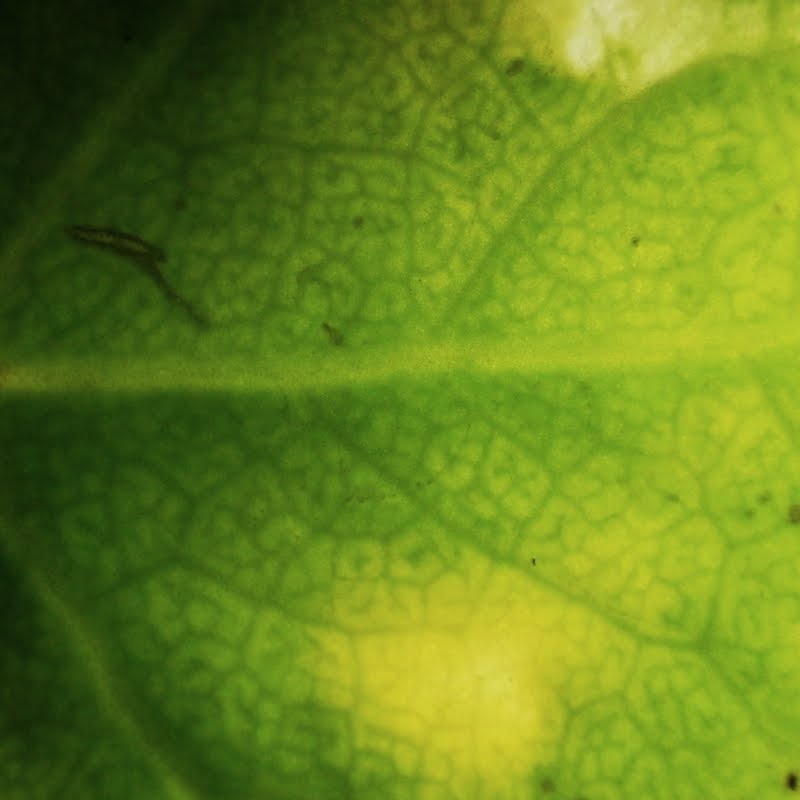
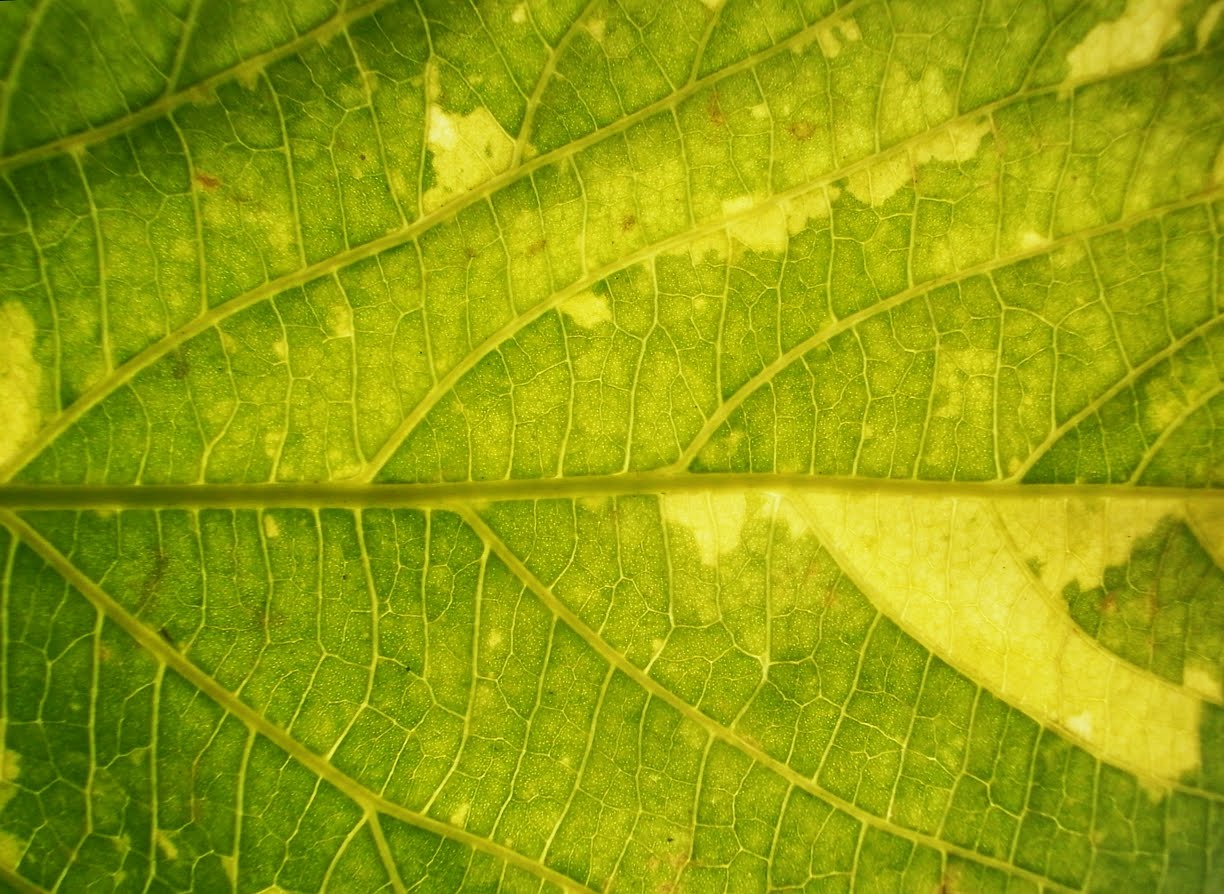
Dracaena deremensis 'Janet Craig Compacta.'

Never my favorite plant, and this photo is boring besides, but I'm appreciating it a lot more these days than I used to. No rot, no scale (knock wood), no defoliation. It just sits there, quietly, and photosynthesizes, like plants are supposed to do.


Iresine herbstii 'Blazin' Rose.'

One of the plants I used to own but no longer do. The main reason for this is that it just grew too fast and needed too much light. The coup de grâce happened when spider mites started bothering it, and I decided it was just too much work to keep around any longer. Not necessarily a terrible plant, and it does photograph well occasionally, but I couldn't say I miss having it around. (Indeed, this is the first time I've even thought about I. herbstii in at least a couple years.)


Senecio macroglossus.

Another one that's no longer around. I miss it . . . slightly. It had some nice qualities. It wasn't a good plant for me to be trying to grow, though, for three main reasons. One, it needed more light than I could give it. Two, it was forever tangling itself in the wire shelving I use, which did the plant no serious harm but was frustrating when watering time came around. Three, it needed a lot of grooming -- leaves were always dying but remaining attached to the stem, which made it difficult to groom. And it always needed to be groomed.

It'd be interesting to look at sometime with the microscope, though. You can see some weird stuff happening in there with the veins just from this picture.


Chlorophytum x 'Fire Flash,' dead leaf.

This picture is dramatic, but I think not good. Not the plant's fault, though. The plant is great.


Malva neglecta.

One of Iowa's less objectionable invasive weeds.


Saintpaulia ionantha NOID, petal.

The third plant I no longer own. I like African violets well enough to want to grow them, but not well enough to change the way I care for my plants to make growing them possible. By the time the last of the Saintpaulias went in the garbage, I was pretty exasperated with the genus, and I think I could live the rest of my life quite happily without ever trying to grow another.


Hibiscus moscheutos 'Dave Fleming,' petal.

I'm not particularly into the H. moscheutos varieties I've seen so far, and I don't know why. I mean, they seem like the sort of thing I would like. I like H. rosa-sinensis fine (I don't grow it, because overwintering always seems to be a problem, but I like them to look at.), and it's not that I have a problem with winter-hardy Hibiscus, because I think H. syriacus 'Blue Satin' is great. H. moscheutos is just too extreme for me, in some way I can't articulate. I don't see them very often around here, either. I mean, I see them for sale, just not usually planted. Though I suppose some of that is because I only recognize them when they're blooming, and for a lot of the year, they're not blooming.


Peperomia caperata.

The last of the plants I no longer grow, and the one I would be most likely to try again if I thought there was a chance of success. The problem with P. caperata was always watering. The 14-day cycle most of the plant collection is on is a bit too long for P. caperata, and if I tried to keep them wet longer by moving them to a larger pot, they'd rot. Irreconcilable differences. If I ever do find a way to deal with the watering differently, I will probably try this one again.


Ipomoea NOID, petals.

Say what you will about Ipomoeas (I. nil, I. purpurea, I. tricolor, and so on), but the flowers really are quite lovely even if the plants are weedy.


Musa 'Zebrina Rojo.' (possibly Ensete 'Zebrina Rojo.')

I probably took more photos of 'Zebrina Rojo' than necessary. (Previously: XLVIII, XLIV. And I think there's another photo in the transmitted light reserves.)


Friday, December 27, 2013

Random plant event: Dracaena fragrans 'Sol'

So the Dracaena fragrans 'Sol' that I've had since February 2008 has produced a sucker.


This is the first time I've seen a D. fragrans do this, and I actually had kind of forgot that it was even a possibility, so this was a nice surprise.

That said, I'm not really sure what to do about it; at one point, the prospect of having propagatable material for this plant would have been fantastic, exciting news, but now? Not so much. Of all the plants to have more of, Dracaenas are way too big to be very high on my list. So the plan is basically to leave it alone and see what happens. Which is a plan I've been falling back on quite a lot lately.


Sunday, December 1, 2013

[Exceptionally] Pretty pictures: transmitted light -- Part LII

My last surviving grandparent died last week. This both was and was not a big deal, and consumed enough of my week that I was unable to work much on the blog, so posting will probably be light for a while until I can catch up.

Funerals remain horrible things that are not remotely consoling. I really have no idea why anyone would ever want one.1 There was more family politics involved with this one than with the other three grandparent funerals, about which I have Feelings, but this is probably not the place to describe those. Let's just say that I like the deceased less now than I did three months ago.2

While we wait for me to get new posts together, here is another batch of transmitted light photos.

(The previous transmitted light posts can be found here.)

Cordyline fruticosa.

Pilea nummulariifolia.

Solanum lycopersicum NOID.

Dracaena reflexa 'Riki.'

Acalypha wilkesiana cv.

Polyscias scutellaria.

Ctenanthe lubbersiana. (This one is probably my favorite from the set.)

Stapelia gigantea, petal.

Begonia NOID.

Quercus sp., autumn.

-

1 I can appreciate the value of bringing the whole extended family together, because that part is actually kind of pleasant. (If you like your extended family, anyway.) I can appreciate doing something special to give everyone some kind of closure. But, well.
Let's say somebody steals your car, but leaves a note behind telling you that they stole your car for a really, really good reason, a reason they decline to provide any specifics about. And then let's say that everyone you talked to about how your car was stolen immediately reacts with oh, that's too bad, but I'm sure they had a good reason for taking it, and well, you'll probably see the car again sometime, like on the street or something, right?, and how about we drone some songs at 1/4 speed about how awesome your car thief was: whaddya say? And you're all like, but I don't really want to sing about how awesome the car thief is, 'cause the fucker, you know, stole my car, and they're like but you have to sing, everybody's going to be expecting you to sing, if you don't sing then people are going to be upset.
This is what religious funeral services feel like to me, except more so, because people are more valuable than cars.
2 So in a roundabout way, I suppose the funeral was successful in making me feel less bad about the loss. Though I don't think that's how funerals are supposed to achieve that feeling.


Thursday, January 26, 2012

List: PATSP All-Stars

"All-Stars" are those plants for which:

1) I have had at least one specimen, continuously, for at least three years,

2) which is still living,

3) and looks as good as, or better than, it did when first acquired, plus:

4) no specimen has ever had spider mites, scale, mealybugs, thrips, aphids, whitefly, cyclamen mites, or fungus (Fungus gnats are excluded, because fungus gnats don't do enough damage to the plants to count as pests, and it's often difficult to tell what plant they're residing in anyway.),

5) no established specimen has ever gone into an abrupt and irreversible decline (new cuttings/divisions/offsets may still do so, 'cause that's part of the process of getting established), and

6) the plant has been successfully propagated,

7) more than once.

I have something in the neighborhood of 400-450 distinct kinds (species / subspecies / cultivars / hybrids) of plants in the house right now, and I don't have any idea how many other kinds of plants I've attempted to grow in the past, but I figure it has to be at least a couple hundred. Out of all those, a mere nineteen meet the above criteria at the moment.

(NOTE: The pictures which follow are not necessarily of the original plant nor particularly current; even those photos which are of the original plant and current may not impress, because looking better than when the plant originally came to live here is a lower bar to clear for some of the plants than it is for others. Also the Philodendron hederaceum 'Brasil' picture isn't even of my own plant.)

Aloe 'Walmsley's Blue.'

Anthurium 'Gemini.'

Anthurium 'Orange Hot.'

Begonia NOID, rhizomatous type.

Chlorophytum x 'Fire Flash.'

Dracaena fragrans 'Massangeana.'

Gasteraloe x beguinii. (Aloe aristata x Gasteria batesiana)

Nematanthus 'Tropicana.'

Peperomia obtusifolia, variegated.

Philodendron hederaceum, chartreuse version. (Possibly 'Aureum' or 'Lemon-Lime;' I've never had an official cultivar name.)

Philodendron hederaceum 'Brasil' or 'Brazil.'

Philodendron hederaceum micans.

Sedum morganianum.

Sedum rubrotinctum.

Synadenium grantii (green version).

Syngonium podophyllum NOID (possibly 'Neon').

Yucca guatemalensis, gray version.

Yucca guatemalensis, green version.

Yucca guatemalensis, yellow-margined version.


I don't know whether this would be useful information to anybody else, but there it is. Ordinarily with the List posts, I recommend three good ones and warn against one, but these are obviously all recommended, so we'll skip that part.

What are your All-Star plants, according to the above criteria?

-


Honorable mentions:

Honorable mentions are those which meet 6 of the 7 criteria. Depending on their reason for disqualification, some of these may move into the All-Star list eventually.
  • Aechmea fasciata (only one successful propagation)
  • Agave desmettiana (?), variegated (have only had ~1 1/2 years)
  • Agave victoriae-reginae (one's been here 4 1/2 years but never propagated; the other's been propagated more than once but has only been here for 2 years)
  • Aloe NOID, possibly 'Blue Elf' or A. x humilis (have only had 2 years)
  • Anthurium NOID w/ purple flowers (original is not as attractive as when first brought home)
  • Anthurium 'Pandola' (have only had ~2 1/2 years)
  • Begonia NOID cane-type (only one successful propagation)
  • Begonia x 'Erythrophylla' (have only had for 7 months)
  • Breynia disticha 'Roseo-Picta' (has had spider mites)
  • Codonanthe serrulata (have only had for 8 months)
  • Columnea microphylla (have only had for 8 months)
  • Echeveria coccinea (have only had 1 1/2 years)
  • Ficus elastica (has had spider mites)
  • Ficus microcarpa (has had spider mites)
  • Furcraea foetida 'Medio-Picta' (have only had for ~2 1/2 years)
  • Guzmania cv. (original is not attractive)
  • Hatiora salicornioides (has had spider mites)
  • Haworthia attenuata (specimens have abruptly declined)
  • Hoya carnosa 'Chelsea' (only one successful propagation)
  • Hoya carnosa 'Krimson Princess', solid-green revert (have not propagated >1 time)
  • Justicia scheidweileri (have only had 1 1/2 years)
  • Murraya paniculata (only one successful propagation)
  • Nematanthus NOID, orange-yellow flowers (specimens have abruptly declined)
  • Nematanthus NOID, orange flowers (have only had 2 1/2 years)
  • Pandanus veitchii, variegated (specimens have abruptly declined)
  • Peperomia pereskifolia (original plant got chopped back severely for propagation, so it doesn't look as good as it did initially)
  • Philodendron erubescens (?) 'Golden Emerald' (have only had 2 1/2 years)
  • Sansevieria trifasciata 'Hahnii' (have only had about 2 1/2 years)
  • Selenicereus chrysocardium (have had about 2 1/2 years)
  • Solenostemon scutellarioides 'Tilt-a-Whirl' (has only been an official plant for less than one month; have likely owned for less than a year but I'm not actually sure when I got it)
  • Synadenium grantii, red/purple version (have only had for 1 1/2 years)
  • Tradescantia pallida (original plant has been restarted repeatedly, and at the moment does not look better than it did when new)
  • Tradescantia zebrina (original plant is not attractive)
  • Zamioculcas zamiifolia (specimens have abruptly declined)