Showing posts with label Beaucarnea. Show all posts

Wednesday, October 14, 2015

Animal: Hyla versicolor or H. chrysoscelis

So last week I had a bad dream. Bees in the attic of a former residence, with honey dripping through a hole in the bathroom ceiling and some tarantula hawks for good measure; the bees part of the dream was almost certainly triggered by this post at Root Simple, which I'd read the morning before the dream. (And the tarantula hawks? My brain's probably been waiting for a good moment to throw some tarantula hawks into a dream since about July, when I started playing Fallout: New Vegas and encountered the cazadores.)

It was bad enough to wake me up,1 and in my bleary early-morning daze, I started the coffeemaker and shuffled downstairs to the bathroom, and there was a . . . thing. Where there was not ordinarily a thing.


I got closer,


and closer,


and there was a miserable-looking frog, covered in dog hair, by the sink.


So I use the toilet and get some paper towels together to grab the frog, to take him (her?) outside, puzzling all the while about how it could possibly have gotten in the basement. The shower drain has a grate on it. The washing machine drain is covered by a mat. The dryer is always closed, so even if the frog had come in through the dryer vent, it couldn't have made it over to the sink. It surely wouldn't have crawled up through the toilet or sink or something. We'd surely notice if it hopped into the house while the door was open. Nothing made any sense. Plus it was sluggish, which made me think it had been in the house for a long time, starving, which made the whole thing even weirder. Got it outside, set it down, apologized, and went back in the house. So there was a whole animals-in-bathrooms theme going that morning, is the point.

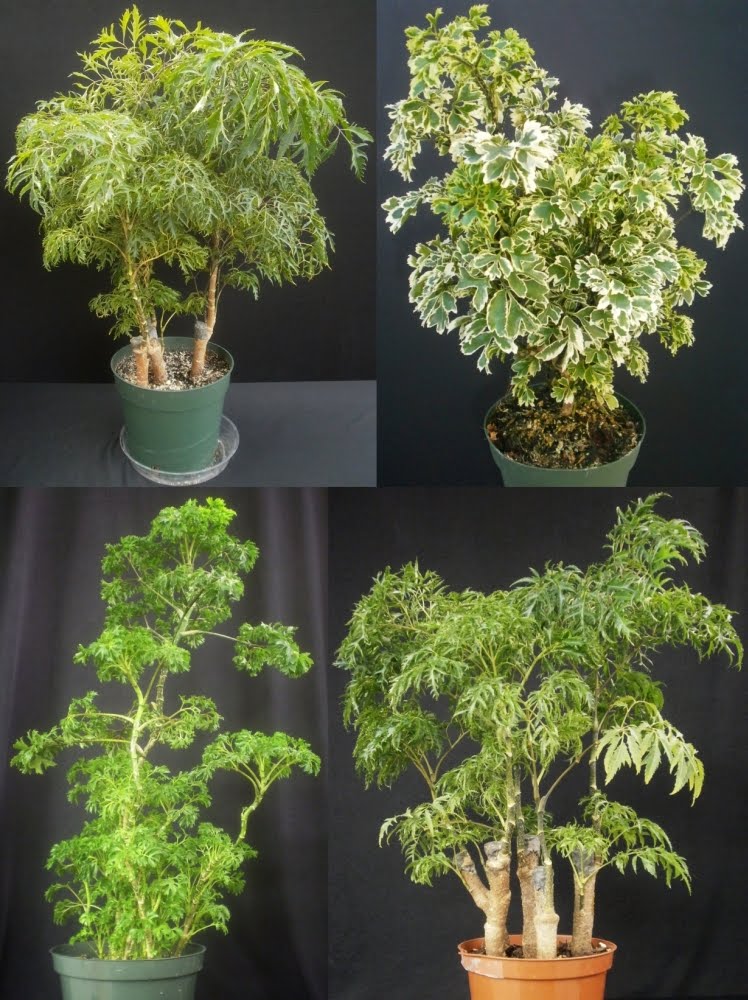
The husband and I eventually figured out that the frog had probably come in the house by riding on one of the plants I brought in from outside, most likely the variegated Beaucarnea recurvata, which looked like this in early July2 --

pot diameter: 8 inches (20 cm)

-- and I just hadn't noticed it when I brought it in because I was more focused on getting all the plants in before it got cold than I was on examining them for hitchhikers. After coming in the house, it probably jumped out of the Beaucarnea, found itself near the top of the stairs, and went down toward the warmth and humidity, getting covered in dog hair along the way.

Or something like that, in any case. Maybe it was the big Euphorbia instead of the Beaucarnea -- I've seen frogs riding on Euphorbias before. (I was figuring the Beaucarnea because its top is big enough to accommodate a smallish frog, and it would have been hard to look in the top accidentally, plus it's been more or less at the top of the stairs ever since they came inside.3 But whatever.)

That would have been the end of the story, but there was a nice coda the following morning when I took Sheba out: I was collecting some Portulaca seeds near where I'd dropped the frog off, and something moved. I turned my head, and saw this:


I know that wouldn't have to be the same frog, but it was, literally, like six inches from where I'd put one down twenty-four hours earlier, so I figured probably. And then when I was adjusting the color on the photo, I noticed that the one in the picture had a wad of wet dog hair across its thigh, between the two yellow spots. So. Maybe hanging around to say hey, thanks.

Or else asking for assistance with the dog hair, which if that was the case then I guess s/he was pretty disappointed.

So now I'm thinking I have a business opportunity: an eco-friendly service for cleaning up pet hair in homes. When you sign up for the service, which I'm thinking of calling "Anura Maid," a customer service representative drives over, has you sign a liability waiver for Salmonella-related illness, and dumps a box full of frogs (I'm thinking like one frog per three square feet of floor space) into some central location, like a living room or kitchen. Three days later, we come and pick up all the frogs we can find (any that we can't find are yours, free to keep!), return them to headquarters, wash them off, feed them a few mealworms, and send them back out again. For a modest additional fee, one frog in every ten could be wearing a little maid's outfit. Obviously they'd double as exterminators.

The only part I haven't quite figured out is the re-collection process, which would be pretty labor-intensive unless I can come up with a way to call them all back to a central location. There's no such thing as a frog-whistle, though there are mating calls. Would they necessarily come back if they heard a mating call, though? Any time of the year? And how long would that take them? People might be less inclined to use the service if they knew we had to play high-volume frog mating calls for eight hours at the end, after all. And also there'd have to be a whole tadpole-production facility for replacements, which might get expensive. I don't know how much people would be willing to pay to have a box full of frogs dumped in their houses, but it's probably best to keep the price point as low as possible. What do you think? Worth a Kickstarter?

-

1 You know you've hit adulthood when you have a dream about an attic full of bees and what wakes you up is not the fear of being stung by the bees, but the fear of how expensive and inconvenient it's going to be to get the hive removed and the damage to the bathroom repaired.
2 And like this in December 2007, when I bought it:

pot diameter: 4 inches (10 cm)

3 Like two weeks ago. I never remember to take into account that if I put them outside, they're going to grow, so there's this long transition period every fall where I'm trying to figure out where they can all go.


Friday, September 27, 2013

Six Plants I'm Not Currently Mad At / Poll for the Hive Mind

Oh, Mr. Subjunctive, you silly goose, why do you have to be so negative all the time? Why phrase it as "plants I'm not currently mad at," instead of "plants I love," or "plants that are doing well," or something along those lines?

That's . . . a really good question. I'm pretty sure some of it is just that I'm a relentlessly negative person.1 And there's also the issue that lots of other blogs use phrasings like "plants I love," and I'm trying to be different.

But there's also the issue of plant betrayal. In the seven or so years I've been doing this, I've been deliriously happy with any number of plants that later turned on me. Euphorbia trigona, once a darling, is now a constant struggle with fungus. Hoyas always seem to succumb to some kind of dramatic and sudden collapse.2 Cordyline fruticosa never quite shook the spider mites. I miss one watering and the Episcias all collapse on me, or get devoured by caterpillars, or turn brown and dry out. That sort of thing. And I occasionally wind up looking at one of those older posts, where I'm talking about how delighted I am with a plant, and feel stupid, because I know that a few months or years later, I couldn't stand that plant anymore, or it was dead, or whatever.

Therefore, it needs a qualifier. I'm not mad at them at the moment. Three months from now? Anything could happen. This is a terrible attitude to have, but . . . .

I guess I have no conclusion to that sentence; it's just a terrible attitude. (I never promised to be inspirational.)

These six plants are also the leading candidates for the next plant profile, by the way. I have no strong preference about which I want to write about, so I figured I'd put it up for a vote. So be ready for that, at the end of the post.

Here we go. In no particular order:

1. Breynia disticha 'Roseo-Picta'


Breynia disticha turns out to be a very different plant if you let it spend a summer outside than it is if you make it stay indoors all summer taking violin lessons, or whatever it is you make your Breynias do. It's not that it was growing poorly for me inside, exactly, but it wasn't getting enough light to produce any variegated leaves, the branches were flopping over into all the plants around them,3 and it wasn't branching very much.

Once it went outside for a summer, though, all that changed. Faster growth, all sorts of color, branching -- almost everything turned around. The floppy branches are apparently just Breynia's thing, because that part didn't get any better. But still.

It had been a pretty good plant for me before this, too, as far as that goes. Aside from a brief and easily-won bout with spider mites, there have been no pest problems, and although it wilts dramatically whenever I'm the slightest bit late with the water, it always bounces right back once I give it a good soaking. I've propagated from cuttings a few times (difficult, but doable), humidity seems not to be a big issue, and it's even flowered for me once, not that the flowers are a particularly big deal.


2. Philodendron mexicanum


My original cutting of Philodendron mexicanum got too long to be manageable, so I chopped it up into two-node cuttings and rooted them in water. They all got busy building roots immediately, so now I have a pot with three plants in it, which is the one in the picture.

Like some other vining Philodendrons, P. mexicanum is maybe a little too enthusiastic for its own good (I'm already contemplating chopping up the original cutting again, and it hasn't been that long. A year, maybe?), but the leaves are really lovely (I neglected to choose a photo that shows the red-brown undersides, though if you're interested you can check out this post.), and it's easy to grow, as far as I can tell. Fairly weak artificial light, normal indoor temperatures and humidity, water every two to four weeks.

My only problem to date has been with thrips, of all things. They weren't that hard to get rid of, but they were surprisingly fond of the plant, and apparently used it as a species headquarters, from which they launched expeditions to the neighboring plants.


3. Beaucarnea recurvata


This is probably the most unexpected plant to land on this list. It's not that it was ever doing poorly, exactly; it's more that it's never done much of anything at all. The reason turned out to be pot size and light intensity: after five and a half years of leaving it alone, I repotted it and gave it some direct sun, and bam, new growth. Quite a bit of it, even. (I'm sad to think of how disappointed it will be this winter: I doubt I'll be able to spare a direct-sun spot once all the plants come in from outside.4)

Even without new growth, though, it was one of those plants I could depend on not to give me any drama. It was fine with the variable temperature in the plant room, it never got any pests, and if it was unpropagatable, it was at least durable.

The propagation thing is likely to continue to be a problem in the future, but otherwise, I feel like I may finally have figured Beaucarnea recurvata out.


4. Polyscias fruticosa


And then Polyscias fruticosa is probably the most obvious plant to go on the list. I've even been publicly happy with it in the past. I have some pretty serious concerns about it for the future,5 but right now, at this particular moment, all is well, and it's been thriving. I'm also pretty pleased with the cultivars I have ('Elegans' and 'Snowflake,' which is just variegated 'Elegans'), and have managed to propagate 'Elegans' a few times, albeit with some difficulty. They're all perfectly happy, and even pest-free (knock wood), so long as I give them some direct sun every day and don't get too unpredictable with the water (both too much and too little leads to defoliation, though too little seems to be worse).

The best part is that as it ages, the plant is developing a sort of Cousin Itt (or possibly Gossamer?) look, which I enjoy.


5. Scindapsus pictus


I have one main problem with Scindapsus pictus, which is that I tend to forget that it exists. Which is to say that whenever I'm listing plants in my mind, in whatever category, I never remember to include it.

It's a perfectly nice plant, as plants go. I treat it horribly: it's on a shelf a couple inches below other plants, which block most of the light. It gets air-conditioning blasted directly at it during the summer. I'm pretty sure the soil hasn't been changed since I bought it in July 2008. But no worries! Scindapsus just keeps plugging away, slowly building leaf after leaf, without complaining or getting bugs. It's the damnedest thing.

I've had an S. pictus many years ago that wasn't nearly as forgiving; this is far enough in the past that I couldn't guess what the problem might have been. So it's possible that I've just been bizarrely lucky for five straight years.

I have yet to attempt propagation, because it's not necessarily a plant I want more of. Maybe someday.


6. Stromanthe sanguinea cvv.


Finally, I continue to be impressed with Stromanthe sanguinea. I have two varieties of it, 'Triostar' (shown) and 'Magicstar,' both of which are much easier to grow than anything from the Marantaceae ought to be.

It's not perfect. There's an unfortunate tendency to develop spider mites, and there are limits to how large of a pot I can use here in the house, because the root systems are relatively shallow and rot-prone, so I can only up-pot for just so long before it's time to start over again with a freshly-propagated plant. Even so, being able to grow something this attractive at all is awfully cool. And when I need to propagate, it's always been game, which is a definite bonus.


So see? I can say nice things about the plants sometimes.


-

1 No. Really. I am. It's okay. I don't mind. Usually.
2 Though it's possible that I'm on the verge of figuring that one out. All the Hoyas that have succumbed to Sudden Hoya Death Syndrome were also not getting any direct sun at the time of death. The cause-and-effect relationship is murky, but in the absence of any other leads, I'm thinking this must be the key, somehow.
3 Which was a problem, because the plants around the oldest and largest Breynia were mostly Euphorbia trigona. Top-heavy thorny plants shouldn't be placed next to floppy-branched leafy plants, as a rule: you wind up losing hours of your life trying to untangle them from one another.
4 Next summer, though: look out! I'm putting the Beaucarnea outside, and fully expect it to grow substantially before autumn arrives. A friend in town has a Beaucarnea that she puts outside every year, and it is amazing. (Had I been thinking, I'd have gotten a picture for you, but I wasn't.)
5 It's 1) a very big plant, with 2) brown, woody stems and 3) lots of delicately-cut leaves, living 4) in a room where scale has recently been discovered. If scale decided to take up residence there, I stand very little chance of catching the infestation early. I've added some pre-emptive imidacloprid to the soil, as well as to the soil of some of its neighbors, but if you look closely at the photo, you may be able to make out a faint aura of doom around the plant.


Thursday, October 20, 2011

Rumble Among the Jungle, Matches 3.11 and 3.12

Rules and Stuff
1) It's probably possible to vote more than once per poll, but please don't. If I believe that someone is voting repeatedly, I will throw out those results, repost the poll, and seriously question that person's priorities.
2) If you want to link to a poll on Twitter / Facebook / your blog / whatever and encourage your friends to come and pump up the support for your favorite plants, you are encouraged to do so.
3) You are also encouraged to leave comments on Rumble posts, if so moved.
4) All photos will enlarge if opened in a separate window/tab.
5) You can choose which plant is "best" according to whatever criteria you decide for yourself. My personal process is a bit convoluted.1
6) All polls will be open for three days.


Results from matches 3.3 and 3.4:

Breathing a sigh of relief over match 3.3. It's not that I thought Dracaena reflexa cvv. would defeat Aglaonema cvv., but y'all sometimes do things I don't expect, so I've learned to worry anyway. Aglaonema advances to the fourth round by a vote of 64 to 37.

I liked both plants in match 3.4 and really wanted to see them both do well, so it was difficult to decide, but in the end I went along with most of the rest of you and chose Philodendron hederaceum cvv. over Strelitzia nicolai / reginae. The final score was 63 to 42.

Aglaonema cvv. and Philodendron hederaceum cvv. vie for a fifth-round spot on 24 October, in match 4.2. And if I thought I was anxious about 3.3 and 3.4, I'm going to be nearly catatonic with worry over 4.2.

Today's matches:

Match 3.11
Beaucarnea recurvata (ponytail palm) vs. Oncidium alliance orchids (dancing ladies)

(Bottom left: Beaucarnea recurvata variegata. Others: B. recurvata.)


Left side, top to bottom: Beallara Marfitch 'Howard's Dream,' Oncidium Tsiku Marguerite 'NN #1.'
Center, top to bottom: Vuylstekeara Aloha Sparks 'Ruby Eyes,' Odontocidium Tiger Crow 'Golden Girl,' Wilsonara Lisa Devos.
Right side, top to bottom: Oncidium Saint Dawn Gold, Bakerara Truth 'Silver Chalice.'


Match 3.12
Dracaena deremensis cvv. vs. Sansevieria trifasciata cvv. (snake plant)

Clockwise from top left: Dracaena deremensis ''Lemon-Lime,' 'Warneckei' or similar, 'Dorado,' 'Malaika,' 'Janet Craig Compacta.'


Top row, L-R: Sansevieria trifasciata 'Black Coral,' 'Laurentii,' 'Bantel's Sensation.'
Center row, L-R: S. trifasciata NOID, 'Hahnii,' 'Hahnii Pearl Young.'
Bottom row, L-R: S. trifasciata 'Moonglow,' 'Black Gold.'


-

1 I'm deciding according to a hypothetical situation in which all of my houseplants are gone, as are all the other houseplants of the world, except for one producer/supplier/retailer. Said person is offering to restock me with one or the other of the plants in question but refuses to give me both. Which one would I choose?


Wednesday, October 12, 2011

Rumble Among the Jungle, Matches 2.21-2.24

Rules and Stuff
1) It's probably possible to vote more than once per poll, but please don't. If I believe that someone is voting repeatedly, I will throw out those results, repost the poll, and seriously question that person's priorities.
2) If you want to link to a poll on Twitter / Facebook / your blog / whatever and encourage your friends to come and pump up the support for your favorite plants, you are encouraged to do so.
3) You are also encouraged to leave comments on Rumble posts, if so moved.
4) All photos will enlarge if opened in a separate window/tab.
5) You can choose which plant is "best" according to whatever criteria you decide for yourself. My personal process is a bit convoluted.1
6) All polls will be open for three days.


Match 2.5 to 2.8 results:

Matches 2.5 and 2.6 weren't particularly surprising. In the first, Dracaena reflexa cvv. defeated Asparagus spp. 76 to 37, which is only logical considering how Asparagus spp. are kind of dicks, with the thorns and everything. (I'm left more mystified than ever as to how Asparagus managed to defeat Cissus rhombifolia and get to the second round at all, though.)
In match 2.6, Aglaonema cvv. beat Oxalis triangularis cvv., 70 to 43, which is likewise pretty much what I expected. (Oxalis made a better showing than I thought it would, but I'm not very objective when it comes to Aglaonemas.)

Dracaena reflexa and Aglaonema go up against one another in match 3.3, which will begin on 16 October.

Matches 2.7 and 2.8, on the other hand, did surprise me quite a bit. Not necessarily the winners (I voted with the victor in both cases), but that neither match was particularly close. They were both pretty tough choices for me.
In match 2.7, Strelitzia nicolai and reginae defeated Ficus maclellandii by 70 to 43. Sad to see Ficus go, but I knew when I started this that most of the plants I liked would not win, so I have only myself to blame.
Finally, Philodendron hederaceum cvv. beat Dracaena fragrans cvv. to a sappy pulp in match 2.8, winning by a score of 82 to 28.

The Strelitzias face Philodendron hederaceum in match 3.4, also beginning 16 October.

And now, today's matches:

Match 2.21
Dendrobium cvv. vs. Beaucarnea recurvata (ponytail palm)

Dendrobium cvv. Right center is 'Karen;' the others are NOIDs.


(Bottom left: Beaucarnea recurvata variegata. Others: B. recurvata.)


Match 2.22
Oncidium alliance orchids (dancing ladies) vs. Polyscias fruticosa (ming aralia)

Left side, top to bottom: Beallara Marfitch 'Howard's Dream,' Oncidium Tsiku Marguerite 'NN #1.'
Center, top to bottom: Vuylstekeara Aloha Sparks 'Ruby Eyes,' Odontocidium Tiger Crow 'Golden Girl,' Wilsonara Lisa Devos.
Right side, top to bottom: Oncidium Saint Dawn Gold, Bakerara Truth 'Silver Chalice.'


Top left and bottom right: Polyscias fruticosa. Top right: P. fruticosa 'Snowflake.' Bottom left: P. fruticosa 'Elegans.'


Match 2.23
Dracaena deremensis cvv. vs. Schefflera actinophylla / arboricola (umbrella tree)

Clockwise from top left: Dracaena deremensis ''Lemon-Lime,' 'Warneckei' or similar, 'Dorado,' 'Malaika,' 'Janet Craig Compacta.'


Top row, L-R: Schefflera actinophylla, S. actinophylla 'Renegade,' S. arboricola.
Bottom row, L-R: Schefflera actinophylla ('Amate?'), S. arboricola NOID.


Match 2.24
Begonia cvv. (rhizomatous begonias) vs. Sansevieria trifasciata cvv. (snake plant)

Clockwise from top left: Begonia 'Soli-Mutata,' B. 'Erythrophylla,' B. 'Tiger Kitten,' NOID.


Top row, L-R: Sansevieria trifasciata 'Black Coral,' 'Laurentii,' 'Bantel's Sensation.'
Center row, L-R: S. trifasciata NOID, 'Hahnii,' 'Hahnii Pearl Young.'
Bottom row, L-R: S. trifasciata 'Moonglow,' 'Black Gold.'


-

1 I'm deciding according to a hypothetical situation in which all of my houseplants are gone, as are all the other houseplants of the world, except for one producer/supplier/retailer. Said person is offering to restock me with one or the other of the plants in question but refuses to give me both. Which one would I choose?


Friday, October 7, 2011

List: Succulents Which Don't Need Full, All-Day Sun (But Might Nevertheless Prefer It)

The initial inspiration for this list comes from a post at Garden Web by someone whose apartment only gets partial sun, who still wants to be able to grow some succulents inside. The post has received one response (as I write this), and I mostly agree with what that responder said, but that's no reason not to write a post about it.

This is also a question I've had to face fairly directly myself, since the main flaw of the house is its disappointing lack of south-facing windows. (The few it does have are partly obstructed by the neighbors' house and our garage, alas.)

Most of the stuff in this list that I've personally grown still gets at least a couple hours of afternoon sun or all-day bright artificial light, so don't take this as the final word on what you can grow in these conditions -- it'll depend on how big of a window you have, how obstructed it is, and so on. But if you have a spot with some sun, just not all-day sun, you should still be able to grow:

Agave victoriae-reginae. I wouldn't believe this if I hadn't done it myself, but my largest, oldest victoriae-reginae has been in a west window for the last two years and is apparently just fine with that. (The leaves are perhaps a little further apart than they would be in a brighter spot, and I'm not sure if they're maybe not also a bit longer. But still. Doable.) It's not even very close to the west window. I don't recommend any other Agave species for anything other than full sun or extremely bright fluorescent light, though.

Beaucarnea recurvata. My Beaucarnea and I have only recently started getting along, more or less since I switched fertilizers. I've never really had the option to give it full sun, but it hasn't seemed to mind that too much, so long as it got some direct sun. It's presently close to a west window.

Cereus peruvianus. I've tried a lot of cacti here -- at one point, cactus-collecting was verging on becoming a full-blown thing for me -- and most of them just don't seem to be able to cope without a lot more light than I can provide. Cereus peruvianus is one of the few that can handle a west window without getting all etiolated and weird. They don't bloom, they don't grow fast, but the base of the plant remains roughly the same size as the new growth.

Dischidia ruscifolia. Dischidia ruscifolia seems perfectly content to live in a semi-obstructed east window in the husband's office, and has been doing so for long enough that I think it's safe to say that it could keep doing so for years.

Euphorbia NOID. I've been calling this plant "Euphorbia kokopelli" in my brain, because the shape sort of resembles the deity as he is commonly portrayed --


-- but you may or may not see the resemblance. The plant's height has forced me to try to grow it in less than ideal locations, and it's performed admirably in them. Currently, it gets only artificial light, and not even very much of that, yet it still grows, and it looks the same as it ever did.

I got E. "kokopelli" from someone through Garden Web, and have never had an ID for it, or even much of a guess as to an ID, so if you thought to yourself when you saw the above picture, oh, that's obviously a Euphorbia ___________, you should leave me a comment telling me what you thought.

The above picture that's a plant, not the above picture that's a humpbacked flute-playing fertility god.

Haworthia limifolia var. limifolia. Haworthias are pretty reliable plants for reduced-sun spots; I had one in a north window, where it never got any direct sun, for a couple years, and it did fine.

Ledebouria socialis. My history with Ledebouria is complicated. My plants have done better in a south window than in the west window where they currently reside, but fertilizer is a large part of that, and to be honest, they're also not terribly close to the west window, so I still think an east or west window should provide sufficient light for a Ledebouria.

Selenicereus chrysocardium. Jungle cacti are pretty flexible about light, as a group. My observations are that Selenicereus chrysocardium will grow faster with more light, but otherwise it behaves the same -- the stems aren't smaller, the color's the same, etc. My best results to date have been with the plant in a hanging basket, suspended below a shop light, but they've grown fine in minimal fluorescent light as well, just a lot more slowly.

Senecio rowleyanus. Senecio rowleyanus initially grew in a good spot in a west window, but it was slow, and stems periodically would just up and die for no obvious reason. The reason I know this wasn't a light problem is because it's been in the same spot this spring and summer, growing like a monster, and the only thing that changed was the fertilizer. (Again, I know. But fertilizer is sometimes very important.)

Stapelia gigantea (and probably other Stapelia spp.?). My Stapelia actually burned when I first brought it home, which you can actually see a bit on the stems in the picture. I thought I was being nice, giving it a spot outside where it could get all the light it could possibly want, but instead it burned. Ungratefully. So it came inside, and has been growing nicely in a west window ever since.


Ordinarily I would pick out three of these to recommend especially at this point, but I'm fairly fond of all of the above plants, and I've already talked about them a little, so we'll skip that part this time.

Not shown:

Explicitly NOT recommended for windows without full sun (and in some cases, not recommended indoors for windows with full sun either):
  • Aeonium spp.
  • Agave spp. that aren't victoriae-reginae
  • Aloe congolensis
  • Aloe juvenna
  • Aloe 'Minibelle'
  • Aloe variegata
  • Anacampseros rufescens
  • Astrophytum myriostigma
  • Astrophytum ornatum
  • Bryophyllum daigremontianum
  • Bryophyllum tubiflorum
  • cacti generally (though there are a few exceptions)
  • Crassula falcata
  • Crassula muscosa
  • Crassula perforata
  • Crassula rupestris
  • Echeveria spp.
  • Euphorbia anoplia
  • Euphorbia drupifera
  • Euphorbia enopla
  • Euphorbia flanaganii
  • Euphorbia grandicornis
  • Euphorbia horrida
  • Euphorbia pseudocactus
  • Hylocereus spp.
  • any Kalanchoe sp.
  • Lampranthus blandus
  • Lithops spp.
  • Myrtillocactus geometrizans
  • Pachyphytum cvv.
  • Sedum burrito
  • Sedum rubrotinctum
  • Sempervivum cvv.

I lack sufficient experience with these to say one way or the other, or have had mixed results, or it grows fine but isn't as colorful, etc.:
  • Adenium obesum
  • Adromischus spp.
  • Alluaudia procera (gets a hesitant thumbs-up at the Garden Web thread, but I've never tried to grow it personally)
  • Aloe arenicola
  • Aloe brevifolia
  • Aloe dorotheae 'Sunset' (definitely won't turn red; still seems to grow okay, though)
  • Aloe ferox
  • Aloe 'Fire Ranch'
  • Aloe greatheadii var. davyana
  • Aloe maculata (A. saponaria)
  • Aloe striata
  • Aloinopsis rubrolineata
  • Argyroderma spp.
  • Browningia hertlingiana
  • Ceropegia woodii
  • Cissus rotundifolia
  • Crassula arborescens
  • Crassula ovata
  • Dischidia nummularia
  • Euphorbia ammak
  • Euphorbia bougheyi
  • Euphorbia lactea
  • Faucaria spp.
  • Furcraea foetida cvv.
  • Gasteria 'pseudonigricans'
  • Hoya obovata
  • Isolatocereus dumortieri
  • Leuchtenbergia principis
  • Pleiospilos spp.
  • Portulacaria afra
  • Senecio crassissimus
  • Senecio jacobsenii


Saturday, October 1, 2011

Rumble Among the Jungle, Matches 1.41-1.44

Rules and Stuff
1) It's probably possible to vote more than once per poll, but please don't. If I believe that someone is voting repeatedly, I will throw out those results, repost the poll, and seriously question that person's priorities.
2) If you want to link to a poll on Twitter / Facebook / your blog / whatever and encourage your friends to come and pump up the support for your favorite plants, you are encouraged to do so.
3) You are also encouraged to leave comments on Rumble posts, if so moved.
4) All photos will enlarge if opened in a separate window/tab.
5) You can choose which plant is "best" according to whatever criteria you decide for yourself. My personal process is a bit convoluted.1
6) All polls will be open for three days.


Results for matches 1.25 to 1.28:

In match 1.25, Platycerium spp. beat Stromanthe sanguinea cvv., 65 to 51.
Match 1.26 went to Gynura aurantiaca over Hypoestes phyllostachya by a similar but slightly wider margin, 66 to 48, though there were some complaints from people that they didn't like either plant and didn't want to have to choose. Which is fair enough.

Platycerium and Gynura advance to the second round, where they will compete with one another on October 10.

The other two matches were basically blowouts: in 1.27, Aloe vera trounced Gymnocalycium spp. 83 to 33, and in 1.28, Schlumbergera cvv. smashed Dracaena surculosa by 91 to 23, which is not close at all but nevertheless a little closer than I had expected.

Aloe vera and Schlumbergera also meet up on October 10, in match 2.14, and I gotta say I'm a little nervous about the outcome of 2.14.

If anyone besides me cares, we're now about 2/3 of the way through the first round. (It'll end next Thursday Friday.) After that, the rounds will start going by a little faster. If everything goes according to schedule, I'll be announcing the winner on November 16.

Today's matches:

Match 1.41
Ficus pumila (creeping fig) vs. Dendrobium cvv.

Top left and bottom right: Ficus pumila. Bottom left and top right: variegated F. pumila.


Dendrobium cvv. Right center is 'Karen;' the others are NOIDs.


Match 1.42
Sedum morganianum / burrito (burro's tail) vs. Beaucarnea recurvata (ponytail palm)

Top left and bottom right: Sedum morganianum. Top right and bottom left: S. burrito.


(Bottom left: Beaucarnea recurvata variegata. Others: B. recurvata.)


Match 1.43
Euphorbia ammak / ingens / trigona (large columnar Euphorbias) vs. Oncidium alliance orchids (dancing ladies)

L-R: Euphorbia NOID, Euphorbia ammak, Euphorbia trigona, Euphorbia NOID, Euphorbia NOID.


Left side, top to bottom: Beallara Marfitch 'Howard's Dream,' Oncidium Tsiku Marguerite 'NN #1.'
Center, top to bottom: Vuylstekeara Aloha Sparks 'Ruby Eyes,' Odontocidium Tiger Crow 'Golden Girl,' Wilsonara Lisa Devos.
Right side, top to bottom: Oncidium Saint Dawn Gold, Bakerara Truth 'Silver Chalice.'


Match 1.44
Polyscias fruticosa (ming aralia) vs. Austrocylindropuntia subulata monstrose (Eve's needle)

Top left and bottom right: Polyscias fruticosa. Top right: P. fruticosa 'Snowflake.' Bottom left: P. fruticosa 'Elegans.'


Austrocylindropuntia subulata monstrose (Photo credit: ArséniureDeGallium, at Wikimedia Commons.)


-

1 I'm deciding according to a hypothetical situation in which all of my houseplants are gone, as are all the other houseplants of the world, except for one producer/supplier/retailer. Said person is offering to restock me with one or the other of the plants in question but refuses to give me both. Which one would I choose?


Friday, August 6, 2010

If You Were a Houseplant, What Kind of Houseplant Would You Be?

Gentle readers:

Just for shiggles, let's ponder the title question.

Obviously human beings' needs for things like water and temperature are going to be pretty similar, and we already know which plants are compatible with regular human environments, because those are the plants we grow indoors, where we live, already. Therefore, we have to resort to metaphor for this.

So what I'm asking everybody to do (if you want) is, evaluate yourselves on a 0-3 scale, as described below, for each of the criteria, and then leave a comment, containing the numbers you come up with for yourself. I'll run your numbers through Excel, match them against the ratings for plants I've already got in the spreadsheet, and then post a list of the three plants with number sets most similar to the set you've given me.1 You may use any number between 0 and 3 (like, if you're just positive you're a 2.68 on something, the number 2.68 works as well as any other for calculating, so go ahead and tell me 2.68.). If you don't like my metaphors for which personality traits go with which plant-care categories, feel free to make up your own and give me those numbers instead.

Euphorbia grandicornis. An extrovert.

PESTS are obviously other people.
0- People are great. I love meeting new people, and get along with everybody.
1- I like most people, though occasionally I run into someone I can't get along with.
2- I don't work or play well with others, but when I have to, I have to.
3- Other people are constantly getting in my way, being stupid, or otherwise causing me problems, and I wish I didn't have to deal with them.

Pogonantherum paniceum. A hoarder.

Water is sort of raw material for doing anything, for plants. Basically "stuff." So for OVERWATERING, the question is how unsettled you are by having too much stuff, too much clutter, in your life.
0- I'm a hoarder.
1- I keep stuff a lot longer than I need to, and regularly buy stuff for which I have no immediate use.
2- Things occasionally get out of hand, but most of the time I keep my space fairly neat and organized.
3- I can't stand any kind of mess, even in space that doesn't belong to me.

Beaucarnea recurvata. A DIYer/survivalist type.

And for UNDERWATERING, it's about how big of a problem it is for you not to have the things you need.
0- I can make anything I need from scratch using only duct tape and twigs, and sometimes I don't need the twigs.
1- I can usually improvise a bad substitute from something I already have, without having to buy something new.
2- I've been known to waste time going to multiple stores, trying to find something that will work perfectly.
3- I'll drop everything and drive for an hour to get exactly the right item.

Pilosocereus pachycladus. Belongs to Overeaters Anonymous.

LIGHT is basically energy input, for plants, which I think most closely parallels food consumption in humans. So
0- I'm basically anorexic.
1- I eat sensibly, most of the time.
2- I eat more than I ought to.
3- I eat anything that isn't nailed down.

Plectranthus verticillatus. Is basically Michelle Duggar.

For PROPAGATION, you have a choice: you can either treat it pretty literally, about your chances of having actual children, and the number of children, in your lifetime (0-I want to have a house full of kids / 1-definitely want some kids / 2-I might want one kid, someday / 3-I never want to have any children ever, or I can't have any childen ever), or you can be metaphorical:
0- I'm very proud of how much stuff I've accomplished in my life, compared to others my age.
1- There have been some unproductive spells, but I think on balance I've done quite a bit of cool stuff.
2- I could definitely have accomplished more if I'd worked harder, but considering what I had to work with I think I've done a couple worthwhile things.
3- I'm not sure I've ever done anything worthwhile in my life.

Begonia rex-cultorum 'Escargot.' Voted Most Likely To Go Postal.

HUMIDITY . . . I'm going to say stress-management and ability to function under pressure, and/or ability to deal with frustration.
0- I deal exceptionally well with stress most of the time. Other people even compliment me on it and ask what my secret is. I'm thinking I should write a book.
1- I handle certain kinds of stress (like pushy co-workers or intense deadline pressure) very well, and other kinds (like disorganized workspace or lazy co-workers) not so much.
2- I work okay under moderate amounts of pressure, but fall apart when it goes on for a long time without a break/vacation or when I'm being asked to perform an exceptionally impossible task.
3- The slightest little thing will make me stress out to the point of being completely unable to function.

Homalomena 'Emerald Gem.' "I CAN'T RUSH MY PROCESS, MAN!"

TEMPERATURE is a toughie, but I'm thinking it has to do with the intensity of daily activity, kinda. Since the meaning as it applies to plants has to do with the allowable range of temperatures, this is basically a measurement of how flexible you can be.
0- Whenever and however you want it, that's when I'll get it to you.
1- It's nice to have a little advance warning about things, but basically I can work at whatever speed is necessary without getting stressed about it.
2- I need to know pretty specifically what you want and how soon you want it, and depending on your deadlines I may or may not be able to get it to you.
3- I am no good with other people's deadlines. I have to work at my own pace, which is sometimes superfast and sometimes superslow, but I can't be rushed to do things faster, and I can't wait around for someone else's input once I'm ready to go.

Zamioculcas zamiifolia. Married, 2.5 kids, lives in suburbs.

GROOMING usually works out in the plant profiles as having special circumstances or quirks of care that aren't covered under one of the other categories but make the plant more difficult. So metaphorically, if your life is unusual in some way, compared to the average person in your country, because of who you are (disabled, gay, famous, independently wealthy, mentally ill), where you live (hippie commune, military, expat), or some other way that creates challenges for you that other people don't have or appreciate (self-employed, caring for a relative with special needs, religious minority, group marriage), this is where to note that.
0- I'm painfully ordinary in every possible way.
1- My life is a little weird.
2- I'm kind of a freak.
3- My life circumstances may be entirely unique in the history of the world.

Hibiscus rosa-sinensis. Goes skydiving on weekends.

FEEDING for plants is the input of trace elements, so for people I'm going to say it's about the need for novelty and stimulation, about how bored you get and how easily.
0- I'd be pretty happy to get on a routine that worked for me and stay in that routine until I die, with no changes at all.
1- Having a stable, routine life is definitely important to me, but it's nice to get away and do something different every once in a while.
2- I like to shake things up regularly, so I don't get into a rut.
3- I have to be doing something new constantly -- going new places, learning new things, trying new forms of physical activity -- or I get bored and cranky.

My personal numbers fall out as follows:

PESTS: 2.5
OVERWATER: 1
UNDERWATER: 1
LIGHT: 2
PROPAGATION: 1
HUMIDITY: 2
TEMPERATURE: 2.5
GROOMING: 1.5
FEEDING: 1

My closest match turns out to be Philodendron gloriosum.2 I'm the son of a Stromanthe sanguinea (Mom) and a Schefflera actinophylla (Dad),3 and I married a Philodendron 'Xanadu.' (So not only same-sex marriage, but same-metaphorical-genus marriage!)

Moi.

The husband points out that there could be a financial opportunity in this, somewhere. Some kind of horti-horoscopes (Rhapis: your sharp tongue may get you in trouble with your boss today, unless you remember to think before you speak."), or personality tests, which could be sold to businesses or used in marriage counseling. ("Well, there's your problem: you're an Agave and he's a Dieffenbachia. What you need is to neutralize your Agave nature by buying its opposite, which is a Begonia rex-cultorum, and then your relationship will be saved.") He's probably right.

None of this, of course, actually means a damn thing, but hey. If you need to have an answer ready just in case you run into Barbara Walters,4 leave your set of numbers in comments, and I'll crunch the numbers and post your results when I get the chance. You don't necessarily have to subscribe to my interpretation of the appropriate metaphors for each criterion, either. Make up your own and give me those numbers if you like.

-

1 The similarity is determined by comparing each plant-rating criterion, C, against the respondent's rating, R, for each of the nine criteria as follows:
similarity = sqrt[(C1-R1)^2 + (C2-R2)^2 + (C3-R3)^2 + . . . + (C9-R9)^2]
It's not merely a matter of comparing the difficulty numbers and picking the three which are closest. Consequently, the results that come up may vary considerably in difficulty ranking, owing to differences in how difficulty-rating criteria are weighted relative to one another, and that sort of thing.
2 I ran this both with the metaphorical propagation numbers and the literal ones, and the highest-ranking plant on both lists was P. gloriosum.
3 As not all possible values are represented among the plants, one cannot necessarily figure out what the person is like by knowing what their corresponding plant is. Philodendron gloriosum, for example, is not particularly bothered by pests (I had spider mites once), even though my pest number was very high: it's just the closest fit from among the nine values, among the 300ish plants for which I have values. Dad is totally a Schefflera actinophylla, though.
4 In 1981, during an interview with Katherine Hepburn, Barbara Walters asked "If you were a tree, what kind would you be?" This was of course roundly mocked at the time, though Walters has since defended the question by pointing out that Hepburn brought up the whole tree thing first, by saying she would like to be a tree.
So even if it's not going to help you if you run into Barbara Walters in a dark alley someplace (*shudder*), you never know when it might be handy to have a quick answer ready for questions like this.