Ack. Running late again. Here's a couple orchid pictures.

Thursday, July 7, 2011

Tuesday, July 5, 2011
Random plant event: Breynia disticha
I tried to come up with something else for this post. The Pilea mollis (?) 'Moon Valley' in my office is blooming, and if you get them wet and then put them back into bright light, the flowers will release little puffs of pollen for about fifteen or twenty minutes afterwards. I vaguely recall reading something attributing this to the change in humidity levels.
(Other Pileas do this too. P. microphylla is called "artillery plant" because the little puffs of pollen "smoke" are reminiscent of the smoke from artillery fire.)
I've tried to photograph the pollen-puffs a number of times for you by now. Just clicking the button on the camera and hoping to get a lucky shot of pollen discharging at exactly the right moment hasn't worked. Using the camera as a movie camera hasn't worked either -- whatever set of flowers I focus on will never erupt, even if all the others do, just out of camera range. I even tried using IrfanView to take out a series of frames from a movie, hoping that either I could stitch them back together into an animated .gif, or I could crop out the interesting parts and put them all together into a series of still images, side-by-side, but IrfanView isn't capable of creating .gif files, and the image quality wasn't good enough for the series of stills to show the process. So I guess I'll just have to keep trying. You'd find it really interesting, I'm almost certain, if I could figure out how to show it to you.
Meanwhile, back at the ranch:
I got a Breynia disticha 'Roseo-Picta' in October 2008. One of the appealing characteristics of 'Roseo-Picta' is that it has variegated leaves, in white, pink, red, and green. Mine, though, was pretty much always plain green. I assumed this probably meant that it had reverted to plain green (Sometimes the new leaves would come in reddish and turn green with age, but the white/pink variegation wasn't there.) due to lack of sufficient light.
However, all that's changed recently. The first cutting to start producing white and pink leaves got traded away about six weeks ago, but another one has started doing it too:
Still nothing from the parent plant (it occasionally produces leaves with a little bit of white flecking, but nothing as colorful as the above), but it's good to know the capacity is probably still there. The cuttings that have produced variegated leaves have been under shop lights in the basement, so I guess it must take a lot of light to get the variegation started.
Pretty picture: Aechmea fasciata

This is not my own plant; it was at the ex-job about three weeks ago. I like A. fasciata just fine as a foliage plant, but I have to admit, the inflorescences are pretty spectacular.
Monday, July 4, 2011
Random plant event: Aglaonema 'Maria' fruit
I had three Aglaonema varieties ('Gold Dust,' 'Maria,' 'Silver Queen') all flowering at once a few months ago, so I got out the old paintbrush and tried cross-pollinating. It wasn't that I expected anything terribly useful to come of it, but that was during the period when I was trying to cross everything I had, and there were flowers, so I figured why not try.
Most of the flowers have subsequently dried up and dropped, and so far only one appears to have done anything. Still, though, there is the one:
I assume sprouting the seeds will work more or less the same way it did for the Anthurium seedlings, should I be so lucky as to get viable seeds. While I'm on the subject, the first batch of Anthurium berries (from 'Gemini') look like they're going to be ripe soon, and there are many berries from Anthurium 'Pandola' coming right behind that.
Saturday, July 2, 2011
Saturday morning Sheba and/or Nina picture, without Sheba or Nina
Yesterday, a man almost died in the street directly in front of our house. Not even exaggerating. The husband and I had just sat down to dinner, and out of the corner of my eye, I saw one of the power/cable/whatever lines to the house jerking around wildly. So I got up and looked out the front window, and saw a telephone pole lying in the street, with an unmoving man. On closer inspection, the telephone pole was actually lying on top of the man's head, and there was a lot of blood.
Long story short, the husband called 911 (as did a neighbor a couple doors down, who'd been watering her flowers outside when it happened), one big fire truck, one little fire truck, at least one police car, and an ambulance all showed up relatively quickly, and eventually the guy was loaded into a helicopter and taken, I assume, to University of Iowa Hospital in Iowa City. I asked one of the police officers if they knew anything about the guy's prognosis, whether he was going to be okay, and she kinda shrugged and said nobody knew, that he'd lost a lot of blood and was unresponsive when they loaded him into the helicopter, and that was as much as she knew about it. I don't imagine I'll ever find out, either, because I don't know anything about the guy except his employer. (Also: none of the responders -- fire, ambulance, police -- seemed to be moving particularly fast. I'm not sure if that was a matter of perception or reality, but it was frustrating.) Though I suppose maybe it's better I never find out. I don't know. And then later about six or seven vehicles from the cable company showed up, and a great deal of effort was expended on washing the blood off the pavement, the urgency of which I found puzzling.
The telephone pole, incidentally, looks like it had either only been buried about four inches deep (unlikely), or it had actually rotted out and broke off at a depth of about four inches deep. I didn't go up to look at the base. Either way, it was pretty obviously the pole's fault, not the guy's.
So my mind is not really on the animal photos today.
Since you've come all this way, though:
I'd thought there were only two babies in the nest, because I'd thought there were only two eggs, but apparently one of them was hiding at an angle I couldn't see with the camera, because that's definitely three. I suppose I'm sort of obligated to name them Greg, Peter, and Bobby.
Friday, July 1, 2011
Berry-Go-Round #41
Welcome to Berry-Go-Round #41, to be known in the future as "The Formal Dinner BGR." Everybody look for the place setting with your name on it and be seated. I'll warn the reader immediately that there are a lot of links here, and I doubt that anybody's going to be able to look at them all in one sitting: I'm using an eight-course dinner metaphor very deliberately. So brace yourself.

I'd like to begin by opening up a bottle. The 2011 Hygrochilus is quite excellent, I hear. Impudent and brash, yet meticulous and sophisticated.

For appetizers, the calorie-conscious will enjoy the Wild Taro Research Project. (I say the calorie-conscious will enjoy it because although someone submitted the link, the site is password-protected and therefore unreadable by anyone not invited to be part of the group. Which I wasn't. Consequently, I have no idea what it says. If this is you, maybe anonymously post a working e-mail address / password combination in the comments?)
Here is a quick amuse bouche from the webcomic Abstruse Goose, about the frustrations of being an evil plant; Wired has another off-kilter piece, about an orchid which uses sight and smell to pretend to have a fungal infection, which it uses to attract fungus-eating flies to pollinate it. (Those orchids! Is there no deception they won't stoop to? No wonder all the other plants hate them.)
If you're more into food-as-art than food-as-sustenance, try this post from Plants are the Strangest People (me!) about a striking hybrid Paphiopedilum, or Hort Log's post on the unusual peacock ginger Kaempferia purpurea.
Far Out Flora have a large number of really beautiful and/or striking pictures of Walnut Creek, CA's Ruth Bancroft Garden.
A Digital Botanical Garden talks about the unusual "rose" mutation of the common garden plantain (Plantago major), and explains how small mutations can have large effects on the appearance of plants.
Slugyard solves the mystery of Lupinus pollination by, you know, paying attention. ("You can see a lot by just looking." -Yogi Berra) And there's a video!

Moving on to the soup course, we have a lovely, murky, cream-of-taxonomic-dispute regarding the genus Acacia at Talking Plants, or one might prefer Joseph Tychonievich's much clearer consomme about why scientific names are changing in the first place, and why even the horticulturally-minded might see this as a good thing in the long run.

I'm tempted to skip over the fish course entirely, but Danger Garden writes a post about ponds and pond plants, which is perhaps close enough. (Even if it's not close enough, the photos are worth the trip. I have to bite my knuckles every time I look at that Furcraea picture.)

Now we're getting into the roasts. Christie Wilcox (Observations of a Nerd) eviscerates an essay from Nature which apparently claims (I couldn't read the original essay) that ecologists are too hard on invasive species, and don't make enough of a distinction between invasive species and non-native species. The basic thrust of the post as I read it is no, we distinguish between them just fine. (I admit to some bafflement about what's going on in Wilcox's post, probably because I haven't seen the essay she's reacting to, but it's hard to argue with what she's actually saying.)
On the lighter side, Arizona State's Top 10 New Species of 2010 includes zero plant species, and Nigel Chaffey (at the Annals of Botany blog) is incensed! Incensed!
(Though actually a little anger is probably appropriate. So few people take plants seriously.)
Finally, Denim and Tweed has a post from April (a little late, I know, and maybe someone else already covered this for BGR, but it's interesting, so I'm going to cover it too, and you can't stop me) that blurs the lines a bit about what constitutes a "carnivorous" plant. Apparently a lot of plants have the capacity to absorb nutrients from decaying animals through their leaves, even if they don't actually require the decaying animals in order to function. Does that make them carnivores? I say, defiantly: I would like to think about this for a while and get back to you!

In the wild game course, we have Emily's discovery of some wild-growing ferns in Wisconsin. This is apparently something Emily discovers a lot (she's a grad student who studies ferns), but who doesn't like ferns?
And speaking of ferns, Hort Log has photos of the east Asian primitive fern Dipteris conjugata, which is so primitive it doesn't look much like a fern to me.
Denim and Tweed assures us that even if the pollinators all disappear, western North America will still have Mimulus flowers -- Mimulus can evolve to do without them within a few generations, if need be. (Die-hard Mimulus fans -- and I have no doubt there are some out there, somewhere -- may also wish to check out this photo of M. 'Eleanor' at Cactus Blog.)
JSK of Anybody Seen My Focus? documents the development of wild Asclepias amplexicaulis from seedling to flowering in two posts. (part 1) (part 2) There's even a promise to continue documenting as the plant goes from flower to seed pod.
JSK seems to stumble upon a lot of interesting wild plants: I find Cnidoscolus stimulosus a bit frightening-looking: so many little spines! The exceptionally rapid opening of the flowers of Phemeranthus teretifolius is more my speed.
For the final offering in the game category, Casa Coniglio has some serious macro shots of a wild green-flowering orchid, Epipactis gigantea.

You'd think the salad course in a botany-related blog carnival would be huge, but in fact it only has three posts. Hunter Angler Gardener Cook has a fascinating post about eating Yucca flowers (something I'd heard of, but nobody'd ever described the taste for me before); Backyard Notes's Blog is growing a whole salad (tomatoes, radishes, beets, carrots, celery, lettuce, etc.), somewhat experimentally; and Agricultural Biodiversity Weblog catches National Geographic in a tuber error, with the result that I learned something about some minor tuber crops of the Andes (including a tuberous Tropaeolum and Oxalis, which I'd never even imagined before).
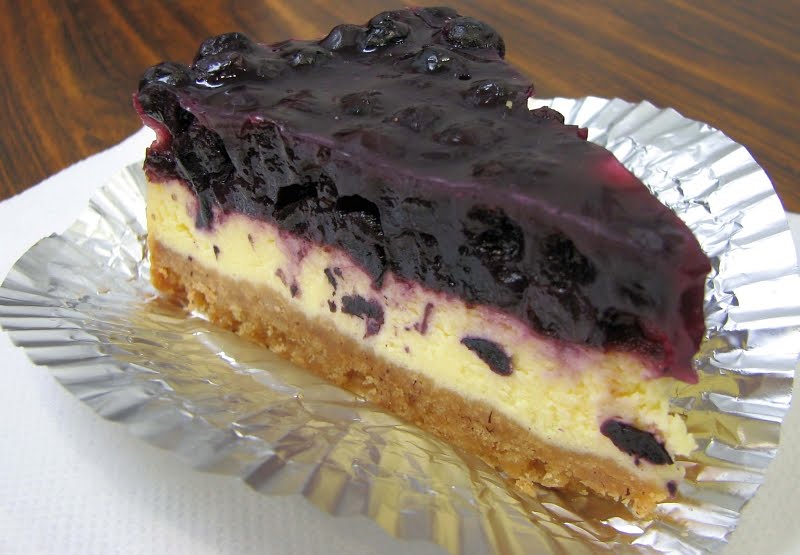
Anybody ready for dessert? Farmscape Gardens has a couple interesting photomosaics of oddly-shaped produce that I thought were compellingly pretty. Cactus Blog has a picture of one extremely odd amaryllis relative, Boophone disticha, which ZOMG WANT. Another Cactus Blog post is a picture of the tiny, hairy, turquoise, and striped flower of Rhytidocaulon macrolobum ssp. macrolobum, which I don't so much covet as just fail to comprehend. Plant Chaser posted some photos of the "blond" Tillandsia named 'Druid,' a naturally-occurring variant of T. ionantha which was collected in Mexico forty years ago. (I've seen it for sale around here once, without an ID, so that made me happy.) Casa Coniglio has some photos of Neofinetia falcata, another oddball orchid with white, long-spurred, coconut-scented flowers.

(Yes, Nuts and Raisins is sometimes considered a course unto itself, hence the expression "[from] soup to nuts.") Floradora has us covered for nuts, or at least seeds (I never said the metaphor was going to be perfect), with the seeds of the grass Stipa barbata, which twist themselves so as to . . . well, essentially screw themselves into the soil.
Instead of raisins, the Annals of Botany blog has a post about dates. More specifically, it's a post about date palms (Phoenix dactylifera), which are dioecious (having plants which are either male or female). Until now, it's not been possible for growers to tell whether they had a female (valuable) or male (not so much) plant on their hands until it was about five years old, but the date palm genome has been sequenced now, and this has the potential to make date production more efficient.
So now we're at the end, uncomfortably overfull, with nothing left to do but napkin origami. Wired has a post about the succulent plant Delosperma nakurense, which executes a kind of reversible origami (Wired's metaphor, not mine) to fold and unfold its seed pods, according to the presence or absence of rain (a scientist is quoted: "Generally speaking, dead things don't move, so when they do, it's of obvious interest," which seems charmingly straightforward, if not entirely accurate).
And we're done. Hope everyone enjoyed themselves. (Or at least I hope nobody threw up.)
Next month's BGR will be hosted by Kate at Beyond the Brambles; you can find the submission form for suggesting links here. If you happened to miss BGR 40, you can find it here at Sitka Nature.
-
Photo credits:
Wine: André Karwath aka Aka, via Wikimedia Commons. Unaltered.
Appetizer (Hamachi Amuse Bouche): Charles Haynes, via Wikimedia Commons. Re-sized; slightly re-colored.
Soup: strawberryblues, via Wikimedia Commons. Cropped; slightly re-sized.
Fish: Miya.m, via Wikimedia Commons. Cropped.
Roast Beef: cyclonebill, via Wikimedia Commons. Cropped; re-sized; re-colored.
Game (Pheasant): Ulrich Prokop (Scops), via Wikimedia Commons. Re-sized.
Salad: Public domain (originally from the National Cancer Institute), via Wikimedia Commons. Unaltered.
Dessert (Cheesecake): Chris Gladis, via Wikimedia Commons. Cropped; re-sized; slightly re-colored.
Nuts and Raisins: Mr. Subjunctive.
Subscribe to:
Comments (Atom)


 Posts
Posts