UPDATE: Nominations are now closed. I appreciate everybody's input.
The list of contestants will be revealed tomorrow afternoon; I expect voting to begin in the middle of next week but can't promise anything yet.
I had an idea a long, long time ago. The idea was that I wanted to pit houseplants against one another in a single-elimination tournament to determine which was the "best," with "best" being determined by reader votes. I was going to call it the "Rumble Among the Jungle."
And then I sat on that idea for a very long time, because the first step, obviously, would be to come up with a list of contestants, and I wasn't sure how to do that.
For some reason, the idea's come back to me in the last week or so, and I've decided to narrow it down to the most commonly sold plants, with a few other qualifiers.
1. They should be sold as potted plants, not as fruits, rhizomes, or whatever -- so pineapples and avocado trees are out.
2. They should be plants which one might reasonably be expected to grow indoors year round, if the situation demanded, which rules out forced bulbs like daffodils and hyacinths.
3. They should be plants which could be easily found and purchased by someone who was looking for them, within his/r local garden center / supermarket / home-improvement store "scene," within a year of beginning to look. (This is so that common but seasonal plants like Schlumbergera or poinsettias can be included.)
I'm also limiting the experiment to 128 slots, which is why this post. (128 seemed like as large of a power of 2 as I could manage without dragging it all out indefinitely. I figure voting 128 plants down to one big winner should take about 2 months: a little long, perhaps, but manageable.) Naturally, I wound up choosing a few too many, and lumping species and varieties together in ways which may or may not make sense, so the main purpose of this post is to show y'all the possible contestants and ask for feedback about who's been unfairly left off the list, who's nowhere near common enough where you live to be included on the list, and who should be lumped together into one slot or split up into several.
Also: I don't have usable photos for a few of the plants on the list; you'll know which ones when you get there. If you have a photo you'd let me use (ideally showing both foliage and flower, on a relatively plain background, but I'll settle), send it to me by e-mail, or point me to the web address, and I'll update the post.
PATSP's next new post will be Saturday's Sheba/Nina picture, so we have a few days to ponder and discuss all of this, start placing bets as to who will win, etc. Readers who are not nerdy enough to care about any of this are asked to be patient. It's only a few days.
The final list of contestants will be up to me, because it's my blog, but I wouldn't be asking for input if I didn't intend to weigh it in the decision.
Official actual voting will commence at some point next week, once I 1) have a final contestant list, 2) set up the brackets, and 3) start posting the polls. I intend to continue writing regular posts in the mornings, in addition to the RATJ posts in the afternoon.
So here are the possible contestants so far:
 1. Acalypha reptans (chenille plant)
2 people have recommended removing this plant from the list.
 2. Adenium obesum cvv. (desert rose; shown: NOID)
 3. Adiantum spp. (maidenhair ferns; shown: A. capillus-veneris)
 4. Aechmea fasciata (silver vase plant)
 5. Aeonium spp. (shown: A. arboreum atropurpureum 'Zwartkopf')
 6. Aeschynanthus spp. (lipstick plant, goldfish plant; shown: A. lobbianus)
 7. Agave spp. (shown: A. victoriae-reginae)
 8. Aglaonema cvv. (chinese evergreen; shown: A. 'Maria')
 9. Alocasia amazonica 'Polly' (african mask plant)
 10. Aloe vera (medicinal aloe, burn plant)
 11. Alpinia zerumbet, variegated (variegated shell ginger)
3 people have recommended removing this plant from the list.
1 person has recommended not removing this plant from the list.
 12. Anthurium cvv. (flamingo flower; shown: A. 'Pandola.' Excludes foliage Anthuriums.)
 13. Aphelandra squarrosa (zebra plant)
 14. Araucaria heterophylla (Norfolk Island pine)
 15. Ardisia crenata (coral berry)
3 people have recommended removing this plant from the list.
1 person has recommended not removing this plant from the list.
 16. Ardisia elliptica (shoebutton tree)
5 people have recommended removing this plant from the list.
 17. Asparagus spp. (asparagus fern; shown: A. setaceus)
1 person has recommended not removing this plant from the list.
 18. Asplenium spp. (bird's-nest ferns; shown, L-R: A. nidus, A. antiquum)
 19. Austrocylindropuntia subulata monstrose (Eve's needle)
Photo credit: ArséniureDeGallium, at Wikimedia Commons.
2 people have recommended removing this plant from the list.
1 person has recommended not removing this plant from the list.
 20. Beaucarnea recurvata (ponytail palm)
 21. Begonia cvv. (rhizomatous begonias; shown: NOID)
 22. Begonia rex-cultorum cvv. (rex begonia; shown: B. rex-cultorum 'Harmony's Red Robin')
 23. Calathea cvv. (various names; shown: C. roseopicta 'Medallion')
 24. Carnegiea gigantea (saguaro)
1 person has recommended removing this plant from the list.
 25. Cattleya alliance orchids (shown: Sophrolaeliocattleya Hazel Boyd 'Debbie')
 26. Cereus tetragonus (fairy castle cactus)
 27. Chamaedorea elegans (parlor palm)
 28. Chlorophytum comosum cvv. (spider plant; shown: NOID)
 29. Cissus rhombifolia cvv. (oakleaf ivy, grape ivy; shown: Cissus rhombifolia)
1 person has recommended removing this plant from the list.
3 people have recommended not removing this plant from the list.
 30. Codiaeum variegatum cvv. (croton; shown: C. variegatum 'Petra?')
 31. Coffea arabica (coffee plant)
3 people have recommended removing this plant from the list.
3 people have recommended not removing this plant from the list.
 32. Cordyline fruticosa cvv. (ti plant; shown: C. fruticosa 'Florica')
1 person has recommended not removing this plant from the list.
 33. Cordyline glauca
5 people have recommended removing this plant from the list.
1 person has recommended not removing this plant from the list.
 34. Crassula ovata and similar species (jade plant; shown: C. ovata)
 35. Cryptanthus cvv. (earth star; shown: 'Elaine?')
 36. Cycas revoluta (sago palm)
 37. Cyclamen persicum cvv. (florist's cyclamen; shown: NOID)
 38. Davallia spp. and other furry-rhizomed ferns like Polypodium/Phlebodium (rabbit's-foot fern, hare's-foot fern, bear's-paw fern, kangaroo fern; shown: Davallia fejeensis 'Major')
 39. Dieffenbachia cvv. (dumb cane; shown: 'Camille?')
 40. Dionaea muscipula (venus flytrap)
 41. Dischidia ruscifolia (million hearts)
1 person has recommended removing this plant from the list.
 42. Dracaena deremensis cvv. incl. 'Janet Craig,' 'Warneckei,' etc.(shown: D. deremensis 'Lemon-Lime')
 43. Dracaena fragrans 'Massangeana' (corn plant)
 44. Dracaena marginata cvv. (Madagascar dragon tree)
 45. Dracaena reflexa cvv. incl. 'Riki,' 'Song of Jamaica,' etc. (shown: D. reflexa 'Song of India')
 46. Dracaena sanderiana (lucky bamboo, ribbon plant)
 47. Dracaena surculosa cvv. (gold-dust dracaena; shown: NOID)
 48. Echeveria cvv. and intergenerics like Sedeveria, Pachyveria, etc. (shown: Echeveria 'Perle von Nurnberg')
 49. Echinocactus grusonii (golden barrel cactus)
 50. Echinopsis spp. (shown: NOID)
 51. Epiphyllum / Selenicereus spp. (ric-rac cactus, orchid cactus; shown: E. oxypetalum)
 52. Epipremnum aureum cvv. (pothos; shown: E. aureum 'Marble Queen')
 53. Episcia cvv. (flame violet; shown: assortment)
 54. Espostoa lanata, Oreocereus trollii, & Cephalocereus senilis (old man cacti; shown: E. lanata)
 55. Columnar Euphorbia spp. like ammak, ingens, trigona, etc. (shown: E. ingens?)
 56. Euphorbia lactea cvv. (hatrack cactus, dragon bones; includes crested forms and crested grafts)
 57. Euphorbia milii (crown of thorns; shown: NOID)
 58. Euphorbia pulcherrima (poinsettia, the devil in plant form; shown: NOID)
 59. Fatshedera lizei (tree ivy, aralia ivy; shown: variegated cultivar)
5 people have recommended removing this plant from the list.
 60. Ficus benjamina cvv. (weeping fig; shown: F. benjamina 'Midnight')
 61. Ficus elastica cvv. (rubber plant, rubber tree; shown: F. elastica 'Tineke' or 'Sylvie')
 62. Ficus lyrata (fiddle-leaf fig)
2 people have recommended removing this plant from the list.
3 people have recommended not removing this plant from the list.
 63. Ficus maclellandii (long-leaf fig)
1 person has recommended removing this plant from the list.
3 people have recommended not removing this plant from the list.
 64. Ficus pumila (creeping fig; shown: F. pumila 'Snowflake')
1 person has recommended removing this plant from the list.
2 people have recommended not removing this plant from the list.
 65. Fittonia albivenis cvv. (nerve plant; shown: NOID)
 66. Gardenia jasminoides (gardenia)
 67. Guzmania cvv. (shown: NOID)
 68. Haworthia spp. (shown: NOID)
 69. Hedera helix cvv. (English ivy; shown: assortment)
 70. Hemigraphis exotica (purple waffle plant)
 71. Hibiscus rosa-sinensis (tropical hibiscus; shown: NOID)
 72. Hippeastrum cvv. (amaryllis)
Photo credit: Arpingstone at Wikimedia Commons. Public domain.
 73. Hoya carnosa cvv. (wax plant; shown: H. carnosa 'Krimson Queen')
 74. Hylocereus/Gymnocalycium grafts (moon cactus; shown: assortment)
 75. Hypoestes phyllostachya cvv. (polka-dot plant; shown: assortment)
 76. Jasminum spp. (jasmine; shown: J. sambac?)
1 person has recommended removing this plant from the list.
[I'm not counting Ivynettle's vote to remove because the category includes all Jasminum spp., not just sambac]
 77. Kalanchoe blossfeldiana (flaming katy, kalanchoe; shown: NOID)
1 person has recommended removing this plant from the list.
3 people have recommended not removing this plant from the list.
 78. Kalanchoe luciae / thyrsiflora (flapjack plant; shown: K. luciae?)
 79. Kalanchoe tomentosa cvv. (panda plant)
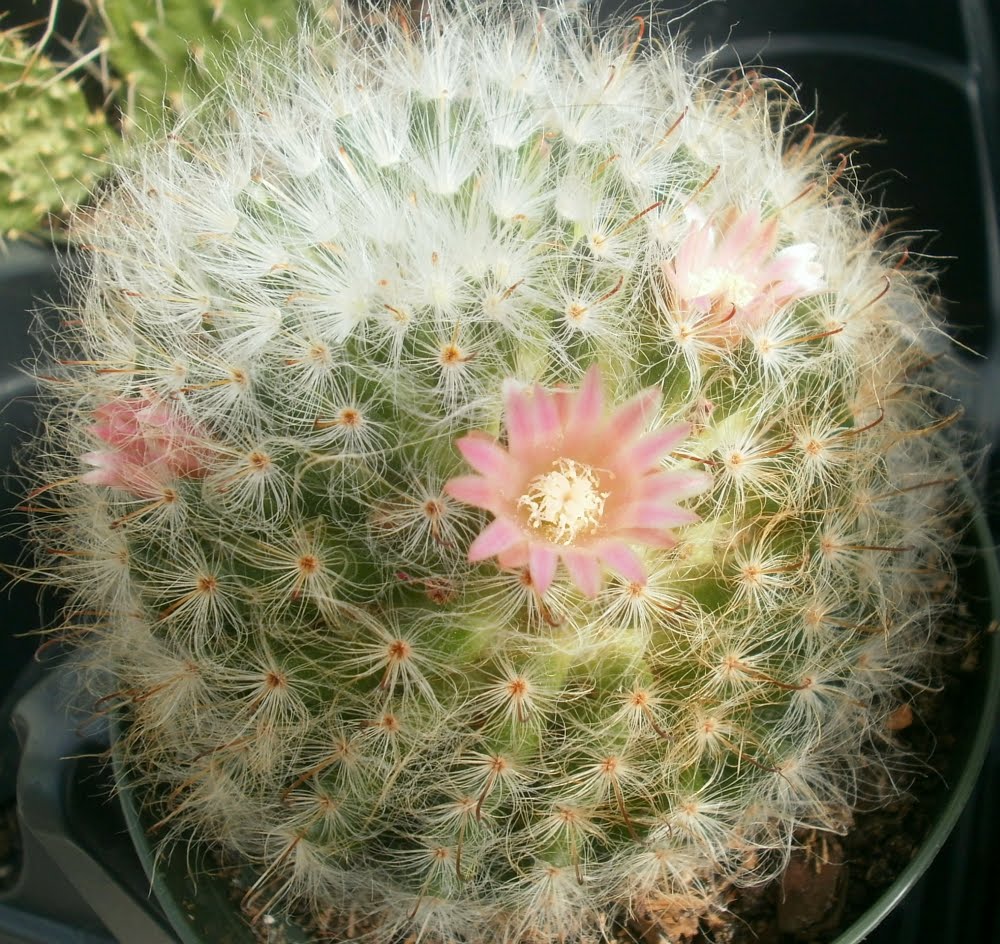 80. Mammillaria cvv./spp. (shown: NOID)
 81. Maranta leuconeura cvv. (prayer plant; shown: M. leuconeura var. kerchoveana)
 82. Mimosa pudica (sensitive plant)
Photo credit: Liza Wheeler. Used by permission.
2 people have recommended removing this plant from the list.
3 people have recommended not removing this plant from the list.
 83. Monstera deliciosa cvv. (swiss cheese philodendron; shown: M. deliciosa 'Cheesecake')
 84. Musa & Ensete spp./cvv. (ornamental banana; shown: NOID)
 85. Nematanthus cvv. (guppy plant; shown: NOID)
 86. Nephrolepis exaltata cvv. (Boston fern; shown: N. exaltata var. bostoniensis)
Photo credit: anonymous donor. Used by permission.
 87. Oncidium alliance orchids (shown: Oncidium Tsiku Marguerite NN #1)
 88. Opuntia spp./cvv. (prickly pear cactus, paddle cactus, bunny ears cactus; shown: O. microdasys?)
 89. Oxalis spp. ("Shamrocks," except they're not really shamrocks. They're like, sham shamrocks. Shown: O. triangularis cv.)
 90. Pachira aquatica (money tree)
 91. Pachypodium spp. (Madagascar palm; shown: P. lamerei)
1 person has recommended removing this plant from the list.
3 people have recommended not removing this plant from the list.
92. Paphiopedilum cvv. (lady-slipper orchid) 93. Pelargonium x hortorum (geranium; shown: P. 'Mrs. Pollock')
Photo credit: Han Keat Lim. Used by permission.
 94. Peperomia argyreia (watermelon peperomia)
 95. Peperomia caperata cvv. (shown: NOID)
 96. Peperomia clusiifolia cvv. (shown: P. clusiifolia 'Rainbow?')
 97. Peperomia obtusifolia (baby rubber plant; shown: P. obtusifolia 'Golden Gate')
 98. Phalaenopsis/Doritaenopsis cvv. (moth orchid; shown: NOID)
 99. Self-heading Philodendrons like 'Autumn,' 'Prince of Orange,' 'Moonlight' (shown: P. 'Prince of Orange')
 100. Philodendron erubescens cvv. incl. 'Red Emerald,' 'Golden Emerald' (shown: P. erubescens 'Red Emerald')
1 person has recommended removing this plant from the list.
1 person has recommended not removing this plant from the list.
 101. Philodendron hederaceum cvv. (heart-leaf philodendron; shown: P. hederaceum micans)
 102. Philodendron 'Xanadu' / 'Hope' / bipinnatifidum / 'Spicy Dog' (tree philodendron, xanadu philodendron; shown: P. bipinnatifidum 'Hope?')
 103. Pilea cadierei (aluminum plant)
 104. Pilea involucrata 'Norfolk' (friendship plant)
 105. Pilea mollis 'Moon Valley.'
 106. Pilosocereus pachycladus
 107. Platycerium spp. (staghorn fern; shown: NOID)
 108. Podocarpus macrophyllus (buddhist pine)
5 people have recommended removing this plant from the list.
 109. Polyscias balfouriana (balfour aralia; shown: variegated variety)
1 person has recommended removing this plant from the list.
1 person has recommended not removing this plant from the list.
1 person has recommended combining this plant with Polyscias fruticosa.
 110. Polyscias fruticosa (ming aralia)
1 person has recommended removing this plant from the list.
1 person has recommended not removing this plant from the list.
1 person has recommended combining this plant with Polyscias balfouriana.
 111. Portulacaria afra cvv. (baby jade plant, elephant bush; shown: P. afra)
1 person has recommended removing this plant from the list.
2 people have recommended not removing this plant from the list.
 112. Radermachera sinica (china doll)
1 person has recommended removing this plant from the list.
2 people have recommended not removing this plant from the list.
113. Ravenea rivularis (majesty palm)2 people have recommended removing this plant from the list.
2 people have recommended not removing this plant from the list.
 114. Rhapis excelsa cvv. (lady palm; shown: species)
 115. Saintpaulia cvv. (African violet; shown: NOID)
 116. Sansevieria cylindrica (wisdom horns)
 117. Sansevieria trifasciata cvv. (snake plant, mother-in-law's tongue; shown: S. trifasciata 'Laurentii')
 118. Saxifraga stolonifera (strawberry begonia)
 119. Schefflera actinophylla cvv. (umbrella plant, umbrella tree, octopus tree; shown: species)
2 people have recommended combining this plant with Schefflera arboricola.
 120. Schefflera arboricola cvv. (umbrella plant, umbrella tree; shown: species)
2 people have recommended combining this plant with Schefflera actinophylla.
 121. Schefflera elegantissima cvv. (false aralia, Dizygotheca elegantissima; shown: species)
 122. Schlumbergera cvv. (holiday/Thanksgiving/Christmas cactus; shown: NOID)
 123. Scindapsus pictus (satin pothos)
 124. Sedum burrito and S. morganianum (burro's tail; shown: S. burrito)
 125. Soleirolia soleirolii cvv. (baby tears; shown: NOID)
 126. Spathiphyllum cvv. (peace lily; shown: NOID)
 127. Stenocereus pruinosus
 128. Strelitzia nicolai and S. reginae (white bird of paradise, orange bird of paradise; shown: S. nicolai)
1 person has recommended removing this plant from the list.
1 person has recommended not removing this plant from the list.
 129. Stromanthe sanguinea cvv. (shown: S. sanguinea 'Triostar')
 130. Syngonium podophyllum cvv. (arrowhead vine; shown: S. podophyllum 'White Butterfly?')
 131. Tillandsia cyanea (pink quill)
 132. Tillandsia spp. (air plants; shown: T. capitata 'Peach')
 133. Tradescantia pallida (purple heart)
 134. Tradescantia spathacea cvv. (moses-in-the-cradle, oyster plant; shown: variegated variety)
 135. Tradescantia zebrina cvv. (wandering jew; shown: NOID)
 136. Small hybrid Vriesea cvv. (shown: NOID)
 137. Vriesea splendens (flaming sword)
 138. Yucca guatemalensis cvv. (spineless yucca; shown: species)
2 people have recommended removing this plant from the list.
2 people have recommended not removing this plant from the list.
 139. Zamioculcas zamiifolia (zz plant, eternity plant)
Plants I thought of too late, after everything was already numbered and formatted and stuff:
 140. Cereus peruvianus (Peruvian apple cactus)
1 person has recommended removing this plant from the list.
 141. Lithops cvv. (living stones; shown: NOID)
Reader-suggested additions:
 142. Senecio rowleyanus and S. radicans (string of pearls / string of bananas; shown: S. rowleyanus)
2 people have recommended adding this plant to the list.
 143. Gynura aurantiaca (purple passion plant)
1 person has recommended adding this plant to the list.
 144. Clivia cvv.
Photo credit: Guérin Nicolas at Wikimedia Commons.
2 people have recommended adding this plant to the list.
 145. Dendrobium cvv. (shown: D. 'Karen')
1 person has recommended adding this plant to the list.
146. Sarracenia spp./cvv. (pitcher plant)
1 person has recommended adding this plant to the list.
147. Drosera spp./cvv. (sundew)
1 person has recommended adding this plant to the list.
148. Aporocactus flagelliformis (rat-tail cactus)
1 person has recommended adding this plant to the list.
149. Rhipsalis spp.
1 person has recommended adding this plant to the list.
 150. Gymnocalycium spp. (shown: NOID)
1 person has recommended adding this plant to the list.
151. Gasteria spp.
1 person has recommended adding this plant to the list.
152. Citrus / Fortunella spp./cvv. (citrus trees, kumquats, lemons, etc.)
1 person has recommended adding this plant to the list.




 Posts






