Showing posts with label Cordyline. Show all posts

Sunday, December 1, 2013

[Exceptionally] Pretty pictures: transmitted light -- Part LII

My last surviving grandparent died last week. This both was and was not a big deal, and consumed enough of my week that I was unable to work much on the blog, so posting will probably be light for a while until I can catch up.

Funerals remain horrible things that are not remotely consoling. I really have no idea why anyone would ever want one.1 There was more family politics involved with this one than with the other three grandparent funerals, about which I have Feelings, but this is probably not the place to describe those. Let's just say that I like the deceased less now than I did three months ago.2

While we wait for me to get new posts together, here is another batch of transmitted light photos.

(The previous transmitted light posts can be found here.)

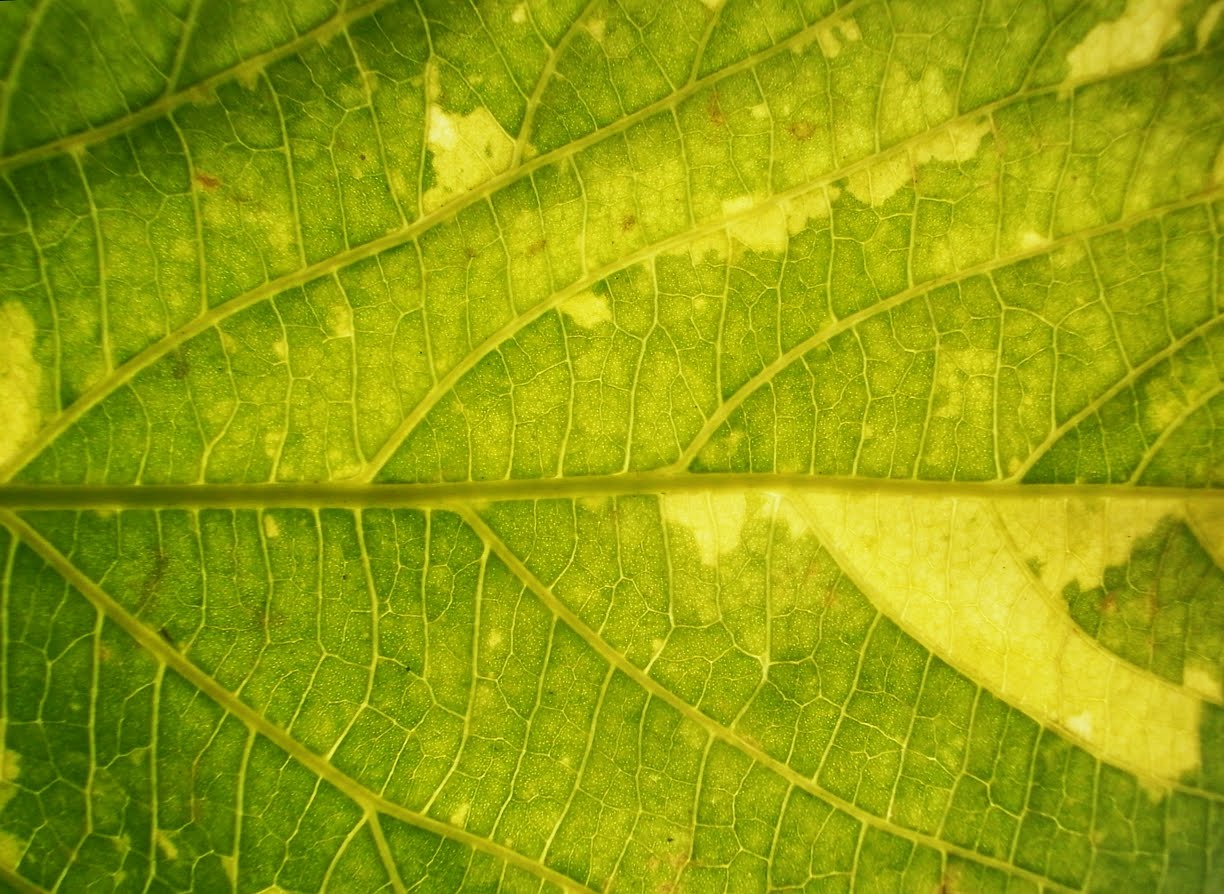
Cordyline fruticosa.

Pilea nummulariifolia.

Solanum lycopersicum NOID.

Dracaena reflexa 'Riki.'

Acalypha wilkesiana cv.

Polyscias scutellaria.

Ctenanthe lubbersiana. (This one is probably my favorite from the set.)

Stapelia gigantea, petal.

Begonia NOID.

Quercus sp., autumn.

-

1 I can appreciate the value of bringing the whole extended family together, because that part is actually kind of pleasant. (If you like your extended family, anyway.) I can appreciate doing something special to give everyone some kind of closure. But, well.
Let's say somebody steals your car, but leaves a note behind telling you that they stole your car for a really, really good reason, a reason they decline to provide any specifics about. And then let's say that everyone you talked to about how your car was stolen immediately reacts with oh, that's too bad, but I'm sure they had a good reason for taking it, and well, you'll probably see the car again sometime, like on the street or something, right?, and how about we drone some songs at 1/4 speed about how awesome your car thief was: whaddya say? And you're all like, but I don't really want to sing about how awesome the car thief is, 'cause the fucker, you know, stole my car, and they're like but you have to sing, everybody's going to be expecting you to sing, if you don't sing then people are going to be upset.
This is what religious funeral services feel like to me, except more so, because people are more valuable than cars.
2 So in a roundabout way, I suppose the funeral was successful in making me feel less bad about the loss. Though I don't think that's how funerals are supposed to achieve that feeling.


Sunday, April 28, 2013

Random plant event: Cordyline glauca

After hearing a while back that Cordyline glauca was a man-made hybrid, I attempted to track down its origins for this post, and found a few sites implying that it wasn't a hybrid at all, that it was actually a variety of Cordyline brasiliensis. So then I went looking for information about Cordyline brasiliensis, but GRIN has never heard of C. brasiliensis, Plant List was apparently broken Saturday morning, and Tropicos has heard of C. brasiliensis but was unable to provide me with any information about it that I could understand. (Which is a problem I have every time I try to use Tropicos for anything.)

So I still have no idea what Cordyline glauca's origin might be. I suppose we're lucky that no lives are at stake.


Fortunately, we don't need to know its origin in order to appreciate its flowers. I've posted pictures of C. glauca flowers previously, but 1) the older photos were produced under the lower-light conditions of the ex-job's greenhouse, and the inflorescence was consequently a bit stretched-out looking, 2) these are better pictures than those in the other post, and 3) the flowers are almost exactly the same color as the current blog background, and one doesn't often get opportunities to be so matchy-matchy on the blog.


I've only tried Cordyline glauca indoors once; I don't recall it ever having any pests, but it also didn't grow very much. It sort of limped along for a few years, then died. Cause of death was undetermined, but I suspect at least some of the problem was that it wasn't in strong enough light. I didn't try to replace it because the specimens available around here are usually pretty big (~3-5 feet / 1-1.5 m tall) and expensive (~$30-40).


Flowering is, of course, unlikely indoors, though probably not impossible.

-

Unrelated but still interesting: having scale infestations suddenly seems . . . not so bad.


(via MetaFilter)


Thursday, February 23, 2012

[Exceptionally] Pretty pictures: transmitted light -- Part XLVII

Catch-up week continues. This particular batch has an unfortunate tendency toward greenish-yellow, which I fear will clash with the background, but this is the set that was queued up and ready to post, so this is the set you get. Wear eye shielding if you feel it's appropriate to do so.1

(The previous transmitted light posts can be found here.)

Commelina communis. Is it weird if I admit that I'm looking forward to seeing the first C. communis sprouts coming up outside this spring? I mean, I know it's a weed and all, but I really enjoy the flowers.

Aglaonema 'Silver Queen.' I recently cut my 'Silver Queen' back, and am trying to root the tops in soil. This had to happen -- the plant was too tall and gangly -- but the stumps haven't resprouted yet, and I can't tell whether the tops are rooting, so I'm a little anxious about the whole thing. It's a variety that used to be all over the place but doesn't seem to be anymore, so if it doesn't survive the beheading, I may have trouble finding a replacement.

Cordyline glauca, dying leaf. My goodness, some of these photos are ancient: I only realized it because I haven't had a Cordyline glauca for nearly a year now.

I like this picture. It has something to do with the colors, but I'm not sure how to explain.

Arctium sp.

Philodendron 'Congo Green.' The line across the top of the photo isn't a shadow; it's actually part of the leaf coloration. Because Philodendron leaves start out curled up (or at least those of 'Congo Green' and a lot of other Philodendrons do), a freshly unfurled leaf will sometimes be darker on the portion of leaf that was exposed to light during development, and lighter on the part from the interior of the spiral, which is what's happened here.

Mahonia aquifolium.

Alpinia zerumbet variegata. Alas, this is not turning out to be as easy to care for indoors as I'd thought it would be. I still have one, and if it continues to live, I'll continue to keep it, but if it dies on me, I don't think I'm going to try the plant again.

Aeschynanthus longicaulis. On the other hand, A. longicaulis is remarkably easy and vigorous, at least for me. Tons of flowers this winter, too, which would be easier to get excited about if the flowers were more colorful. But still. Hard to dislike a plant that's so easygoing.

Quercus sp., autumn. Either this one or the next one is my favorite from this batch. I like both the geometry and the colors on this picture; I want to say it reminds me of an afghan my grandmother crocheted.

Caladium 'Fire Chief.' This is a little more BANG! POW! In your face! than the other, but Caladium pictures tend to be that way.


-

1 It may surprise the reader to know that the Preview function in Blogger does not render the post as it will appear on the blog: the words and pictures are all present, and in the right sizes and positions relative to one another, but the background is plain white, and there's no sidebar. This isn't a huge deal, but sometimes not being able to view an actual preview means that I post pictures that clash uncomfortably with the background, or a video gets posted that overlaps part of the sidebar, or things of that nature.


Tuesday, November 8, 2011

[Exceptionally] Pretty pictures: transmitted light -- Part XLV

I woke up on Monday depressed, and remained that way. This is something that's happened before, though usually it spontaneously dissipates after about six hours without me having to do anything. Occasionally I have to watch Beavis and Butthead Do America to shake it.

Yesterday, it didn't dissipate after six hours. More like twelve (it started to lift around 8-8:30 PM last night). But I've scraped the bottom of the posts barrel1 to bring you a post anyway, because I love you.

Though it's only a transmitted light post. I don't want to marry you or anything.

(The previous transmitted light posts can be found here.)

Spathoglottis NOID.

Zea mays.

Chlorophytum 'Charlotte.'

Aglaonema 'Maria.'

Cordyline fruticosa NOID.

Philodendron pinnatifidum 'Spicy Dog,' dying leaf. Unexpectedly, this is probably my favorite from this set.

Colocasia esculenta. Though this would be a close second place. Colocasia pictures are almost cheating, though, really.

Stromanthe sanguinea 'Triostar.' Turned out badly, which seems like it ought to be impossible with this plant. Not sure what to blame.

Caladium 'Cardinal.' Caladium pictures are cheats too. Also Codiaeum. Any of the "C" plants, really.

Episcia NOID.

-

1 Metaphor, obviously, but I picture it as being your standard staves-and-hoops barrel. Wooden (oak?), about 18 inches (46 cm) in diameter, and filled with white pieces of paper about the size of a receipt, which are the posts.


Tuesday, October 18, 2011

Rumble Among the Jungle, Matches 3.7 and 3.8

Rules and Stuff
1) It's probably possible to vote more than once per poll, but please don't. If I believe that someone is voting repeatedly, I will throw out those results, repost the poll, and seriously question that person's priorities.
2) If you want to link to a poll on Twitter / Facebook / your blog / whatever and encourage your friends to come and pump up the support for your favorite plants, you are encouraged to do so.
3) You are also encouraged to leave comments on Rumble posts, if so moved.
4) All photos will enlarge if opened in a separate window/tab.
5) You can choose which plant is "best" according to whatever criteria you decide for yourself. My personal process is a bit convoluted.1
6) All polls will be open for three days.


Results of matches 2.29 to 2.32:

I found match 2.29 to be really strange. I don't know what it is about rosette-forming succulents that y'all get so excited about, but Echeveria and its relatives have been cutting quite a swath on the way to the championship, and now Aeonium's doing it too. Worse, Aeonium's done it to Euphorbia milii, which I think was clearly the superior plant. So I don't like this at all. Final score: 58 to 52.
I don't really agree with the results of 2.30 either, but I expected it: the air plant group of Tillandsias defeated Dieffenbachia cvv. 66 to 43.

Aeonium spp. and Tillandsia spp. clash on 22 October, in match 3.15.

I'm more comfortable with the other pair of matches. In match 2.31, Agave spp. pulled ahead of Hippeastrum cvv., 62 to 48, though things were a little shaky there at the beginning.
Last, Calathea cvv. won match 2.32 over Opuntia spp., 62 to 45.

Match 3.16 will pit Agave against Calathea on 22 October. Something about that seems kind of absurd, but I guess if the universe survived the Agave-Cattleya match, it'll survive this one too.

This concludes the second round. Families leaving the competition in the second round were the Araliaceae, Begoniaceae, Commelinaceae, Compositae, Droseraceae, Euphorbiaceae, Leguminosae, Moraceae, Oxalidaceae, and Urticaceae. Let's give 'em all a hand!

[scattered applause]

The following families still have a (theoretical) chance to claim the championship: Amaryllidaceae (1 competitor remaining), Apocynaceae (2), Araceae (5), Araucariaceae (1), Asparagaceae (8), Bromeliaceae (2), Cactaceae (2), Crassulaceae (2), Cycadaceae (1), Gesneriaceae (2), Malvaceae (1), Marantaceae (1), Orchidaceae (2), Polypodiaceae (1), and Strelitziaceae (1).

My ability to predict the winners improved slightly in the second round: I got 24/32 (75%) correct.

EDITED TO ADD: Forgot to mention that the three plants I'm currently invested in (the two that I think are most likely to win, and the one that I'd most like to see win) made it through the second round intact.

And that's where we are right now. Today's matches:

Match 3.7
Platycerium spp. (staghorn fern) vs. Schlumbergera cvv. (holiday/Thanksgiving/Christmas cactus)

(Unidentified Platycerium spp.)


Center and top left: Schlumbergera 'Caribbean Dancer;' others are NOID.


Match 3.8
Cordyline fruticosa cvv. (ti plant) vs. Hibiscus rosa-sinensis (tropical hibiscus)

Clockwise from top left: Cordyline fruticosa 'Florica,' species, NOID, NOID which might be 'Chocolate Queen,' 'Kiwi.'


All unidentified cvv. except left center ('Mrs. Jimmy Spangler') and bottom right ('Sunny Wind').


-

1 I'm deciding according to a hypothetical situation in which all of my houseplants are gone, as are all the other houseplants of the world, except for one producer/supplier/retailer. Said person is offering to restock me with one or the other of the plants in question but refuses to give me both. Which one would I choose?


Wednesday, October 12, 2011

List: Plants Which Someone on the Internet has Said Bring Bad Luck

Someone visited PATSP last week via a Google search for "is euphorbia milii a bad luck plant," or something to that effect. Which is interesting. So I googled it myself, which brought me to this page, in which the author had received a question from someone wanting to know if her mother's recurrent, advanced cancer was related to the E. milii plants she'd grown "multiple varieties" of, and if so, whether she should destroy the plants.

Euphorbia milii.

So far, so heartbreaking, but the post attracted a comment confirming that the plant was terrible, and harbored bad spirits, and would kill entire families given half a chance to do so, as demonstrated by the sad (unconfirmable) case of someone (no name given) in the Middle East (country unspecified) who owned one, whose entire family died (by unspecified means), so then he was going to destroy the plant (because somehow he knew the plant was responsible?), but then another guy (likewise unnamed) saw the plant before it was destroyed and took a piece of it home with him to the Philippines. At which point the anecdote stopped because the comment-writer got distracted or something, but I assume s/he was going to go on to say that that person's whole family died horribly as well: s/he was very clear that E. milii was a bad, terrible, no good, evil, dangerous plant which should be eradicated from the face of the earth.1

Which is of course makes the situation that much worse, because now not only did the original questioner's mother have recurrent, advanced cancer, but I'm guessing her daughter also probably collected and destroyed her Euphorbia milii collection, which for all we know had been the woman's pride and joy for years.2

As if the plants were going to give her cancer again.

I did leave a comment, but I was about two years too late.

*sigh*

So that got me thinking about the concept of "bad luck" plants in general. I'd never heard of Euphorbia milii being bad luck before, much less harboring evil spirits, so I figured there were probably lots of other so-called "bad luck" plants I'd just not heard of before. So I googled. And boy, are there.

But first, let me just say -- the below is mostly pharmaceutical-grade bullshit. Plants don't contain or attract evil spirits; you're not going to change your life by buying, rearranging, or discarding them; they don't bring good or bad luck. Good stuff happens. Bad stuff happens. Because the good and bad stuff happens randomly, some people get more of it than others, but that doesn't have anything to do with what plants people grow. I mean, if having lucky bamboo nearby were actually lucky, then the people of Cameroon, where D. sanderiana is native, would be the wealthiest, happiest, longest-lived people in the world, yes? And yet.3

As has always been the case, the way to live a life of minimal unpleasantness is to be rich and powerful or related to someone who is. The plants you grow or don't grow are really not factors. (And anyway, if you're going to avoid everything on this list, you may as well just give up trying to grow plants, period.)

I've linked the sources for the various claims of bad luck, and either quoted or summarized the relevant parts. All quotations are [sic]. Sometimes I've added my own comments to the end.

Chlorophytum comosum.
(link)
"Am I the only who has herd this one before? If you own a spider plant you will be cursed with bad luck. So anyone herd this old tale or know someone who owned the plant and had bad luck until getting rid of it? Odd I can't seem to find anything online about the topic but I herd it from someone so I wondered what you all thought." (-PillsburyDoughboy)
My comment: the general consensus from the people who replied was that either 1) they're not bad luck, or 2) that they might be, but everybody really hoped they weren't.4


Hedera helix
(link)
Summary: ivy is bad luck inside but good outside. It's particularly bad to give it to someone who is ill.

(link5)
My recollection is that this also said basically that ivy was bad luck inside the home.

(link)
Summary: unlucky as a gift, "a person who grows ivy will always be poor," only permissible indoors as Christmas decoration.
My comment: you may as well go ahead and take this as true, because Hedera are often lousy houseplants. It's not that they're unlucky, just that they're unsuited to indoor cultivation unless you have a cool, bright, moist home, which few of us do.


Aloe vera
(link)
"Some say that its bad luck to grow aloe vera plant at home, is it true?" (-ahelas_123)
My comment: the few people who replied said no, not bad luck.


Any and all thorny/spiky plants, especially cacti (probably also includes Pachypodium, Agaves, most Euphorbias, Pandanus veitchii, and pretty much anything else that could be worth growing). Shown: unidentified cactus.
(link)
Summary: thorny plants shouldn't go inside the home or close to one's front door, but you can plant as many as you like outside the house.

(link)
Summary: Friends of the author's suffered terrible catastrophes (unspecified) after putting cactus plants on their windowsills, because cacti send out "little slivers of bad energy" which accumulate like dust bunnies until something bad happens.6 Then the friends took the cacti away and the bad things stopped happening.

(link)
"many people say that cactuses are bad luck especially if you place it inside your home, but i don't believe in that stupid idea, whoever said that, well i'm so sorry but i really don't believe you... I really love plants, i have my collection of cactuses at home, i just love them, they're very nice to look at..." (-Cosepqueenie)
My comment: replies amounted to one person saying "well, you don't have to believe it, sweetie" and two bits of spam.

(link)
Summary: cacti are specifically believed to be bad luck in Hungary, apparently.


Bonsai specimens (Juniperus, Acer, etc.). Shown: Juniperus sp.
(link)
Summary: bonsai represent stunted growth and thereby make for bad symbolism. Or something.


"Overgrown" plants (?). Shown: Pilea depressa.
(link)
Summary: they give off bad vibes.7


Murraya paniculata.
(link)
"The Murraya is a silent, slow killer. Those flu symptoms that you have been experiencing are thanks to the innocent looking orange jasmine. Get rid of it NOW or face a lifetime of illness." (Anonymous PATSP commenter, whose family is apparently allergic to the plant, which is a very different thing from the plant being a "silent, slow killer."8)


Cordyline fruticosa, red cvv.
(link)
"Some people believe red ti plant invites bad luck."
My comment: the page also says that "Hawaiians think this plant is a charm against evil," which means that whether good things or bad things happen to you after buying a red ti plant, the page predicted that it would happen.

(link)
Summary: Cordyline is a low-maintenance and colorful plant which is often grown in Singaporean cemeteries, because it's low-maintenance and colorful. Consequently, people believe it to be bad luck, because if it isn't bad luck then what's it doing in all those cemeteries, with the dead people?


Codiaeum variegatum (croton).
(link)
Summary: Same as for Cordyline fruticosa: it's bad because it's grown in cemeteries; it's grown in cemeteries because it doesn't need a lot of tending.


Epipremnum aureum (pothos).
(link)
Summary: [every bad thing that's happened to five (?) different families over a period of several years] (-tablariddim)
The original questioner hasn't considered the possibility that bad things often happen in close proximity to pothos because everyfuckingbody has a pothos.


Night-blooming / night-fragrant plants, especially those with white flowers and/or heavy fragrance, e.g. Cereus peruvianus, Epiphyllum cvv., Cestrum nocturnum, Hoyas, Sansevieria trifasciata?, Peniocereus greggii. Shown: Hoya lacunosa.
(link)
Summary: Night-blooming plants are unlucky because in some cultures, suddenly detecting a flower's scent indicates the presence of spirits nearby. (See Musa and Ensete spp. below.) Also white is the color of death and mourning in these cultures too, so the fact that many night-opening flowers are also white just makes them that much scarier.
My comment: night-blooming flowers do tend to be fragrant or white or both, because both qualities make it easier for nocturnal pollinators to locate the flower.


Musa and Ensete spp. (bananas), Plumeria spp. (frangipani). Shown: Musa NOID.
(link)
Summary: Banana trees are believed to contain spirits called "Pontianaks" who are the ghosts of women who died in childbirth. Pontianaks appear in the form of beautiful women, "dig into the . . . stomach with long sharp fingernails," and eat "it" (presumably the stomach?). They also attack pregnant women, and announce their presence by the smell of jasmine or Plumeria, followed by a horrible stench. A pontianak can be controlled by tying a red thread around a banana tree and tying the other end to the foot of one's bed; it then has to do the bidding of whoever tied the thread or whoever sleeps in the bed or something like that. (Site wasn't specific.)


Chrysanthemum cvv. Shown: Chrysanthemum NOID.
(link)
Summary: Thought to attract the ghost of Okiku, who cries a lot, for reasons which vary according to the version of the story being told.

(link)
Summary: bad luck because of its association with funerals.


Bamboo varieties. Shown: Pogonantherum paniceum.
(link)
Summary: Contain evil spirits and/or ghosts.


Plumeria cvv. (frangipani)
(link)
Summary: the Thai word for Plumeria means sadness, so obviously it's bad luck. It's believed to house the ghosts of evil people. Plus there's the whole thing about smelling the fragrance when a pontianak is nearby.


Tradescantia zebrina cvv. (wandering jew)
(link)
Summary: the unluckiness of wandering jew is apparently a long-standing superstition in the U.S., though I'd never heard of it.9


Drosera spp.
(link)
Summary: Not a lot of information to go on, but is apparently unlucky for sheep in particular?


Any plant that blooms out of season. Shown: Aechmea fasciata.
(link)
Summary: plants blooming out of season were thought to be "touched by the devil."
I assume this would apply to plants that were chemically induced to bloom, so most store-bought Spathiphyllums, Schlumbergeras and bromeliads, would probably qualify. Also Euphorbia pulcherrima are usually induced to bloom a bit earlier than they normally would, in order to sell at Christmas, so they'd at least sort of count. (And we all know that poinsettias are touched by the devil regardless.) Probably lots of other things too.

No doubt I've missed some: it's difficult subject matter for a Google search, because one also runs into a lot of pages where people say they have bad luck with this plant or that plant, which is obviously different from having bad luck due to the plant. So let me know if you run into other examples.

-

1 The full comment, copied from the site:
shayne Says:
January 18th, 2010 at 10:58 am

yeah.. its true.. the plant euphorbia is “MALAS”.. it has a bad spirit.. that causes many sickness.. and can cuase death for the whole family who lives in the house with euphorbia plants.. it is proven.. ive searched about this plant.. that is from the middle east.. one man there that owns that plant .. his family was died becauseof that plant.. after of wat happened to his famiy he decided to destroy it. but before he destroy it a seaman saw it and get one of it.. and that seaman brought it in the phillipines.. it is proven that if you have that plant in your house your family will always get sick.. that sometimes causes death for the whole family.. because that plant grows even you dont watered him.. it is beautiful to see.. but it brings badluck to your life.. so if you dont want bad luck happens to you and to your family.. destroy that plant.. and its better to tell it to your other friends about it.. to prevent the growing numbers of that plant.. im juz a concerned citizen.. thats why im telling you this. its all up to you if your going to beleive it..
[sic, obviously]
2 (I mean, maybe not, but the plants must have been around for a while: if they were new, it wouldn't make any sense to blame them for the cancer. Not that it makes sense to blame them for the cancer anyway, but you know what I'm saying.)
3 One could make a fairly strong argument that Japanese knotweed -- native to prosperous East Asian countries like Japan, China, and South Korea, widespread and invasive in Europe, the U.S., and Canada -- is one of the most potent good-luck plants in the world, based on the economic situations of the countries where it's found. I mean, it would be extremely irresponsible to make that argument, but some people would find it convincing.
4 Tip: if you have to hope that it's not bad luck, because you've had a bunch of them for several years, then it's not. You would obviously notice it, if the bad luck were real. As would everybody else who's grown one.
5 This site was down when I was trying to write the post, but it worked when I was searching initially, so I don't know whether you'll be able to get to it or not. My recollection is that it said basically the same thing as snopes.com.)
6 I don't believe anyone has ever shown any physical evidence for the existence or accumulation of "energy shards," nor measured the rate at which they accumulate, nor defined the quantity necessary to cause "bad luck," nor explained how removing the source makes them go away. (When you remove a shedding dog from a house, does the accumulated hair disappear from the carpet? No? Then why would removing a plant make the accumulated energy shards disappear?)
Not that one would necessarily expect this to be the sort of detail you'd go into in the sort of breezy, informal book I've linked to, but -- well, that's sort of the problem: the feng shui community doesn't seem to publish anything that isn't breezy and informal.
7 (No, really, that's pretty much all it says.)
8 Among the differences: if you're allergic to plant X, it does not necessarily follow that all human beings are allergic to plant X. Also -- we've had the plant almost five years now: if it's going to kill us, it's taking its time about it.
9 (I suspect that most of these aren't actually believed by very many people, even in their country/region of origin.)