Showing posts with label Stapelia. Show all posts

Saturday, November 21, 2015

Random plant events: the stapeliads

Stapeliads1 are just the best plants. Or, well, they fall just short of being the best plants, because they're difficult to grow from seed, and they're even more difficult to hybridize. But they're so weird, and so easy to grow, and, well, I was prepared to say "beautiful" but how about I just say "weird" again -- that you are almost certainly not growing as many of them as you should be.

I have five, at the moment, four of which have bloomed this fall. That's less impressive than it sounds, because Huernia schneideriana basically never stops blooming, and H. oculata only stops briefly, every few months, presumably to catch its breath. Here's H. schneideriana:


And H. oculata:


In previous years, I've seen blooms on Stapelia gigantea between September and December, but not this year. They look like this, when they happen, and are as stinky as they are enormous:


The two biggest surprises this year were Huernia zebrina and Stapelia variegata. Both have bloomed pretty prolifically for me when I've had them outside for the summer, but I never thought they could get enough light in the house to bloom spontaneously. I mean, I only got one bloom apiece, but still.

Huernia zebrina lives in a semi-obstructed west window:


And Stapelia variegata lives in a pretty wide-open east window:


Normally, stapeliad blooms have five-fold symmetry; I don't know what led the plant to produce a bloom with only four of everything.


I had a clue that the Stapelia variegata was blooming, but didn't realize it was a clue until too late: Sheba had started doing a lot of pointed sniffing in that part of the living room, which I'd noticed but not given a lot of thought to: it's not that unusual for her to sniff intensely around something for no obvious reason. I found the bloom when I went to water the plants in the living room. A single S. variegata bloom like this isn't particularly unpleasant, but when we had three flowers at once, over the kitchen sink, I was asked, kindly but firmly, to put the plant somewhere else.

All five stapeliads are pretty easy to grow. H. schneideriana is one of the easiest plants I have; H. oculata hasn't been here as long as the others, but has been easy so far. I have trouble getting enough light to S. variegata, which results in weak, etiolated new growth, which is sort of a problem. S. gigantea complains about being overwatered occasionally. H. zebrina is the problem child of the group, if any: the joints where new branches emerge tend to be weak, and are easily pulled apart. Often this happens without the stem noticeably changing position or location, so I usually don't notice that anything has happened until a stem starts turning yellow. Though this also makes it one of the easier ones to propagate, as I don't even need to intend to take a cutting a lot of the time: cuttings just happen.

-

1 The most commonly grown stapeliads are from the genera Stapelia, Huernia, and Orbea, and a few others are cultivated occasionally, or by specialists, like Caralluma, Edithcolea (which has amazing flowers), Whitesloanea, and Hoodia.
(This Hoodia is the same Hoodia as the hot new all-natural weight loss herbal supplement cactus hoodia you probably heard about a few years ago, when it was briefly a thing. We have since realized that no, Hoodia isn't a magical effortless the-pounds-just-melt-right-off pill either. But surely the next one will be. Or maybe the one after that. Or.)
The Stapeliae are a "tribe" within the subfamily Asclepiadoideae, in the family Apocynaceae. This makes them sort of close relatives to Ceropegia, Dischidia, and Hoya, and somewhat more distant relations to Nerium, Plumeria, Stephanotis, and Allamanda.


Sunday, December 1, 2013

[Exceptionally] Pretty pictures: transmitted light -- Part LII

My last surviving grandparent died last week. This both was and was not a big deal, and consumed enough of my week that I was unable to work much on the blog, so posting will probably be light for a while until I can catch up.

Funerals remain horrible things that are not remotely consoling. I really have no idea why anyone would ever want one.1 There was more family politics involved with this one than with the other three grandparent funerals, about which I have Feelings, but this is probably not the place to describe those. Let's just say that I like the deceased less now than I did three months ago.2

While we wait for me to get new posts together, here is another batch of transmitted light photos.

(The previous transmitted light posts can be found here.)

Cordyline fruticosa.

Pilea nummulariifolia.

Solanum lycopersicum NOID.

Dracaena reflexa 'Riki.'

Acalypha wilkesiana cv.

Polyscias scutellaria.

Ctenanthe lubbersiana. (This one is probably my favorite from the set.)

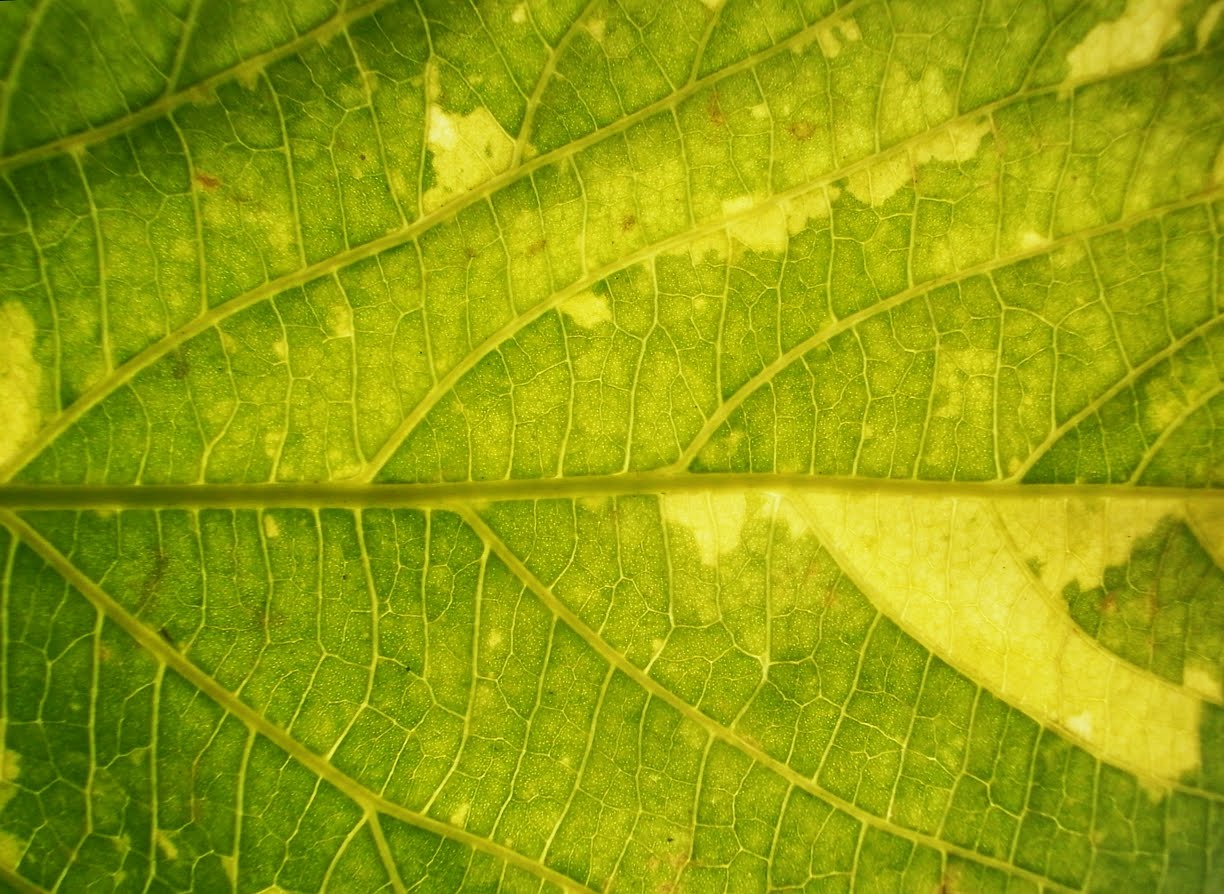
Stapelia gigantea, petal.

Begonia NOID.

Quercus sp., autumn.

-

1 I can appreciate the value of bringing the whole extended family together, because that part is actually kind of pleasant. (If you like your extended family, anyway.) I can appreciate doing something special to give everyone some kind of closure. But, well.
Let's say somebody steals your car, but leaves a note behind telling you that they stole your car for a really, really good reason, a reason they decline to provide any specifics about. And then let's say that everyone you talked to about how your car was stolen immediately reacts with oh, that's too bad, but I'm sure they had a good reason for taking it, and well, you'll probably see the car again sometime, like on the street or something, right?, and how about we drone some songs at 1/4 speed about how awesome your car thief was: whaddya say? And you're all like, but I don't really want to sing about how awesome the car thief is, 'cause the fucker, you know, stole my car, and they're like but you have to sing, everybody's going to be expecting you to sing, if you don't sing then people are going to be upset.
This is what religious funeral services feel like to me, except more so, because people are more valuable than cars.
2 So in a roundabout way, I suppose the funeral was successful in making me feel less bad about the loss. Though I don't think that's how funerals are supposed to achieve that feeling.


Wednesday, October 30, 2013

Your Love is Like / a Rollercoaster, Baby, Baby


Weird times. The plant collection is at once thriving in previously unprecedented ways and going completely to hell, which I guess is something that can happen once a collection reaches a certain size. Sort of like how Texas can be a disaster area due to flood and drought simultaneously.

On the one hand, I've been finding scale infestations all over the house, including on some very special plants,1 which has at times left me despairing of ever getting things under control. (For good reason -- this has been going on for almost two years already, and only seems to be getting worse. It's showing up in new rooms, it's showing up on plants I thought I'd cured, and it's particularly bad on the plants that were outside for the summer.2) I'm not seeing scale on that many plants, really (probably only about 50, in a collection of 955), but of course it's the scale you're not seeing that's the real problem.

Also the Euphorbia fungus has returned as well. It probably never left.

On the other hand, the Stapelia giganteas are blooming like crazy, which is delightful, in that special way that the smell of dog shit can be delightful if it's being smelled for the right reasons.3


Anthurium "Bijoux Tuit" is working on a second bloom, making it the second of my Anthurium seedlings to bloom twice. Three more Anthurium seedlings are producing first blooms,4 for a total of thirteen. I'm not completely used to the idea of the Anthuriums blooming, even though it's been a few weeks now, so this is neat every time I'm reminded of it. About 40% of the Clivia seeds I started are producing leaves.5 I just took a whole bunch of berries off the Coffea and started seeds drying.6

Seeds on lower right.

I had one Schlumbergera seedling, #55, produce a flower bud about 14 months after it was first sown.7 The Spathiphyllum seedlings are looking like actual plants now, and have been for some time.


They're even suckering!


So the teal deer here is that the most incredible, wonderful, and exciting things are happening with the plant collection, and I am honestly thinking about throwing it all in the trash, shuttering the blog, and taking up a less emotionally draining hobby, like competitive jam-jar rolling.

For the time being, I've just been throwing out plants8 and looking for sources for bulk imidacloprid.9 Should I find scale on the Anthuriums again, however, absolutely anything might happen.

LATE EDIT: While watering on Tuesday night, I found out Schlumbergera number 25 has decided to try and bloom as well:


Hopefully that bud will do better than #55's did.

-

1 The original Murraya paniculata, all four of the gray-variegated Yucca guatemalensis, and the Furcraea foetida 'Medio-Picta,' to name a few.
2 Lesson learned: don't put scale-infested plants outside in the summer. I blame ants.
3 So far, I have six blooms open at once in the plant room, plus at least one on the smellier Stapelia variegata, and I'm not finding the combined odor objectionable or even noticing it much. Which might mean that I've just gotten used to it, but the husband hasn't said commented on any unusual smells, and he spends less time in the house. So I'm thinking maybe it's just really not that bad unless you're up close. They're not a flower you want to stick behind your ear or anything.
4 #118, "Elijah Sturdabowtit;" #46, "Aurora Boreanaz;" and #235, "Rowan DeBoate." Rowan is particularly of interest, as her spathe is sort of a pale peach/cream color, which I haven't seen before on my plants.
5 No, it does not seem to have mattered much whether I rinsed them with hydrogen peroxide before planting, though I can't say for certain that it doesn't matter at all. The un-peroxided group of five seeds currently stands at: 0 rotted, 3 inactive, and 2 germinated and producing foliage. The peroxided group of eight seeds has 2 rotted, 1 inactive, 2 germinated but not doing much of anything, and 3 germinated and producing foliage. If we're only counting the seedlings that are visibly growing and healthy-seeming, that's a success rate of 40% on the first group and 38% on the second.
6 I took one berry off on 7 October, which gave me two seeds. Then on 27 October, I removed a whole cupful, and got 138 seeds. Though at least three got washed down the drain while I was trying to clean them off, and I'm planning to give a few others away, so I'm probably going to wind up starting about 130 seeds from this batch on 22 December. And that's not even half the berries that are on the plant.
Unrelated point of interest: in large quantities, Coffea berry skins smell sort of oniony, it turns out.
7 No pictures, because the bud dropped. It had either already given up on further development when I took it out of the flat it was in, or I knocked it off the plant in the process of untangling it from the other seedlings, 'cause by the time I went to get the camera to take a picture, it was no longer attached to the plant. Considering that it had no business even thinking about blooming in the first place (it's in the basement, under artificial lights, so it doesn't get the long, cool nights it should require for setting buds, and it was also a couple years too young to be blooming besides, according to all the reputable websites), I figure this is a pretty good sign. The moral? Between this and the Anthurium situation, I'm thinking that it's best to ignore when people tell you that plants have to be X years old before they'll bloom, because plants can't read and will bloom when they feel like it.
8 I had 1017 plants at the beginning of September, 1001 at the beginning of October, and it looks like we're going to be somewhere around 950 at the beginning of November. Since most of the plants that were easy to get rid of got thrown out ages ago, every plant I discard now is like a knife to the heart, pretty much.
9 For comparison, I've been paying $8.50 for one pound of 0.22% imidacloprid; the stuff at the link is $3.08/lb for 0.5% imidacloprid, before shipping. Do I actually need that much in order to dose the entire collection all at once? No, probably not that much. My best ballpark guess is about 25 lb. of what I've been getting, or 11 lb. of the bulk stuff.
Some of you will, at this point, be thinking about telling me I should try something else, something other than imidacloprid, like neem oil or rubbing alcohol or whatever. The reason why I'm not considering these as options is because sprinkling imidacloprid granules on soil is fast, covers the whole plant, and only has to be done once. Spraying neem or rubbing alcohol, or anything else, takes much longer to apply, covers only the areas I can reach with the spray (not so bad for large-leaved plants like Strelitzia, but spraying every surface on a Polyscias fruticosa? Fuggedaboutit.), and has to be re-done at least every week or two to keep up with the freshly-hatched larvae. As the size of the collection decreases, rubbing alcohol or whatever might be more of an option, but at the moment, there's really no way I could keep up. It's not like I haven't tried before.


Thursday, October 24, 2013

Grab bag

Various recent plant- and fungus-related events:

1. Stapelia gigantea


Everybody else has been posting Stapelia pictures for the last month or so, but my plants have lagged behind for some reason: everybody else was posting flowers when I was just beginning to see buds.

So far, two flowers have opened, and there are another four or five left to go. As to the smell: I can't detect any just standing in the room with them. I can if I get right up next to them and inhale, though. Experiments to determine the minimum number of Stapelia gigantea flowers it takes to be unpleasant in a plant-room-sized room are ongoing; I'll keep you informed about the results.


2. Strelitzia juncea

I've finally obtained some Strelitzia juncea seeds, after a long period of wanting some but not finding any. I began with five seeds, which I planted on 19 September, and I noticed the first sprout on 18 October, which I guess is fairly rapid progress. I'd been warned that they were irregular germinators, and could take a few months to do anything, so I guess this is encouraging.


I'm not even sure why I wanted them in the first place; the existing Strelitzias here (2 S. nicolai, 2 S. reginae) are big and awkward to deal with, and it's not clear that S. juncea can even be grown indoors in the first place. But I'm still going to try.


3. Anthuriums, assorted

The Anthurium "hookeri" spadix is not showing any sign of having self-pollinated. Which is more or less what I was expecting to happen. Or expecting to not happen, I guess. It's still attached to the plant, though, and sometimes they take a while to show any obvious changes, so I haven't entirely given up hope yet.

There are also two new additions to the list of flowering Anthurium seedlings, #26 ("Peaches Christ," whom we've seen on the blog before) and #276 ("Zach Religious"). That's eight seedlings blooming now: 26, 59, 76, 108, 238, 243, 276, and 282. In case you needed some lottery numbers to play or something.1

Peaches' spathe is, so far, the same pink-red as "Bijoux Tuit" and most of the others, and is consequently not that interesting enough to warrant a photo, but the plant as a whole looks good even if the flower's nothing special.

Zach is possibly going to be the most interesting seedling yet; his spathe is a pale peach-pink with a red margin right now.

It's actually kind of unsettlingly close to my skin tone (below and to the left of the spathe), now that I look at the picture.

The color may change -- not only is it normal for developing spathes to get darker in color as they mature, but I'm not sure Zach's going to make it to full bloom. Some of the Anthurium seedlings do a practice inflorescence and then drop it before they make a real one in a different color,2 and there are some indications that Zach might be inclined that way. (Both "Dave Trading" and "Bob Humbug" did this too; maybe it's a guy thing.) In any case, I'm potentially excited about having some variety in color.

"Sal Monella" is both in the process of unrolling the spathe from its first inflorescence and in the process of producing a second bloom. If the second bloom is successful, then Sal would be the first of the seedlings to bloom twice, which makes him potentially valuable for breeding. Also nice: the spathe has remained a solid red red, not the pinkish-red of most of the others. It's not hugely different from the other five that had bloomed previously, but it's different enough to notice and be happy about.

(New inflorescence is just starting to be visible, below and slightly to the left of the one that's opening now.)

EDIT: I finished this post Wednesday morning, then found another two flowers in progress on Wednesday afternoon: #58 ("Betty Larsony") and #245 ("Sawyer Ad"). Sawyer's spathe looks more or less in line with Gemini and most of the other seedlings; Betty might be a little lighter in color but it's hard to tell for sure. In Betty's case, I believe she's trying to apologize. So that makes ten.

And no, I'm not going to blog about it every. Single. Time. one of the Anthurium seedlings produces a flower from now until the end of eternity. But I'm excited. Bear with me.


4. Unknown mushrooms


I happened on this group a while back and found the size of the clump impressive enough to photograph. I couldn't make an ID on the species, even with the pictures to go from and my copy of The Pocket Guide to Wild Mushrooms; my best guess is something in the Hypholoma genus but I emphasize that it's a guess.


The closest match in the book was H. capnoides, but the pictures of H. capnoides that come up in Google don't look much like my pictures or those in the book. And considering that the book is explicitly about edible mushrooms, and not all mushrooms are edible, there's every chance it shouldn't contain a photo of this particular mushroom in the first place. So I probably shouldn't even be guessing at an ID in public.


Mushrooms remain neat, though, even if they aren't plants.


5. Artiocarpus heterophyllus


Finally, an oddity at the supermarket: Jackfruit.


One could buy it by weight ($10/lb, which translates to $4.50/kg) or pay $30 (reduced from $35!) and get the entire fruit. (Which suggests that the whole thing was maybe only 4 lb / 1.8 kg to begin with. It sure looked a lot heavier than that, though, so I may be making some bad assumptions.) At those prices, for a fruit I couldn't have even guessed how to begin eating, I wasn't particularly tempted, though the informational sign next to it mentioned seeds, and that got my attention briefly.

-

1 Yes, I am aware that lottery numbers usually don't go that high, and don't usually have you pick eight numbers. But I'm not seriously suggesting that you play the lottery, so it all works out.
2 It's not really practice. But that's what it looks like. (If you object to plant anthropomorphization, what are you even doing here in the first place?)


Wednesday, July 31, 2013

Random plant events: Huernia schneideriana (?), Huernia zebrina, and Stapelia variegata

Originally, this post was just supposed to be about the Huernia schneideriana, because I saw that it had produced some buds on 18 July.


And they opened on 23 July, the first time I'd seen the flowers in-person, which was neat.

(This photo is actually from 27 July, but it's the same flower that opened on the 23rd. Should also note that the flower is actually very small: maybe 3/4 inch, or 2 cm, in diameter.)

But then two days after that, on the 25th, I happened to see that the Stapelia variegata had produced a flower without me even noticing the bud.

This flower is about 2 inches / 5 cm in diameter.

And two days after that, on 27 July, I saw that the Huernia zebrina had also produced a bunch of buds, one of which had fully opened by that afternoon.

Maybe 1 in / 2.5 cm in diameter.

So instead of a post about a single stapeliad flower, you get a post about three of them. And they cover a range of color patterns: solid, dots, stripes. So it's clearly a good thing that I couldn't write this post when I first thought of it.

As a side note: the flowering of the H. schneideriana means that all four of my stapeliads have now bloomed, so I can compare their smells. S. variegata is definitely, absolutely, no question about it, the worst-smelling. I haven't been able to smell anything, good or bad, from either of the Huernias, even checking multiple times over the course of a day. S. gigantea definitely has an unpleasant smell, but it's not so intense as to be particularly bothersome, if it's only one flower at a time. Putting the S. variegata next to the door we use all the time was a mistake, though.


Tuesday, March 5, 2013

Ten(-ish) Things I Have Mistaken for Scale

So we're in the fifth week of checking all the plants in the basement weekly (on the east and south sides) or every second week (on the west). I'm not finding many actual pests anymore, for two reasons:

The first reason is that there's just not that much to find anymore, since any plants with obvious, easy to see infestations were already thrown in the trash.1 The second is that I'm not looking as hard, because it's extremely time-consuming and tedious to do, and I'm tired of it.

As a result, almost every scale insect I've seen lately has been a false positive of one kind or another. And there are many kinds. So here is a list of ten things I have managed to mistake for scale in the last five weeks:

1. Scars -- on everything. Oh my god. You've never imagined how many little tan corky spots there are on the leaves, petioles, and stems of your plants until you've had to check each one individually to see whether it rubs off. And of course there's no way to actually remove them, because they're part of the plant, so I wind up checking the same scars over and over, week after week. This is far and away the largest and most irritating category of false positives.

Multiple scars on Epipremnum aureum 'Neon.'

Leaf scar on Manfreda undulata 'Chocolate Chips.'

Not actually sure what this thing on a NOID Cryptanthus is, but I think it's either edema, a scar, or edema that became a scar.

Multiple irregular scars on the back of a Begonia x 'Erythrophylla' leaf.

Scars from thrips (?) on one of the Anthurium seedlings.


2. Dots of dried sap -- they're generally the wrong color to be scale, but the size and shape are close, so they have to get checked out anyway. Arguably a subcategory of scars, though distinct because dried sap rubs off. (Usually.)

Dried sap on Euphorbia trigona.

And on Hoya something. (Sold as H. kentiana, probably actually H. wayetii.)


3. Marginal burn, tip burn -- It doesn't happen a lot, but sometimes when a leaf is burnt in just the right way, the dead spot looks like a scale insect hanging right on the edge or tip of the leaf. Since the actual insects tend to congregate around the spot where the petiole attaches to the leaf, on and along the midrib and other major veins, this isn't terribly confusing, but it happens.

The margin spots on this variegated Yucca guatemalensis didn't make it through the recoloring / cropping process in very good shape, but they're there, along with a more obvious scar in the center of the leaf.


4. Aerial roots -- the shape is often not quite right, but when they're first developing, some aerial roots are small, oval, and tan. Best distinguished from scale by the facts that they don't wipe off and that they're pointy.

Aerial roots on a somewhat unhappy Selenicereus anthonyanus.2

Roots forming on a Stapelia gigantea stem.


5. Dirt -- dirt gets splashed all over when I water, so some of it ends up on the leaves and stems. Because there's no wind in the basement to blow it off, it stays attached. The irregular shape usually gives it away, but some pieces of bark are rounded enough to be momentarily alarming, and vermiculite is about the right color, so this is occasionally a problem.

A tiny fleck of potting mix on an Aglaonema 'Peacock' leaf.

A couple bits of dirt on an Anthurium seedling.


6. The natural coloration of the plant -- some plants just naturally have lots of little bumps or brown spots or whatever. In most of these cases, I've either given up on checking altogether because it's impossible, or the plant got scale a long time ago and has been thrown out. Aerial roots is technically a subdivision of natural coloration, now that I think about it, but it's so common and specific it probably deserves a separate entry anyway.

Close-up of a Ficus microcarpus stem, showing peeling bark, aerial roots, and a bunch of other random stuff.

Some of this Schefflera actinophylla's brown spots, if not all of them, are capable of becoming aerial roots if the air is sufficiently humid, but usually they just expand to form bark.


7. Edema -- again, bumps due to edema are usually irregularly shaped, so I don't have to resort to the squish test, but this has still happened plenty of times.

Surprisingly bad edema on a Billbergia nutans leaf, probably because I moved it into a bigger pot and then set it in front of a cold window.


8. Spiders -- only once, but still.


9. Mineral deposits -- parts of the plants that are in contact with the soil will sometimes get a tan, crusty mineral buildup which can resemble a big infestation of closely-spaced scale. Hatiora salicornioides seems to be especially prone to this, but I also see it on Anthurium quite a lot.

Mineral crust on Hatiora salicornioides.


10. Hallucinations -- and occasionally I just straight-up see things that aren't there. Which is usually a sign that I should take a break.

-

1 The last few scale insects I've found also appeared to be dead already. Or at least they were really, really tired, being flat and dried out and crunchy. One hopes that this has something to do with the imidacloprid.
Although thrips aren't really the focus of the post, for readers who are curious: the thrips are still around, here and there, and when I see them they're generally alive. I'm only finding them in a particular fairly narrow section of the basement shelves, though, and I didn't find any last week, so this is maybe progress. I also got my first thrips photos -- none are very good, but they're an improvement over no photos at all:
The thrips in question was photographed on notebook paper (hence the blue line in the top image), through a tiny magnifying glass lens, if this gives you any sense of the size.
2 I have two Selenicereus anthonyanus plants, one in the basement and one in the plant room, and neither one has ever seemed very happy to be here. Mostly they just don't grow very fast, and the new growth is thin. Likely a light issue, but I don't have any better spots available.
It's weird, because Selenicereus chrysocardium is fine in very similar spots. I don't know what's wrong.