Showing posts with label Hedera. Show all posts

Wednesday, October 12, 2011

List: Plants Which Someone on the Internet has Said Bring Bad Luck

Someone visited PATSP last week via a Google search for "is euphorbia milii a bad luck plant," or something to that effect. Which is interesting. So I googled it myself, which brought me to this page, in which the author had received a question from someone wanting to know if her mother's recurrent, advanced cancer was related to the E. milii plants she'd grown "multiple varieties" of, and if so, whether she should destroy the plants.

Euphorbia milii.

So far, so heartbreaking, but the post attracted a comment confirming that the plant was terrible, and harbored bad spirits, and would kill entire families given half a chance to do so, as demonstrated by the sad (unconfirmable) case of someone (no name given) in the Middle East (country unspecified) who owned one, whose entire family died (by unspecified means), so then he was going to destroy the plant (because somehow he knew the plant was responsible?), but then another guy (likewise unnamed) saw the plant before it was destroyed and took a piece of it home with him to the Philippines. At which point the anecdote stopped because the comment-writer got distracted or something, but I assume s/he was going to go on to say that that person's whole family died horribly as well: s/he was very clear that E. milii was a bad, terrible, no good, evil, dangerous plant which should be eradicated from the face of the earth.1

Which is of course makes the situation that much worse, because now not only did the original questioner's mother have recurrent, advanced cancer, but I'm guessing her daughter also probably collected and destroyed her Euphorbia milii collection, which for all we know had been the woman's pride and joy for years.2

As if the plants were going to give her cancer again.

I did leave a comment, but I was about two years too late.

*sigh*

So that got me thinking about the concept of "bad luck" plants in general. I'd never heard of Euphorbia milii being bad luck before, much less harboring evil spirits, so I figured there were probably lots of other so-called "bad luck" plants I'd just not heard of before. So I googled. And boy, are there.

But first, let me just say -- the below is mostly pharmaceutical-grade bullshit. Plants don't contain or attract evil spirits; you're not going to change your life by buying, rearranging, or discarding them; they don't bring good or bad luck. Good stuff happens. Bad stuff happens. Because the good and bad stuff happens randomly, some people get more of it than others, but that doesn't have anything to do with what plants people grow. I mean, if having lucky bamboo nearby were actually lucky, then the people of Cameroon, where D. sanderiana is native, would be the wealthiest, happiest, longest-lived people in the world, yes? And yet.3

As has always been the case, the way to live a life of minimal unpleasantness is to be rich and powerful or related to someone who is. The plants you grow or don't grow are really not factors. (And anyway, if you're going to avoid everything on this list, you may as well just give up trying to grow plants, period.)

I've linked the sources for the various claims of bad luck, and either quoted or summarized the relevant parts. All quotations are [sic]. Sometimes I've added my own comments to the end.

Chlorophytum comosum.
(link)
"Am I the only who has herd this one before? If you own a spider plant you will be cursed with bad luck. So anyone herd this old tale or know someone who owned the plant and had bad luck until getting rid of it? Odd I can't seem to find anything online about the topic but I herd it from someone so I wondered what you all thought." (-PillsburyDoughboy)
My comment: the general consensus from the people who replied was that either 1) they're not bad luck, or 2) that they might be, but everybody really hoped they weren't.4


Hedera helix
(link)
Summary: ivy is bad luck inside but good outside. It's particularly bad to give it to someone who is ill.

(link5)
My recollection is that this also said basically that ivy was bad luck inside the home.

(link)
Summary: unlucky as a gift, "a person who grows ivy will always be poor," only permissible indoors as Christmas decoration.
My comment: you may as well go ahead and take this as true, because Hedera are often lousy houseplants. It's not that they're unlucky, just that they're unsuited to indoor cultivation unless you have a cool, bright, moist home, which few of us do.


Aloe vera
(link)
"Some say that its bad luck to grow aloe vera plant at home, is it true?" (-ahelas_123)
My comment: the few people who replied said no, not bad luck.


Any and all thorny/spiky plants, especially cacti (probably also includes Pachypodium, Agaves, most Euphorbias, Pandanus veitchii, and pretty much anything else that could be worth growing). Shown: unidentified cactus.
(link)
Summary: thorny plants shouldn't go inside the home or close to one's front door, but you can plant as many as you like outside the house.

(link)
Summary: Friends of the author's suffered terrible catastrophes (unspecified) after putting cactus plants on their windowsills, because cacti send out "little slivers of bad energy" which accumulate like dust bunnies until something bad happens.6 Then the friends took the cacti away and the bad things stopped happening.

(link)
"many people say that cactuses are bad luck especially if you place it inside your home, but i don't believe in that stupid idea, whoever said that, well i'm so sorry but i really don't believe you... I really love plants, i have my collection of cactuses at home, i just love them, they're very nice to look at..." (-Cosepqueenie)
My comment: replies amounted to one person saying "well, you don't have to believe it, sweetie" and two bits of spam.

(link)
Summary: cacti are specifically believed to be bad luck in Hungary, apparently.


Bonsai specimens (Juniperus, Acer, etc.). Shown: Juniperus sp.
(link)
Summary: bonsai represent stunted growth and thereby make for bad symbolism. Or something.


"Overgrown" plants (?). Shown: Pilea depressa.
(link)
Summary: they give off bad vibes.7


Murraya paniculata.
(link)
"The Murraya is a silent, slow killer. Those flu symptoms that you have been experiencing are thanks to the innocent looking orange jasmine. Get rid of it NOW or face a lifetime of illness." (Anonymous PATSP commenter, whose family is apparently allergic to the plant, which is a very different thing from the plant being a "silent, slow killer."8)


Cordyline fruticosa, red cvv.
(link)
"Some people believe red ti plant invites bad luck."
My comment: the page also says that "Hawaiians think this plant is a charm against evil," which means that whether good things or bad things happen to you after buying a red ti plant, the page predicted that it would happen.

(link)
Summary: Cordyline is a low-maintenance and colorful plant which is often grown in Singaporean cemeteries, because it's low-maintenance and colorful. Consequently, people believe it to be bad luck, because if it isn't bad luck then what's it doing in all those cemeteries, with the dead people?


Codiaeum variegatum (croton).
(link)
Summary: Same as for Cordyline fruticosa: it's bad because it's grown in cemeteries; it's grown in cemeteries because it doesn't need a lot of tending.


Epipremnum aureum (pothos).
(link)
Summary: [every bad thing that's happened to five (?) different families over a period of several years] (-tablariddim)
The original questioner hasn't considered the possibility that bad things often happen in close proximity to pothos because everyfuckingbody has a pothos.


Night-blooming / night-fragrant plants, especially those with white flowers and/or heavy fragrance, e.g. Cereus peruvianus, Epiphyllum cvv., Cestrum nocturnum, Hoyas, Sansevieria trifasciata?, Peniocereus greggii. Shown: Hoya lacunosa.
(link)
Summary: Night-blooming plants are unlucky because in some cultures, suddenly detecting a flower's scent indicates the presence of spirits nearby. (See Musa and Ensete spp. below.) Also white is the color of death and mourning in these cultures too, so the fact that many night-opening flowers are also white just makes them that much scarier.
My comment: night-blooming flowers do tend to be fragrant or white or both, because both qualities make it easier for nocturnal pollinators to locate the flower.


Musa and Ensete spp. (bananas), Plumeria spp. (frangipani). Shown: Musa NOID.
(link)
Summary: Banana trees are believed to contain spirits called "Pontianaks" who are the ghosts of women who died in childbirth. Pontianaks appear in the form of beautiful women, "dig into the . . . stomach with long sharp fingernails," and eat "it" (presumably the stomach?). They also attack pregnant women, and announce their presence by the smell of jasmine or Plumeria, followed by a horrible stench. A pontianak can be controlled by tying a red thread around a banana tree and tying the other end to the foot of one's bed; it then has to do the bidding of whoever tied the thread or whoever sleeps in the bed or something like that. (Site wasn't specific.)


Chrysanthemum cvv. Shown: Chrysanthemum NOID.
(link)
Summary: Thought to attract the ghost of Okiku, who cries a lot, for reasons which vary according to the version of the story being told.

(link)
Summary: bad luck because of its association with funerals.


Bamboo varieties. Shown: Pogonantherum paniceum.
(link)
Summary: Contain evil spirits and/or ghosts.


Plumeria cvv. (frangipani)
(link)
Summary: the Thai word for Plumeria means sadness, so obviously it's bad luck. It's believed to house the ghosts of evil people. Plus there's the whole thing about smelling the fragrance when a pontianak is nearby.


Tradescantia zebrina cvv. (wandering jew)
(link)
Summary: the unluckiness of wandering jew is apparently a long-standing superstition in the U.S., though I'd never heard of it.9


Drosera spp.
(link)
Summary: Not a lot of information to go on, but is apparently unlucky for sheep in particular?


Any plant that blooms out of season. Shown: Aechmea fasciata.
(link)
Summary: plants blooming out of season were thought to be "touched by the devil."
I assume this would apply to plants that were chemically induced to bloom, so most store-bought Spathiphyllums, Schlumbergeras and bromeliads, would probably qualify. Also Euphorbia pulcherrima are usually induced to bloom a bit earlier than they normally would, in order to sell at Christmas, so they'd at least sort of count. (And we all know that poinsettias are touched by the devil regardless.) Probably lots of other things too.

No doubt I've missed some: it's difficult subject matter for a Google search, because one also runs into a lot of pages where people say they have bad luck with this plant or that plant, which is obviously different from having bad luck due to the plant. So let me know if you run into other examples.

-

1 The full comment, copied from the site:
shayne Says:
January 18th, 2010 at 10:58 am

yeah.. its true.. the plant euphorbia is “MALAS”.. it has a bad spirit.. that causes many sickness.. and can cuase death for the whole family who lives in the house with euphorbia plants.. it is proven.. ive searched about this plant.. that is from the middle east.. one man there that owns that plant .. his family was died becauseof that plant.. after of wat happened to his famiy he decided to destroy it. but before he destroy it a seaman saw it and get one of it.. and that seaman brought it in the phillipines.. it is proven that if you have that plant in your house your family will always get sick.. that sometimes causes death for the whole family.. because that plant grows even you dont watered him.. it is beautiful to see.. but it brings badluck to your life.. so if you dont want bad luck happens to you and to your family.. destroy that plant.. and its better to tell it to your other friends about it.. to prevent the growing numbers of that plant.. im juz a concerned citizen.. thats why im telling you this. its all up to you if your going to beleive it..
[sic, obviously]
2 (I mean, maybe not, but the plants must have been around for a while: if they were new, it wouldn't make any sense to blame them for the cancer. Not that it makes sense to blame them for the cancer anyway, but you know what I'm saying.)
3 One could make a fairly strong argument that Japanese knotweed -- native to prosperous East Asian countries like Japan, China, and South Korea, widespread and invasive in Europe, the U.S., and Canada -- is one of the most potent good-luck plants in the world, based on the economic situations of the countries where it's found. I mean, it would be extremely irresponsible to make that argument, but some people would find it convincing.
4 Tip: if you have to hope that it's not bad luck, because you've had a bunch of them for several years, then it's not. You would obviously notice it, if the bad luck were real. As would everybody else who's grown one.
5 This site was down when I was trying to write the post, but it worked when I was searching initially, so I don't know whether you'll be able to get to it or not. My recollection is that it said basically the same thing as snopes.com.)
6 I don't believe anyone has ever shown any physical evidence for the existence or accumulation of "energy shards," nor measured the rate at which they accumulate, nor defined the quantity necessary to cause "bad luck," nor explained how removing the source makes them go away. (When you remove a shedding dog from a house, does the accumulated hair disappear from the carpet? No? Then why would removing a plant make the accumulated energy shards disappear?)
Not that one would necessarily expect this to be the sort of detail you'd go into in the sort of breezy, informal book I've linked to, but -- well, that's sort of the problem: the feng shui community doesn't seem to publish anything that isn't breezy and informal.
7 (No, really, that's pretty much all it says.)
8 Among the differences: if you're allergic to plant X, it does not necessarily follow that all human beings are allergic to plant X. Also -- we've had the plant almost five years now: if it's going to kill us, it's taking its time about it.
9 (I suspect that most of these aren't actually believed by very many people, even in their country/region of origin.)

Sunday, October 2, 2011

Rumble Among the Jungle, Matches 1.45-1.48

Rules and Stuff
1) It's probably possible to vote more than once per poll, but please don't. If I believe that someone is voting repeatedly, I will throw out those results, repost the poll, and seriously question that person's priorities.
2) If you want to link to a poll on Twitter / Facebook / your blog / whatever and encourage your friends to come and pump up the support for your favorite plants, you are encouraged to do so.
3) You are also encouraged to leave comments on Rumble posts, if so moved.
4) All photos will enlarge if opened in a separate window/tab.
5) You can choose which plant is "best" according to whatever criteria you decide for yourself. My personal process is a bit convoluted.1
6) All polls will be open for three days.


Results from matches 1.29 to 1.32:

Ordinarily I write up the results about six or seven hours before the poll ends, and then just paste in the numbers after the poll closes at 5 PM. Makes it easier to keep up, and usually there's a wide enough split between competitors that it's obvious who's going to win well before it happens. I couldn't do that with match 1.29, though: it'd been close all along, and then as of 11:30 AM yesterday the two differed by a single vote, so it was still too close to call.

This led me to realize that I didn't announce a procedure for breaking ties. I'd thought of two possibilities when I was planning the RATJ: 1) a re-vote (arguably the most time-consuming, but also probably the most fair), or 2) I could break the ties myself (fast unless I have a hard time deciding, which is more and more likely to happen as we get closer to the end, and also arguably unfair to anybody who voted, since I wind up getting two votes that way). I have since thought of a third option, which is what I'm actually going to do for ties: if there are any, the winner will be determined by coin-flip. It doesn't drag the contest out for another three days, it's not biased, and it's easy to do. So now you know.
(In the end, Pachira aquatica defeated Pilosocereus pachycladus by a single vote: 53 to 52.)
Match 1.30 was likewise extremely close, with Cordyline fruticosa cvv. maintaining a tiny lead over Euphorbia lactea for most of the contest; when voting ended, Cordyline led Euphorbia by only three votes, 54 to 51.

Pachira aquatica and Cordyline fruticosa cvv. will now face one another in match 2.15, on October 10.

In match 1.31, after some wavering back and forth, Mimosa pudica smacked down Ravenea rivularis, 60 to 46. But in a sensitive way.
Match 1.32 is the only match from this group where the results were never in much doubt: Hibiscus rosa-sinensis clobbered Dracaena sanderiana, 69 to 36. (Asked to comment, Hibiscus said, "I got lucky.")

Mimosa pudica and Hibiscus rosa-sinensis will go head to head on October 10 as well, in match 2.16.

And now for today's first-round action:

Match 1.45
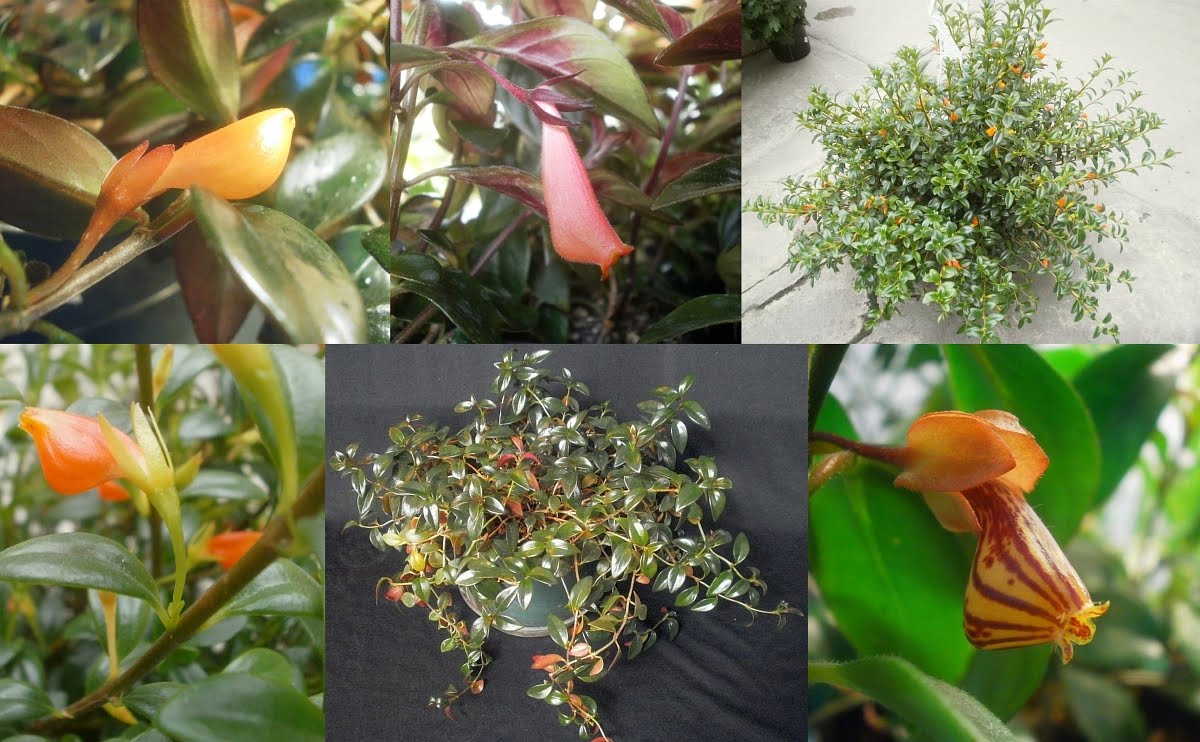
Nematanthus cvv. (guppy plant) vs. Dracaena deremensis cvv.

Various NOID Nematanthus cvv.; bottom right is N. 'Tropicana.'


Clockwise from top left: Dracaena deremensis ''Lemon-Lime,' 'Warneckei' or similar, 'Dorado,' 'Malaika,' 'Janet Craig Compacta.'


Match 1.46
Schefflera actinophylla / arboricola (umbrella tree) vs. Gardenia jasminoides (gardenia)

Top row, L-R: Schefflera actinophylla, S. actinophylla 'Renegade,' S. arboricola.
Bottom row, L-R: Schefflera actinophylla ('Amate?'), S. arboricola NOID.


(Both are of Gardenia jasminoides.)


Match 1.47
Begonia cvv. (rhizomatous begonias) vs. Hedera helix (english ivy)

Clockwise from top left: Begonia 'Soli-Mutata,' B. 'Erythrophylla,' B. 'Tiger Kitten,' NOID.


Various NOID Hedera helix cvv. The one in the bottom right corner may be 'Needlepoint.'


Match 1.48
Lithops cvv. vs. Sansevieria trifasciata cvv. (snake plant)

(All are NOID Lithops spp. or cvv.)


Top row, L-R: Sansevieria trifasciata 'Black Coral,' 'Laurentii,' 'Bantel's Sensation.'
Center row, L-R: S. trifasciata NOID, 'Hahnii,' 'Hahnii Pearl Young.'
Bottom row, L-R: S. trifasciata 'Moonglow,' 'Black Gold.'


-

1 I'm deciding according to a hypothetical situation in which all of my houseplants are gone, as are all the other houseplants of the world, except for one producer/supplier/retailer. Said person is offering to restock me with one or the other of the plants in question but refuses to give me both. Which one would I choose?


Wednesday, October 27, 2010

Funeral Plants, part II (for the recipients)

So you've lost a loved one recently, and everything for the past couple weeks has been kind of a blur, and you're only just now cluing in to the fact that you've got a plant in your home that wasn't there before, and you're wondering what you're supposed to be doing to take care of it.

We'll get to that, but first let me just say I am genuinely sorry. Not that I know you, not that I knew them, but still. Everybody pretty much agrees that death is confusing and painful and hard. The universe is often appallingly stupid that way. I can't do much about this except sympathize, which I do, and help you deal with the plant, which I will. So.

Often, florists place plants in plastic-lined baskets, or wrap the pot in colored foil. The purpose is to make the plant more attractive by hiding the plain plastic pot the plants are grown in, and catch any water that drains out of the plant when it is watered, so it doesn't wet carpet or tabletops or whatever. However, this is a very bad thing for the long-term health of the plant. If your plant is in foil, remove the foil and throw it away. Plastic plant saucers are available to protect carpet or furniture, if you need them, or you can use a plate or a plastic lid or whatever. (I use plant saucers at home.)

If your plant is in a plastic-lined basket, you can either remove the basket (my preference) or place something (like a brick) in the bottom of the basket to raise the pot up, so that when you water the plant, it won't have to stand in the water that drains out. The latter is probably a temporary solution: usually the plastic is pretty flimsy, and tears sooner or later, and then the water leaks out anyway.

The reason this is important is, although all plants need water, the roots also need oxygen. The soil of a plant that stands in water will be waterlogged, which prevents air from reaching the roots. If the roots die because they're too wet, then they can't take up water for the rest of the plant, which means that the rest of the plant also dies, sooner or later. (Worse: when the roots die back and the plant is unable to take up more water, the plant often wilts, which a lot of people think means that the plant is too dry, so then they dump more water in.)

Gift plants may also be planted in decorative pots lacking drainage holes; if you receive such a plant, you need to repot it into a pot that can drain. (There are plenty of attractive options with drainage holes out there.) It's technically possible to grow plants successfully in pots that lack drainage holes, but it's much harder to know how much water you're adding and how much is there already, so it's very easy to overwater and end up with a waterlogged plant.

For anything after this, it becomes important to know what plant(s) you have. Florists tend to use the same things over and over as condolence plants, leaning heavily on those of a certain size, usually with rounded leaves (sharp, pointy, jagged shapes are apparently considered unsettling), and a shape that isn't too unusual or dramatic. Normally, it's a single kind of plant, but occasionally dish gardens, with multiple plant species potted together, may be sent. Since there's such heavy reliance on the same plants over and over again, there's a pretty good chance that I can guess what you have without having to see it. Here are the usual suspects.

Peace lily (Spathiphyllum cv.)

Peace lilies (Spathiphyllum cvv.) are the king of condolence plants, I suspect mainly because of their common name. Plants vary in size and color but always have white flowers, held above the tops of the leaves. Read about how to take care of peace lilies at the Spathiphyllum cvv. profile.

Rubber tree (Ficus elastica 'Burgundy')

The other very common condolence plant in my personal experience is the rubber tree, Ficus elastica, particularly the variety 'Burgundy,' which is actually nearly black. Read about how to take care of rubber trees at the Ficus elastica profile.

Chinese evergreen (Aglaonema 'Peacock')

Chinese evergreens (Aglaonema cvv.) have fairly large leaves, patterned in varying shades of gray, silver, and green. There are many varieties, which differ in size, color, or patterning. A few new varieties are being introduced which have pink, red, orange, or yellow in the leaves as well, though the green/gray varieties are still much more common. Read about how to take care of Chinese evergreens at the Aglaonema cvv. profile.

Dumb cane (Dieffenbachia 'Tropic Marianne')

Dumb canes, or dieffenbachias (Dieffenbachia spp.) are similar to Chinese evergreens, but tend to be white or yellow where a Chinese evergreen would be gray or silver. They are also poisonous, and are not a good choice if you have pets or children who might chew on the leaves by accident. Read about how to take care of dieffenbachias at Part II of the Dieffenbachia cvv. profile, and learn about their toxicity and history in Part I.

Croton (Codiaeum variegatum 'Petra?'

Crotons (Codiaeum variegatum) are very diverse. Leaves can be nearly any color (red, orange, yellow, green, dark purple, white) and shape ("leaf-shaped," long and skinny, nearly round, threadlike), with spots and streaks all over. They can be kept as long-term houseplants, but they're more demanding than the others on the list. Read about how to take care of crotons at the Codiaeum variegatum profile.

Pothos (Epipremnum aureum 'N'Joy')

Pothos (Epipremnum aureum) is an atypical funeral plant; florists usually stay away from trailing plants for these situations, because of the possibility that the vines will be stepped on. One sometimes sees specimens that have been trained to climb a post in the center of the pot, though, and it's a common addition to group plantings. Pothos is a very robust indoor plant that does well for most people. Several varieties are available, with white, gray, or yellow variegation. Read about how to take care of pothos at the Epipremnum aureum profile.

Small specimens of the above plants are also frequently used in mixed containers. Some other common small plants for dish gardens are below.

English ivy (Hedera helix)

English ivy (Hedera helix) is a trailing plant that I haven't written about much yet. I don't have a lot of experience with this plant, because what experience I have is pretty uniformly bad. Does best in a cool, humid spot with bright light but no direct sun. They're sensitive to dry soil, so don't let them get overly dry. English ivy is also very prone to spider mite infestations.

Heart-leaf philodendron (Philodendron hederaceum)

Heart-leaf philodendron (Philodendron hederaceum) is another trailer. It looks a lot like pothos, but they really are different. I have written a post about how to tell the difference between heart-leaf philodendron and pothos here, and the profile for Philodendron hederaceum is here.

Parlor palm (Chamaedorea elegans)

Parlor palm (Chamaedorea elegans) is another plant I haven't written about very much, due to bad experiences with them. Care is basically the same as for English ivy, but unlike English ivy, they prefer warmer temperatures.

Arrowhead vine (Syngonium podophyllum)

Arrowhead vine (Syngonium podophyllum) will eventually trail, but the plants used in dish gardens are usually small juvenile plants, which have an upright habit. The Syngonium podophyllum profile is here.

Baby rubber plant (Peperomia obtusifolia 'Gold Coast')

Baby rubber plant (Peperomia obtusifolia) is a plant I actually like, but haven't written about yet. They do best with some direct sun, but will survive fine in bright indirect light (the variegation may not be as intense, though). Let them get fairly dry between thorough waterings. Plants will suffer if exposed to extreme temperatures (above 90F/32C or below 60F/16C). Despite the name, they are a different species from rubber trees, and aren't actually "baby" anything: that's a full-grown, if young, plant in the picture.

Madagascar dragon tree (Dracaena marginata 'Tarzan')

Madagascar dragon tree (Dracaena marginata) is a very common dish garden plant, which I talk about in its profile.

Ribbon dracaena (Dracaena sanderiana)

Ribbon dracaena (Dracaena sanderiana) is the same species as "lucky bamboo," but the variety used in dish gardens is almost always variegated. I find them hard to kill, and also hard to make interesting or attractive, as a separate plant. The profile for Dracaena sanderiana is here.

Nerve plant (Fittonia albivenis)

Nerve plant (Fittonia albivenis) is a small, attractive plant with veins that can be white, pink, or red. They shouldn't be allowed to dry out (they'll wilt dramatically, but will revive if watered -- most of the time), and prefer high humidity. Some sun is okay, but they're happy with bright indirect light too. Temperatures should always be at or above 60F/16C. Fittonias are easiest to grow in terrariums. The profile for Fittonia albivenis is here.

Pineapple dracaena (Dracaena deremensis 'Janet Craig Compacta')

Pineapple dracaena (Dracaena deremensis 'Janet Craig Compacta'), like all of the Dracaena deremensis varieties, is a tough plant that handles neglect well. Though 'Janet Craig' is a different, larger variety, most of what is said in the Dracaena deremensis 'Janet Craig' profile also applies to 'Janet Craig Compacta.'

Friendship plant (Pilea involucrata 'Norfolk?')

Friendship plant (Pilea involucrata) is much like Fittonia -- it would be happier in a terrarium, though if you water when the soil is moderately dry and give it decent light (bright, but not necessarily sun), and keep the temperature above 60F/16C, it's fairly easy to grow.

Prayer plant (Maranta leuconeura 'Marisela')

Prayer plant (Maranta leuconeura cvv.) is so named because the leaves change position during the day: they're horizontal during the day and vertical at night. See the Maranta leuconeura erythroneura profile here.

Polka-dot plant (Hypoestes phyllostachya)

Polka-dot plant (Hypoestes phyllostachya) is a fast-growing, weedy plant with leaves covered in white, pink, or red polka dots, hence the name. It needs a lot of maintenance but isn't hard to keep alive. The Hypoestes phyllostachya profile is here.

Umbrella tree (Schefflera arboricola)

Umbrella tree refers to two different species in the genus Schefflera, but only S. arboricola is a common dish garden plant. Some varieties have white or yellow variegation. They do best when allowed to get almost completely dry between thorough waterings, and should be kept above 50F/10C. Scheffleras are prone to spider mites, particularly if grown in direct sun in a room with dry air; they don't mind bright indirect light, though.

If you have received a plant you are unable to identify from this list, I'll do my best to identify it and direct you to good care information if you can e-mail me a photo at 7mrsubjun7cti7ve@aol.com (remove the three 7s from the address first; they're there to foil spambots).

You may also wish to read:
Funeral Plants, part I (for the senders)
The Ten Houseplant Commandments: covers most of the basic mistakes people make with houseplants.
Repotting Questions (With Answers!) Part I and II: covers how, when, and why to repot.
How Often Should I Water This?: about watering plants on a strict schedule, and why you shouldn't do it.
Caring For Unknown Tropical Plants: what to do with houseplants you can't identify.


Saturday, February 13, 2010

List: Houseplants With Heart-Shaped Leaves

This would possibly have been more helpful to people, or at least more timely, if I'd posted it earlier, but you know how things go sometimes.

Houseplants with heart-shaped leaves are surprisingly uncommon. I looked through the "yearbook" expecting to find them all over the place, but actually, most of the stuff that looked heart-shaped were actually either round (orbicular) or lens-shaped (elliptic) leaves, that only appeared to be slightly heart-shaped when viewed from a particular angle (e.g. Saxifraga stolonifera). I was really expecting to find a lot more than this.

Even a lot of plants that have leaves which are technically the right shape are a little more elongated than people normally think of as heart-shaped. More spear-shaped (hastate) or triangular (deltoid) than cordate (the botanical term for "heart-shaped"), really.

There's also a word, obcordate, which means heart-shaped-but-with-the-petiole-attaching-at-the-"bottom"-of-the-heart-instead-of-at-the-"dent." You can see why having a shorter word is useful. I'm counting obcordate leaves too, because the shape isn't any different, it's just the point of attachment that changes.

I am, no doubt, forgetting some plants here (in which case please, remind me in comments), but here's what I came up with:

Anthurium crystallinum 'Mehani.'


Anthurium andraeanum 'Pandola,' plus some other Anthurium andraeanum cvv. (bonus: many have flowers with heart-shaped spathes, too! Including some that are both red and heart-shaped!)


Cyclamen persicum cvv. (florist's cyclamen)


Hedera helix (English ivy), some cvv.


Hemionitis arifolia (heart fern).


Monstera deliciosa 'Cheesecake' (variegated split-leaf philodendron), as well as other Monstera deliciosa cvv. Mature leaves will develop splits, but the overall leaf shape remains cordate.


Peperomia caperata (ripple peperomia, Emerald Ripple), all cvv. (also the very similar P. griseoargentea)


Philodendron gloriosum.


Philodendron hederaceum 'Brazil' and other P. hederaceum cvv. (heart-leaf philodendron)


Scindapsus pictus (satin pothos).


We'll be doing anti-recommendations for this set, because most of these are perfectly nice folks, who would fit in just fine in most households. However, Hemionitis is not easy to grow at all -- miss one watering, even by half a day, and it'll tell you it hates you and will never forgive you before stomping off to its room to cut itself and write bad angsty songs on the guitar you bought it for its birthday. And it doesn't like direct sunlight that much either. I don't know how they are about humidity because I've only ever seen one in the greenhouse, but it's a fern, so, make your own guesses.

I've also never owned a Cyclamen, though I know of enough people who have that I'm thinking they may not be that bad. I'm a little scared to try, because plants with serious dormant periods freak me out. Maybe someday.

Finally, Peperomia caperata and I have had a bit of a falling-out since I wrote the profile for it; a few plants have failed to survive repottings (repottings that they actually needed, and were requesting), one got knocked over and broke off a good 80% of its leaves (it might be coming back, though), the one in Nina's terrarium got too dry, or too wet, or both, and went ffffft on me, and so I'm down to a small fraction of the number I had originally. In the right circumstances, they're still okay, but I don't have the kind of time available to deal with a Peperomia caperata anymore. Which is a shame, 'cause I think they're really pretty. (If I do get a new terrarium for Nina, though, I'll probably attempt to stock it with at least one Peperomia, either a caperata or argyreia.)

Not pictured:

Alocasia cvv. (elephant ears), to some degree
Anthurium 'Faustino Giant'
Anthurium 'Nikki'
Anthurium clarinervum
Anthurium luxuriens
Anthurium radicans x dresslerii
Most Caladium cvv.
Ceropegia woodii (string of hearts)
Cissus discolor (begonia vine)
Colocasia cvv. (elephant ears), to some degree
Dischidia ruscifolia (million hearts) (?)
Epipremnum aureum (pothos), mature leaves: juvenile leaves are lens-shaped
Ficus pumila (creeping fig), sometimes
Hoya carnosa 'Chelsea,' under some conditions (switches back and forth between cordate and elliptic)
Hoya kerrii (sweetheart hoya) (*obcordate*)
Some Oxalis spp. have compound leaves with heart-shaped leaflets
Peperomia incana, sometimes
Syngonium podophyllum cvv. (arrowhead vine). More hastate than cordate, but younger plants could sometimes go either way.