Showing posts with label Gardenia. Show all posts

Sunday, October 2, 2011

Rumble Among the Jungle, Matches 1.45-1.48

Rules and Stuff
1) It's probably possible to vote more than once per poll, but please don't. If I believe that someone is voting repeatedly, I will throw out those results, repost the poll, and seriously question that person's priorities.
2) If you want to link to a poll on Twitter / Facebook / your blog / whatever and encourage your friends to come and pump up the support for your favorite plants, you are encouraged to do so.
3) You are also encouraged to leave comments on Rumble posts, if so moved.
4) All photos will enlarge if opened in a separate window/tab.
5) You can choose which plant is "best" according to whatever criteria you decide for yourself. My personal process is a bit convoluted.1
6) All polls will be open for three days.


Results from matches 1.29 to 1.32:

Ordinarily I write up the results about six or seven hours before the poll ends, and then just paste in the numbers after the poll closes at 5 PM. Makes it easier to keep up, and usually there's a wide enough split between competitors that it's obvious who's going to win well before it happens. I couldn't do that with match 1.29, though: it'd been close all along, and then as of 11:30 AM yesterday the two differed by a single vote, so it was still too close to call.

This led me to realize that I didn't announce a procedure for breaking ties. I'd thought of two possibilities when I was planning the RATJ: 1) a re-vote (arguably the most time-consuming, but also probably the most fair), or 2) I could break the ties myself (fast unless I have a hard time deciding, which is more and more likely to happen as we get closer to the end, and also arguably unfair to anybody who voted, since I wind up getting two votes that way). I have since thought of a third option, which is what I'm actually going to do for ties: if there are any, the winner will be determined by coin-flip. It doesn't drag the contest out for another three days, it's not biased, and it's easy to do. So now you know.
(In the end, Pachira aquatica defeated Pilosocereus pachycladus by a single vote: 53 to 52.)
Match 1.30 was likewise extremely close, with Cordyline fruticosa cvv. maintaining a tiny lead over Euphorbia lactea for most of the contest; when voting ended, Cordyline led Euphorbia by only three votes, 54 to 51.

Pachira aquatica and Cordyline fruticosa cvv. will now face one another in match 2.15, on October 10.

In match 1.31, after some wavering back and forth, Mimosa pudica smacked down Ravenea rivularis, 60 to 46. But in a sensitive way.
Match 1.32 is the only match from this group where the results were never in much doubt: Hibiscus rosa-sinensis clobbered Dracaena sanderiana, 69 to 36. (Asked to comment, Hibiscus said, "I got lucky.")

Mimosa pudica and Hibiscus rosa-sinensis will go head to head on October 10 as well, in match 2.16.

And now for today's first-round action:

Match 1.45
Nematanthus cvv. (guppy plant) vs. Dracaena deremensis cvv.

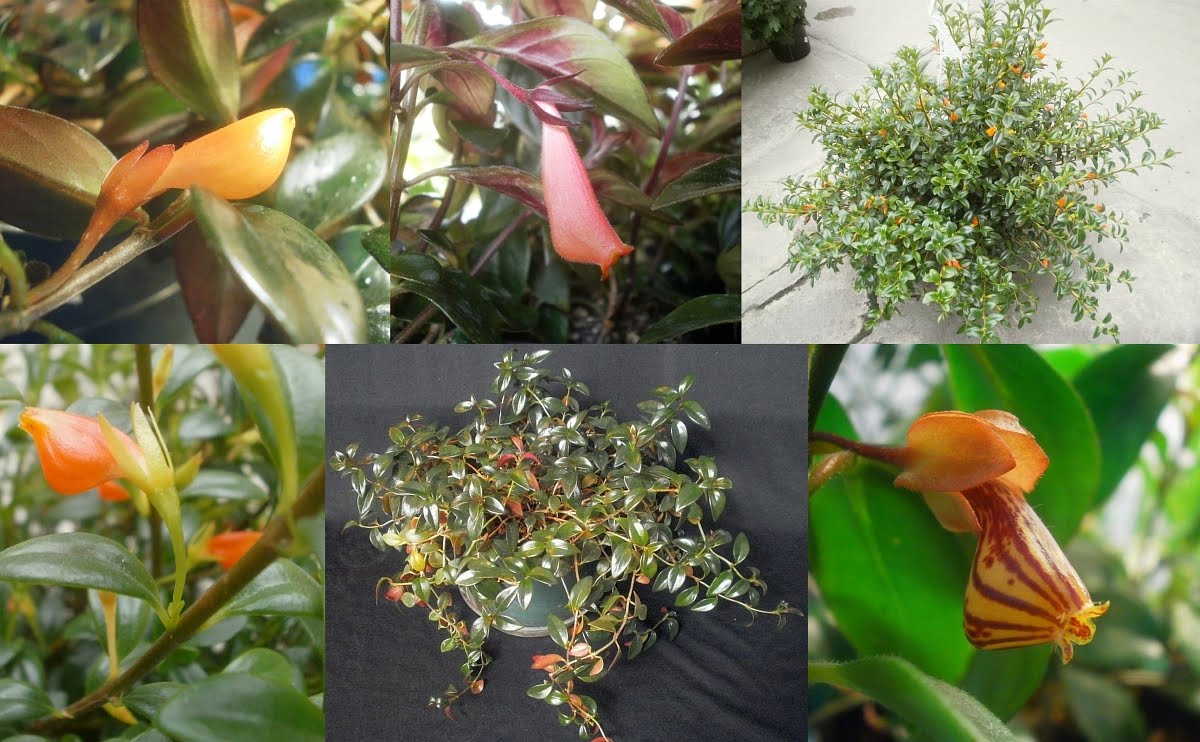
Various NOID Nematanthus cvv.; bottom right is N. 'Tropicana.'


Clockwise from top left: Dracaena deremensis ''Lemon-Lime,' 'Warneckei' or similar, 'Dorado,' 'Malaika,' 'Janet Craig Compacta.'


Match 1.46
Schefflera actinophylla / arboricola (umbrella tree) vs. Gardenia jasminoides (gardenia)

Top row, L-R: Schefflera actinophylla, S. actinophylla 'Renegade,' S. arboricola.
Bottom row, L-R: Schefflera actinophylla ('Amate?'), S. arboricola NOID.


(Both are of Gardenia jasminoides.)


Match 1.47
Begonia cvv. (rhizomatous begonias) vs. Hedera helix (english ivy)

Clockwise from top left: Begonia 'Soli-Mutata,' B. 'Erythrophylla,' B. 'Tiger Kitten,' NOID.


Various NOID Hedera helix cvv. The one in the bottom right corner may be 'Needlepoint.'


Match 1.48
Lithops cvv. vs. Sansevieria trifasciata cvv. (snake plant)

(All are NOID Lithops spp. or cvv.)


Top row, L-R: Sansevieria trifasciata 'Black Coral,' 'Laurentii,' 'Bantel's Sensation.'
Center row, L-R: S. trifasciata NOID, 'Hahnii,' 'Hahnii Pearl Young.'
Bottom row, L-R: S. trifasciata 'Moonglow,' 'Black Gold.'


-

1 I'm deciding according to a hypothetical situation in which all of my houseplants are gone, as are all the other houseplants of the world, except for one producer/supplier/retailer. Said person is offering to restock me with one or the other of the plants in question but refuses to give me both. Which one would I choose?


Wednesday, June 2, 2010

List: Houseplants for Beginners to Avoid

This is the flip side of the list I posted on May 27, which was about easy plants I recommended for beginning growers of houseplants. These are the ones that are fairly easy to get (usually a little less common than the easy ones; it depends where you shop), but are not good prospects for growing year-round indoors.

There are a number of reasons why this could be the case. Some of the plants on the list are very prone to bug problems. Some of them are easy enough to keep alive, but are unlikely to ever again look as good as they do when you first see them in the store. Some have completely unreasonable care requirements, or are slow to recover from damage and consequently just sit there looking like crap forever if you forget to water once. That sort of thing.

I either know, or have at least heard of, people who have been successful with each of these plants. I have no doubt that there will be people reading the list who will say but I have a [name of plant] and it was the first one I ever bought and it's been awesome for me for fifteen years; I think you're nuts. And to those people, I say congratulations. (Also I say that whether or not I'm nuts is not the issue.) I know of many more people, however, including some people with a lot of indoor plant experience, who have tried some of these and failed multiple times.

The unfortunate thing is that these are still being sold, a lot, because they're really damned attractive. The stores don't actually care what happens to your plant once you purchase it, and in fact would probably rather you killed them, everything else being equal (people with dead plants are people who will buy replacements), so they'll keep getting them in. But give some easier stuff a try before handing over your money for these, is basically what I'm saying.


Alocasia amazonica 'Polly.' (African mask plant)

Why you would want one: they have big, dramatic leaves with striking shape and coloration.
Why you shouldn't get it: spider mites love them, they're fussy about humidity and temperature, and occasionally they will decide to go dormant, which if you don't know that they do this will make you think you killed it.
What to buy instead: Anthurium andraeanum (some cultivars have similar leaf size and shape, plus flowers), Ficus elastica 'Burgundy' (similar leaf color, size, and texture), Philodendron 'Congo Red' or 'Imperial Red' (similar leaf size and color), Syngonium wendlandii (vining plant with velvety, dark green, arrowhead-shaped leaves and a contrasting lighter center).
If you've already bought one: watch carefully for spider mites (they will show up as light webbing on the underside of the leaves and a dusty, tan, washed-out look on the tops of the leaves). Keep humidity and temperature high (not below 60F/16C). Provide good light (filtered sun or very bright indirect or artificial light). Hope for the best.


Begonia rex-cultorum 'Harmony's Red Robin' (shown) and other Begonia rex-cultorum cvv. (rex begonia)

Why you would want one: iridescent-metallic, multicolored leaves in green, gray, red, black, pink, purple, or silver, on a low, trailing plant.
Why you shouldn't get it: unreasonable environmental requirements, plus prone to mildew and other fungal diseases, unforgiving of lapses in care.
What to buy instead: Saxifraga stolonifera is a very easy, low-growing plant with silver-veined green leaves which are red underneath. Tradescantia zebrina is a trailing plant which usually has purple leaves striped in silver. Pilea involucrata 'Norfolk' trails, and has red, brown, gray, and silver leaves depending on the amount of light it is receiving; it's not a particularly good beginner plant, but I'd consider it an improvement on rex Begonias. Some of the cane Begonias, particularly the angel-wing or trout-wing types, may be slightly easier to get along with than the rexes, and have coloration which is similar, though their habit is very different. Some rhizomatous Begonias (Don suggests 'River Nile' in the comments) are also less fussy, and the patterns are frequently just as interesting even if the color range is narrower.
If you've already bought one: provide bright indirect light or filtered sun to maintain color. Keep humidity high around the plant, but try to avoid splashing water directly on the leaves. Do not allow the plant to dry out completely.


Calathea roseo-picta 'Medallion' (shown?) and other Calathea spp. (peacock plant, rattlesnake plant, zebra plant, pin-stripe plant, etc.)

Why you would want one: large oval leaves with delicate, fancy-schmancy streaks and blotches of color.
Why you shouldn't get it: drought-intolerant, sensitive to fluoridated water, prone to spider mites, unreasonable expectations for humidity.
What to buy instead: some Aglaonema and Dieffenbachia cvv. have similarly intricate color patterns and oval leaves, if not an equally broad color palette. Peperomia obtusifolia has some cultivars with feathery green-and-yellow variegation (for example 'Golden Gate'), and though it's a much smaller plant, it's also much easier. Variegated Epipremnum aureum cultivars like 'Marble Queen' have fairly intricate, swirly patterns, though the colors tend to disappear if the plant is grown in low light.
If you've already bought one: as for Alocasia, above.


Dionaea muscipula. (venus flytrap)

Why you would want one: dude! They move, and kill insects and shit!
Why you shouldn't get it: need special water because they're mineral-sensitive, very strong light year-round, and inhumanly cool temperatures during winter (when they go dormant). Plus they rot at the drop of a hat.
What to buy instead: not many good options. The sensitive plant, Mimosa pudica, also moves in response to touch and is perhaps a little more manageable, though it also needs very bright light and is not, in my opinion, a very pretty plant most of the time. I've heard nice things from certain quarters about Drosera (sundews), Pinguiculas (butterworts), and Nepenthes (pitcher plants), but my experience with Nepenthes is that they're not easy at all, and I'd be surprised if the others were either. I would recommend that a beginner either wait for a long time to attempt carnivorous plants in general, or else commit to growing nothing but carnivorous plants, because their needs are very different from the plants people normally keep indoors, and very little of your experience with one group will transfer to the other.
If you've already bought one: they need lots of light (full sun), distilled or reverse-osmosis water, and a winter dormancy; read the Dionaea muscipula profile for more specific information. You might also consider getting a terrarium for it.


Euphorbia pulcherrima. (poinsettia)

Why you would want one: 'cause they're so fucking Christmasy and festive.
Why you shouldn't get it: they're just very badly-suited for indoor cultivation all around. They need tons of light, even during the winter when you're least likely to have lots of light; they need a lot of warmth; they're a pain to rebloom; they're usually potted in crappy potting mix because the growers don't expect them to survive past New Year's so there's no point springing for the good potting mix; they're usually artificially dwarfed using hormones, so even if you did manage to keep it until the next year, you'd have a leggy monstrosity; they tend to be stressed from being forced to grow fast and bloom fast; if you're in a cold climate, they've probably been shipped in cold and are stressed from that when you see them; they're prone to fungus, whitefly, and everything else; the lower leaves fall off at the drop of a hat, even if it's the next-door neighbor's hat; they bring untold misery and despair to garden center and greenhouse workers the world over; and I say not to.
What to buy instead: oh my god anything. An. Y. Thing. Norfolk Island pines (Araucaria heterophylla) can be very nice long-term plants if you have a bright, cool spot for one. Schlumbergera cvv. ("Christmas cactus") are very easy, though plants purchased late are prone to drop flower buds once you get them home, so try to buy them out of season or else as early as you can. Those are probably the two I'd most recommend. But if you don't like those, English ivy (Hedera helix) is common in stores around Christmas: it's a terrible, terrible idea to start your houseplant career with Hedera, but better that than poinsettias. Forced bulbs like Hippeastrum ("amaryllis") can be saved and made into long-term, reblooming plants. Even Cyclamen persicum or Kalanchoe blossfeldiana, absolutely anything at all, just not a poinsettia.
If you've already bought one: enjoy it while it lasts.


Gardenia jasminoides. (gardenia)

Why you would want one: the flowers smell amazing.
Why you shouldn't get it: they have unreasonable expectations.
What to buy instead: there are no great Gardenia substitutes, because nothing else smells like a Gardenia. But Hoya lacunosa flowers are pleasant, and the plant is easy to grow. Quite a few of the other Hoyas have pleasant-smelling flowers, too, though ease of care and ease of flowering vary from one species to the next. Murraya paniculata is considerably easier than Gardenia though not easy, and blooms readily year-round if given enough light and water. Finally, Callisia fragrans, which looks and smells nothing like Gardenia, is still relatively easy to bring into bloom, and the blooms smell good enough. All three of the above substitutes also have going for them that they'll continue to bloom for a good long while, once they've started, if care is consistent.
If you've already bought one: Gardenias like cool nights for setting buds, so aim for low temperatures in the 50s F (10-15C). Do anything you can to keep the plant out of hot, dry air, as well, as this will stress the plant and encourage spider mites. Don't let plants dry out completely, either. Plants will also usually benefit from spending the summer outdoors, if you have a semi-protected spot you can keep the plant in where it won't sit in the sun cooking to death. See also the Gardenia jasminoides profile.


Juniperus sp. bonsai, other bonsai (juniper, fukien tea, elm, Japanese maple, box, etc.)

Why you would want one: they look like adorable little trees, they're Asian-feeling, you have action figures that would look perfect sitting next to a miniature tree.
Why you shouldn't get it: Juniperus in particular needs much cooler winter temperatures than most houseplants, and won't survive a winter indoors with central heating. Other types of bonsai tend to be extremely touchy about heat and drought. There's also a lot of precise work involved in keeping the plant miniaturized: they want to be full-sized trees, and are only miniature because they're being deprived of root space and fertilizer, and keeping them in line is something of a job.
What to buy instead: some varieties of Ficus, especially F. benjamina 'Too Little' and F. microcarpa, are used as bonsai specimens, but are more resilient and accommodating than most species used as bonsai. 'Too Little' is genetically inclined to grow tiny, bonsai-scale leaves, even when it's not being treated like a bonsai, and consequently is easier to maintain as a miniature tree. Polyscias fruticosa and Crassula ovata maintain a treelike form as they grow, branching spontaneously and forming woody trunks (Crassula ovata is occasionally a legitimate bonsai subject.). Polyscias fruticosa also tends to develop gnarled, bonsai-like forms over time. Araucaria heterophylla doesn't do a very good pine impression, and eventually gets very large, but if you're looking for a houseplant conifer, it may be as close as you're going to get, as a beginner.
If you've already bought one: depends on the species. I recommend Googling for your particular species ("common bonsai subjects," maybe?), or else (if it was sold without an ID tag, as will usually be the case) locating a dedicated bonsai forum of some kind, where you can get advice specific to your plant.


Lithops spp. (living stones)

Why you would want one: the weirdness of a plant pretending to be a couple pebbles, or the novelty of a plant with windows in its leaves, or just the all-around freakyness of the thing.
Why you shouldn't get it: watering is tricky, and they demand a lot of light.
What to buy instead: Astrophytum species of cacti, especially A. myriostigma, sort of resemble oddly symmetrical rocks. They're a little touchy about overwatering, too, but not to the same degree. Senecio rowleyanus resembles green beads on a string, and portions of the leaves are translucent. Quite a few Haworthia species, though not all of them, have "windows" at the tips of their leaves, though the resemblance to pebbles is debatable. Pachyphytum spp. look like small piles of pebbles, to varying degrees.
If you've already bought one: give it as much light as you possibly can, and give it water only 1) when it looks like it's shriveling up, and 2) in late August. Otherwise, not even a drop, you hear me? When you do water, don't feel compelled to drench the soil, either. Less is definitely more in this case.


Ravenea rivularis. (majesty palm)

Why you would want one: you're looking for a palm, and it's big and cheap. (The one in the photo is an unusually small specimen.)
Why you shouldn't get it: they're all but impossible to grow indoors in a long-term way. The reason it's so big and cheap is that in Florida or wherever they're being produced, they grow very, very fast, so there's less time invested in a majesty palm than in most of the others, which means less fertilizer, less water, less pesticide, etc. The down side is that although they grow very well in an outdoor tropical climate, indoors they completely suck balls.
What to buy instead: kentia palms, Howea forsteriana, tend to be outrageously priced when one even manages to find one, but people rave about them being incredibly good plants. I've never had the pleasure of growing one, though, so don't know whether I agree. WCW used to talk up the spindle palm, Hyophorbe verschaffeltii, as being a very good indoor palm, but I've never tried that either, and again, they tend to be pricey. I'm personally partial to lady palms, Rhapis excelsa, though they lack the arching, finely-divided fronds of Ravenea and are slow growers and therefore expensive. If it's just the general V-shape you're into, Dracaena fragrans 'Massangeana' is widely available, cheap, and has a certain palminess to it, as do the various cultivars of Dracaena deremensis ('Warneckei,' 'Lemon-Lime,' 'Janet Craig,' 'Limelight,' 'Art,' and so forth), Ficus maclellandii, and Yucca guatemalensis. Strelitzia nicolai, the white bird of paradise, does a decent job of signifying tropical, and is usually not that expensive, though they're very big and need a lot of light to do well.
If you've already bought one: don't get too attached, monitor for spider mites, and give it as much light, heat, and humidity as you can manage. Ravenea would probably also benefit from spending summers outside in a semi-shady spot, though they're extremely thirsty, so make sure to keep it watered.


Selaginella kraussiana cv. (shown) and other Selaginella spp. (spikemoss, clubmoss)

Why you would want one: delicate, finely-divided foliage, sometimes with a deep red underside (S. erythropus) or iridescent blue sheen (S. uncinata).
Why you shouldn't get it: they're unforgiving of low humidity, over- and underwatering.
What to buy instead: there aren't a lot of alternatives for this one either. I like some of the Davallias (rabbit's-foot ferns) for delicate, finely-divided foliage, and at least one of mine (D. tyermanii) has a slight blue tinge to it. Crassula muscosa has a similar texture and is easier care when properly established, though a lot of the plants sold seem to be sold before they've rooted completely, which makes them somewhat difficult. Pilea depressa lacks the color and is not as fine-textured, but it's still in that same small-leaved creeping category.
If you've already bought one: get a terrarium and plant Selaginella in it. You'll both be much happier.


Don't start with these either:

Adiantum spp. (maidenhair fern)
Asplenium nidus / antiquum (bird's-nest fern)
Caladium spp. (angel wings)
Citrus / Fortunella / etc. (citrus, lemon, orange, lime, kumquat)
Codiaeum variegatum (croton)
Cyclamen persicum (florists' cyclamen)
Fenestraria rhopalophylla (baby toes)
Hedera helix (English ivy)
Hibiscus rosa-sinensis (hibiscus)
Jasminum sambac (jasmine)
Kalanchoe blossfeldiana (flaming Katy, kalanchoe)
Maranta leuconeura cvv. (prayer plant, rabbit tracks)
Nepenthes spp. (pitcher plant)
Oxalis triangularis ("shamrock")
Rhododendron cvv. (azalea)
Rosmarinus officinalis (rosemary)
Soleirolia soleirolii (baby tears)
Streptocarpus cvv. (cape primrose)
Stromanthe sanguinea cvv.
tree ferns (Blechnum, Cyathea, Dicksonia, Cibotium)

Wednesday, February 17, 2010

List: Houseplants Which Produce Pleasantly-Scented Flowers

I have to specify pleasantly-scented, because there are a fair number of unpleasant flowers out there, too (e.g. Gynura aurantiaca, Crassula muscosa). There are also potential lists to be written about plants with pleasantly- (or unpleasantly-) scented foliage, and maybe I'll get to that someday.

Instead of recommending for or against three at the end of the list, like I've been doing with most of the lists so far, I'm giving brief comments about each (ease of care, quality of smell). Suggestions for plants to add to the list, or differing opinions about difficulty, smell quality, etc. are welcome.

Cyclamen persicum (florist's cyclamen), at least some cvv.; possibly not all of them. SMELL: light, powdery, sort of pleasant but nondescript. EASE OF CARE: varies considerably depending on the person. Reblooming is said to be somewhat difficult. PATSP difficulty level 7.1.


Dracaena fragrans 'Massangeana.' (corn plant; mass cane, massangeana) SMELL: overpowering, floral-perfumey. Plants generally have to be quite old before they will flower. EASE OF CARE: Easy as long as you don't overwater. PATSP difficulty level 2.6.


Eucharis grandiflora (amazon lily). SMELL: faint, sweet/floral. Flowers are fairly short-lived and appear in January; I haven't yet figured out the trick to blooming this plant indoors. EASE OF CARE: moderate to difficult. PATSP difficulty level 4.9.


Exacum affine (Persian violet). SMELL: light, delicate, floral, really pleasant. Extremely difficult to rebloom. EASE OF CARE: a lot of people don't even try to rebloom them. PATSP difficulty level: insufficient data for a number, but it's hard.


Gardenia jasminoides (gardenia). SMELL: just about perfect, delicious, sweet. Reblooming can be triggered by cool night temperatures. EASE OF CARE: For the love of god do not get a Gardenia unless you can grow it outdoors year-round. PATSP difficulty level 9.5.


Hoya lacunosa (shown), and most/all Hoya spp. SMELL: varies by species; Hoya lacunosa smells like a flower cooler full of roses and carnations. EASE OF CARE: about average for houseplants. Flowering requires a lot of light. PATSP difficulty level 3.3. Highly recommended.


Murraya paniculata (orange jasmine). SMELL: a lot like orange blossoms. Kind of heavy, musky. EASE OF CARE: slightly difficult. Flowers are not difficult to produce if the plant is otherwise reasonably happy: lots of light, water and fertilizer appear to be critical. PATSP difficulty level 4.8 but highly recommended anyway; a personal favorite.


Sansevieria trifasciata 'Moonglow' (shown), and other Sansevieria trifasciata cvv. (snake plant, mother-in-law tongue) Probably also most/all Sansevieria spp. SMELL: S. trifasciata smells like a funeral. I don't know how else to describe it. It's not unpleasant, but it somehow also smells mournful. Flowers don't appear with any particular consistency, but (in my experience) tend to happen in winter and summer when they happen, and plants won't bloom without strong light. EASE OF CARE: I have trouble with them during winter (either too much water or too little), but otherwise they're not bad. PATSP difficulty level 2.0.


Senecio rowleyanus (string of pearls, string of beads). SMELL: almost precisely like Big Red (cinnamon) gum. There is a trick to making flowers happen, but I'm not sure what it is. EASE OF CARE: You've probably grown worse. PATSP difficulty level 2.7.


Spathiphyllum sp. (peace lily) (Not all varieties: only a few like 'Sweet Pablo' and 'Sweet Chico.') SMELL: powdery, light, faint, clean. Getting plants to flower is pretty easy: reluctant plants will usually start blooming if you boost the light level or add fertilizer. EASE OF CARE: watering can be tricky, but otherwise they're very accomodating. PATSP difficulty level 2.5.


Not pictured (NOTE: I did not try to verify odors, track down common or alternate names, or confirm indoor growability on the orchids, and there are a lot of orchids in the list -- thanks Andrew):
Aerangis cvv./spp. (most)
Aeranthes cvv./spp. (a few)
Aerides cvv./spp.
Ancistrochilum rothschildianum
Angraecum cvv./spp.
Barkeria spectabilis
allegedly Beallara Peggy Ruth Carpenter, though I have seen this one before and don't remember it having a scent
Bifrenaria harrisoniae
Brassolaeliocattleya cvv. (most/all)
Brassovola Little Stars, and most/all other Brassavolas
Brassia cvv./spp.
Brassidium cvv.
Brugmansia cvv. (angel's trumpet)
A few Bulbophyllum cvv./spp., particularly B. ambrosia (most others do not smell good)
Callisia fragrans (basket plant)
Catasetum cvv./spp. (some)
Cattleya cvv./spp. (most/all)
Caularthron bicoroutum
Cestrum nocturnum (night-blooming jasmine)
Cischweinfia sheehanae
Citrus/Fortunella spp. (orange/lemon/lime/kumquat)
Clowesia cvv./spp.
Cochleanthes cvv.
Coffea arabica (coffee tree, coffee plant)
Coelogyne cvv./spp.
Cymbidium cvv./spp., though I haven't noticed this personally
Datura cvv. (devil's trumpet)
some Dendrobium cvv.
Dendrochilum cvv./spp.
Diplocaulobium arachnoideum
Dracaena surculosa (gold dust dracaena, D. godseffiana) (Smell is not universally thought pleasant)
Duranta erecta, some cvv. (golden dew drop, sky flower, pigeon berry) Uncommon as houseplant.
Encyclia cvv./spp.
Epiphyllum cvv. (most cvv.?) (orchid cactus, night-blooming cereus)
Euphorbia drupifera (giraffe tree) Scent is faint and extremely hard to pin down, see post.
Eurychone rothschildiana
Gomesa crispa
Gongora spp.
Grammangis stapeliflora
Haraella odorata
Hyacinthus orientalis (hyacinth) (Not really a houseplant in any long-term sense, but forced bulbs are common enough that it kind of counts.)
Hylocereus spp. (pitaya, dragon fruit cactus, night-blooming cereus) (Scent is supposed to be faint.)
Iwanagara (Collierara) Apple Blossom
Jasminum sambac cvv. (jasmine)
Laeliocattleya cvv. (most/all)
Lycaste aromatica
Maxillaria cvv.
some Miltonia cvv.
Miltonidium Red Tide (but not Miltonidium Pupukea Sunset, which is said to smell like soap + hot garbage)
Miltoniopsis cvv. (some? all?)
Narcissus 'Ziva' (paperwhite narcissus) (I hate the smell, personally, but some people like it.)
Neofinetia falcata
Neostylis Lou Sneary
Oncidium Sharry Baby (see post) and lots of other Oncidium cvv./spp.
Osmanthus fragrans (sweet olive)
Pandanus utilis, other Pandanus spp. (screw pine) Plants have to be somewhat old and very large before they'll flower; some Pandanus spp. apparently don't flower.
Peristeria pendula
some Phalaenopsis cvv., particularly those derived from crosses of P. bellina, P. schilleriana, & P. violacea
Plumeria cvv., some cvv. (frangipani)
Rhynchovanda Colmarie 'Merlot'
Sedirea japonica
Senecio macroglossus (turtle ivy, cape ivy) Allegedly has a smell, though not in my personal experience.
Smitinandia micrantha
Sobralia decora 'Santa Barbara'
Stanhopea cvv.
Stapelia spp. (carrion flower) A few species are said to smell nice. (Most do not. You were warned.)
Stephanotis floribunda (Madagascar jasmine)
Trachelospermum jasminoides (Confederate jasmine)
Trichoglottis philippinensis
Some Vandas
Wilsonara 'Snowshell'
Zygoneria cvv., at least some cvv.
Zygopetalum cvv. (most)


Wednesday, March 18, 2009

Pretty picture: Gardenia jasminoides in film-noir lighting

We've just gotten some Gardenia jasminoides in at work, after several months of only having one kind of problematic large one that refused to bud (and then disappeared when it did start to bud), so I've been reacquainting myself. They don't actually spend all day lurking in the shadows, but when I saw that that was the direction the photo was heading, I elected to run with it.


Monday, December 3, 2007

Messenger of God (Gardenia jasminoides)

We have one Gardenia jasminoides at work. I think it's been the same one for a while now, because it's big, and it's old enough that the price tag has partly faded and fallen apart, which happens to plants that have been around a while. I think I've even seen this particular plant bloom before, last spring, as a customer. And it's a nice enough plant, and flowers are pretty and all, but I never really saw the point to trying to grow Gardenia indoors. Flowers, okay. Reasonably pleasant, glossy green foliage – great. But they could hardly be worth the trouble, could they?


Because let's face it, they don't go out of their way to be growable indoors. Many, many pests and diseases like them, including: spider mites, aphids, scale, mealybugs, whiteflies, assorted beetles and fungi, and powdery mildew. The petals will turn brown if handled (or even, in some cases, touched). They don't like windy conditions. They can sunburn. They drop flowers if they're too wet, overfertilized, too hot, or too cold. They don't like stuffy conditions with no air movement either. They're prone to iron chlorosis (yellowing of the leaves due to lack of iron) if the soil pH is too high, if roots have been damaged, if soil isn't well aerated, and so forth. They tend not to rebloom indoors, though they may if they get to summer outside when temperatures are warm. They need bright light pretty much all the time, and high humidity, and they won't set buds without cool night temperatures. There's just nothing easy about them at all.

Even so, there are some people out there who can do it. We got a call at work a couple months ago from a woman who said she was having troubles with a Gardenia that she'd had for thirty-some years. Which, granted, the problems sounded pretty serious over the phone, and possibly she lost the plant, or will at some point, but even so, anybody who's kept one for that long has more or less proven that it's possible.

But for me, the question was still, why bother? I mean, the flowers are kind of elegant, the way the petals are all kind of folded up together in a spiral when they open, and they're nicely scented and everything, but surely there are nice architectural flowers with pleasant scents out there that wouldn't be so problematic. Maybe a Citrus of some kind, or Jasminum. What's the big deal with Gardenia?


And then the one at work flowered. Just one flower. And I realized that it's not so much about the shape of the flower, nice though it is, or the leaves being dark green and glossy, though that is also attractive. It's not even about the flowers' scent being pleasant, not in and of itself.

There is a depth to the scent, a dimension, that you don’t pick up just from leaning in to take a quick sniff and then moving on. You have to live with a Gardenia for a little while to experience the smell properly. Or any smell, really. I have similar feelings about the orange jasmine tree, Murraya paniculata: smells change from one time of day to another, they get mixed with others, they progress. Sansevieria trifasciata and Crassula muscosa flowers both smell very different on the first day than they do on the third. Gardenia doesn't seem to change as much (though they do smell better when newer and fresher), but you need some time to appreciate them properly all the same. You have to be going about your business and then stopped in your tracks by a whiff of the scent, repeatedly, for it to really sink in: it's not enough to just stop and sniff one when you're in Lowe's and say, oh, that's nice, or whatever it is you'd say.

I find it hard to come up with a sensible description that would explain the smell to someone who had never encountered one before, but the two words that keep coming to mind are sweet and balanced. Sweet because there's a sort of powdery vanilla (verging on glazed donut) angle to the smell that's not something you usually find in flowers, though it's subtle, and balanced because there's nothing to the smell that's especially overpowering or cloying: it's sweet, and it's floral, but neither one dominates. I could be wrong, but I get the feeling that a room full of Gardenia flowers would be just as awesome as a room containing a single one, unlike some flowers where one is nice and ten is way too much.

There are, of course, many plants that have pleasantly-scented flowers: Hoya carnosa, orange trees (Citrus x sinensis), the aforementioned Murraya paniculata, even Spathiphyllum spp.1 and Dracaena surculosa. But there's no comparison. Let me make an analogy with sounds: Gardenia is k. d. lang doing the whole Ingenue album. Citrus, by contrast, is Fran Drescher whining about something.2

I may sound like I'm exaggerating, or overdramatizing, and I am a little bit. But it all makes sense now. I would understand, if a tribe of Gardenia-worshipping cultists were found on some previously unknown island in the South Pacific. Also Billie Holiday3 makes more sense.

I'm never going to try to grow one myself. There are just too many things that could go wrong. I accept that not all of the plants I have are going to survive and grow well for a long time, but I don't have anything like the conditions a Gardenia would want, and there's no point in putting us both through the anguish. Fortunately, the one at work is priced at like $120,4 so I expect I can enjoy it for at least a little while longer. And maybe someday. When I have a gigantic, state-of-the-art greenhouse. Maybe then.

-

Photo credits:

I'd Turn Back If I Were You! -- cropped picture from "The Wizard of Oz," I forget where I found this particular picture, but I'm pretty sure TWOO is old enough to be public domain by now.

The rest -- me.


1 Surprising but true. Though you apparently have to get quite a few of them together at once for the scent to be very noticeable, because I had never detected any scent until we got a bunch of plants in that were all blooming heavily at once. It's not the most interesting smell, but it's not unpleasant.
2 Oh my gaaaawwd! Somebody paaaaaaaalinate me already! [I have no particular beef with Fran Drescher, by the way. She seems like a nice lady in real life.]
3 (Who somewhat famously preferred the gardenia over other flowers, and liked to perform with one in her hair.)
4 It's a 6- or 7-foot standard -- i.e., a plant that's been shaped into a ball of foliage on top of a length of bare stem -- so this isn't completely ridiculous. Though I'm sure you could get the same thing for less in some parts of the country. I didn't get a picture of the entire plant because that's a difficult photograph to get, given the size of the plant and where it's located and everything.