This righteous.
.png)
I have no idea what a tree has to do to get a halo, but clearly, this is a very, very good tree.
This righteous.
This isn't maybe the prettiest set of transmitted light photos I've got, but what they lack in beauty, they make up for in having unusually diverse textures. Or at least that was the feature that jumped out at me when I first looked at them as a group.
Ordinarily when I post a set of transmitted light photos, I'm doing so because I can't come up with anything else to post. Not the case this time, though: this time, I'm doing it because I had the realization that if I don't start posting them once in a while, I'm never going to end up publishing them all.
(The previous transmitted light posts can be found here.).jpg)
 Alcea sp. Obviously a leaf from late in the season: a spring leaf wouldn't be as scarred and torn.
 Acer sp., autumn.
2.jpg) Pulmonaria 'Raspberry Splash.' One of the two Pulmonarias I planted when we first moved in died this spring; the other had to be relocated and, I fear, may not come back. It needed to be divided, I think, but the husband was the one who moved it, and I hadn't told him it needed to be divided, so . . . we'll see what happens, I suppose. I think I like Pulmonaria well enough to buy replacements if the survivor doesn't come back, but maybe I won't need to. We'll see.
Pulmonaria 'Raspberry Splash.' One of the two Pulmonarias I planted when we first moved in died this spring; the other had to be relocated and, I fear, may not come back. It needed to be divided, I think, but the husband was the one who moved it, and I hadn't told him it needed to be divided, so . . . we'll see what happens, I suppose. I think I like Pulmonaria well enough to buy replacements if the survivor doesn't come back, but maybe I won't need to. We'll see. Polyscias scutellaria. The photograph is, I think, a technical failure but an artistic success: the shadows are maybe excessive, but they also make me think of bubble wrap, which I like. (Who doesn't like thinking about bubble wrap, after all?) This is actually, I think, my favorite photo from this set, despite being plainer than most of the images that follow.
 Strobilanthes dyerianus.
  Epipremnum aureum. It's strangely impossible to come up with a decent transmitted light photo of E. aureum, and I have no idea why. It's like Dracaena deremensis varieties and Tradescantia pallida -- however many different ways I try of doing it, I still always get crappy photos. But what do the three of them have in common that Philodendron hederaceum, Dracaena fragrans, and Tradescantia zebrina don't? It's a mystery.
 Glycine max, dead leaf. This improves a bit when full-size. It's also one of the more map-like leaves in this set.
 Begonia 'Soli-Mutata.' The texture is pretty striking by reflected light, too, though the colors aren't going to make anybody's list of most colorful Begonias.
  Calathea makoyana.
This week looks like it's going to be busy for me again. I couldn't bring myself to water yesterday or Sunday, it looks like I'm going to be going in to Iowa City again on Wednesday, and if I don't hurry up and get busy putting some of my plants up on Craigslist I'm never going to manage to sell them all. (I'm still selling plants, by the way.) Therefore, transmitted light photos.
(The previous transmitted light posts can be found here.)
P. S.: For anyone who was wondering: Sheba appears to be just fine, without any intervention at all. There was a piece of the nail still hanging off when we first discovered the problem, and we'd assumed that we'd have to take her to the vet to get it removed on Monday, but it disappeared on its own on Sunday. She still didn't like us getting near it on Sunday, but as of Monday she wasn't being protective of the foot anymore. So we're assuming that it's resolved itself, though we'll keep an eye on it for a couple more days just in case.
 Bergenia 'Rosi Klose.' I'm not particularly familiar with Bergenia, although I probably should be (this picture was taken at the ex-job, and I assume they had them when I worked there).
 Polypodium grandiceps. Surprisingly good houseplant for me so far, though if the plant dries out too much, any unfurling, immature fronds turn black and die, and that's happened a few times. It's also a little on the big side, though mine's not as big as the Phlebodium aureum 'Mandianum.' At least not yet.
 Tolmiea menziesii.
 Callisia repens.
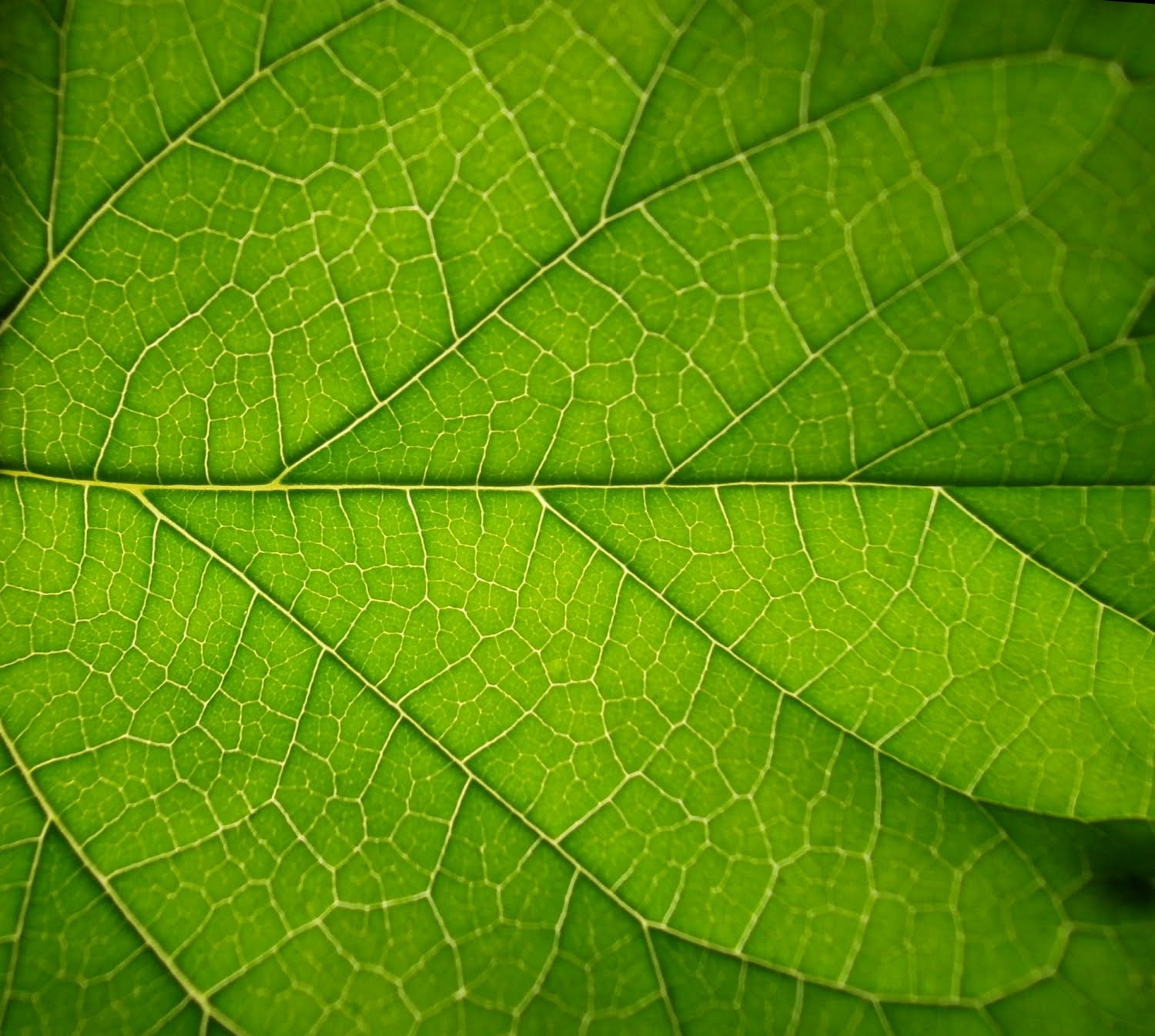 Morus sp. Very happy with the way this one turned out, plain green though it may be.
10.jpg) Codiaeum variegatum NOID. Some part of me still feels like croton pictures are cheating.
Codiaeum variegatum NOID. Some part of me still feels like croton pictures are cheating.
 Strelitzia reginae. A particularly fun transmitted light subject. S. nicolai has the same basic structure, but the cross veins are a lot less visible, so it looks more like stripes than like a bunch of little rectangles. Or at least I think that's how it works.
 Acer sp., autumn.
 Peperomia caperata.
 Caladium 'Fire Chief.' Caladiums really suck indoors (at least they always have for me), which is a pity. I would love to be able to grow something like this in the house. Unfortunately, it's too cold in here (year round), and probably also not bright enough. I sort of intended to get some to plant in containers outside this year, but didn't get around to it, or couldn't afford it, or something. Perhaps next year.
I'm going to be working on Berry Go Round #41 this week (hoping to have it up on Wednesday, but no promises), so it's transmitted-light time again.
(The previous transmitted light posts can be found here.)2.jpg)
 Tradescantia pallida.
 Cissus rhombifolia. Something about the slight variations in color here makes me really happy. The plant itself mostly makes me angry, unfortunately -- I had one a few years ago that did reasonably well for a year or two, but then it slowly dwindled to nothing for no discernable reason. I've bought replacements for it, but they tend to begin dwindling immediately. Sometimes I also had mildew problems. Yes, I have fairly good humidity here in the house, but it's not so good that I should be seeing mildew. So Cissus rhombifolia is on the Never Again list.
  Episcia NOID. Episcias don't tend to give particularly good transmitted light photos, despite the often-colorful leaves. Gesneriads in general tend not to turn out well, actually. I think the leaves are too thick for it to work properly.
 Acer sp., autumn.
 Aglaonema 'Jubilee.' Especially perceptive readers might notice that this is the same image as the one I'm using for the header for the next several weeks; that was accidental, and if I'd noticed it was part of the next set of transmitted light pictures, I would have picked something else. Oh well.
 Prunus sp., autumn.
 Asplundia 'Jungle Drum.'
 Euonymous alatus, autumn. This is probably my favorite from this set, though I'm a little hazy as to why. Makes me think of lightning, a little.
.jpg) Ipomoea NOID, petals. It's hard to find opportunities for blue transmitted light pictures. I think this one turned out nicely.
Ipomoea NOID, petals. It's hard to find opportunities for blue transmitted light pictures. I think this one turned out nicely.Transmitted Light Week continues!
I think I may be self-sabotaging: on yesterday's walk with Sheba, I wound up collecting several dead leaves. Brought them home, and then spent half an hour or so taping them to the kitchen window, getting pictures, and pulling them down. I think I probably got enough photos yesterday that I technically lost ground. (I may have gone a little nuts with the oaks.) But oh well. I'll still be ahead for the week.
(The previous transmitted light posts can be found here.)


About a week ago, Errant asked whether there was a possibility of me doing transmitted light photos of autumn leaves anytime soon. My answer was that I post the transmitted light pictures in more or less the order I take them, and that there was enough of a backlog at the moment that I was only ready for photos I took toward the beginning of last spring. I'm not posting the photos as quickly as I take them, either, so I'm always drifting further and further behind real-time. Maybe, I said, I would have to do an all-transmitted-light week sometime, to use up some of the photos I've been diligently collecting.
(Also: by the time the leaves on an outdoor plant have made it to autumn, they're usually pretty beat-up, and lots of leaves curl as they dry, which makes them nearly impossible to photograph. Eliminate the curled, cracked, or spotted leaves, and there's not much to take pictures of this time of year. I have gotten some, but you probably won't be seeing those until next spring.)
I actually try pretty hard to avoid following posts with the same kind of post -- if I post pretty pictures one day, then I post a random plant event or question for the hive mind or list the next. I figure changing it up that way means that if you don't care about the Monday post, you'll still come back to see what Tuesday is. So I'm a little hesitant to do a whole week that's all the same thing (I think the last time I did this was during the plant toxicity series back in April 2009, and in that case, I knew there were people wanting to see it.) But I have something like 200-250 unposted transmitted light photos now, and I figure we may as well get through some of them sooner instead of later. So, this week, we're going to do Part 31 to Part 36.
I might have an explanation later this week for the "good stress" I was talking about, too. If that happens, it'll get a separate post.
(The previous transmitted light posts can be found here.)


 Posts
All Comments
Posts
All Comments


 Photos on this blog attributed to mr_subjunctive are licensed under a Creative Commons Attribution-Noncommercial 3.0 Unported License. All other photos retain the licensing preferences of their owners and require permission for reuse. Contact mr_subjunctive for help in locating the sources for other photos.
Text on this blog: all rights reserved. Text may not be duplicated by any means without permission of its author, who is actually pretty easygoing under most circumstances and will probably say okey-dokey if you ask to reproduce something (but you still have to ask, and credit mr_subjunctive as the author of the excerpted part).
Photos on this blog attributed to mr_subjunctive are licensed under a Creative Commons Attribution-Noncommercial 3.0 Unported License. All other photos retain the licensing preferences of their owners and require permission for reuse. Contact mr_subjunctive for help in locating the sources for other photos.
Text on this blog: all rights reserved. Text may not be duplicated by any means without permission of its author, who is actually pretty easygoing under most circumstances and will probably say okey-dokey if you ask to reproduce something (but you still have to ask, and credit mr_subjunctive as the author of the excerpted part).


